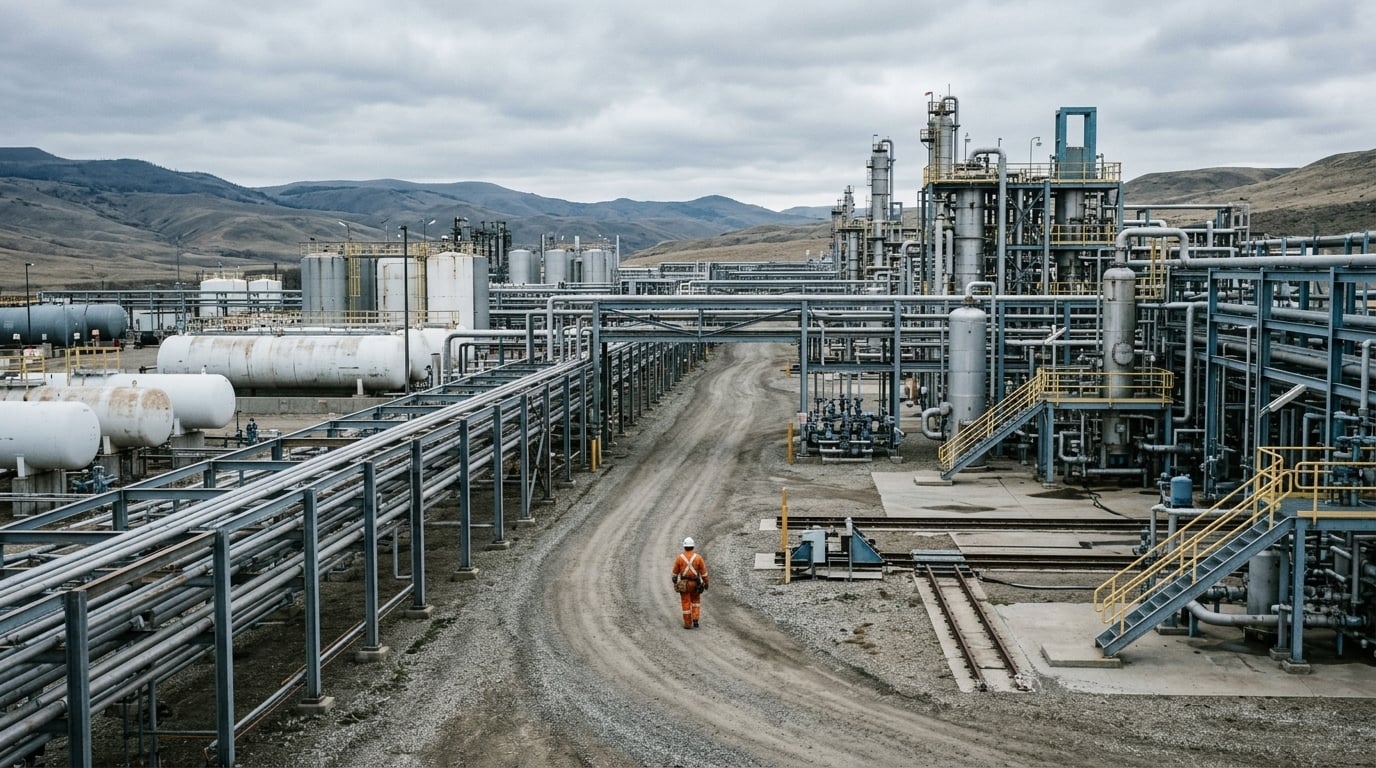

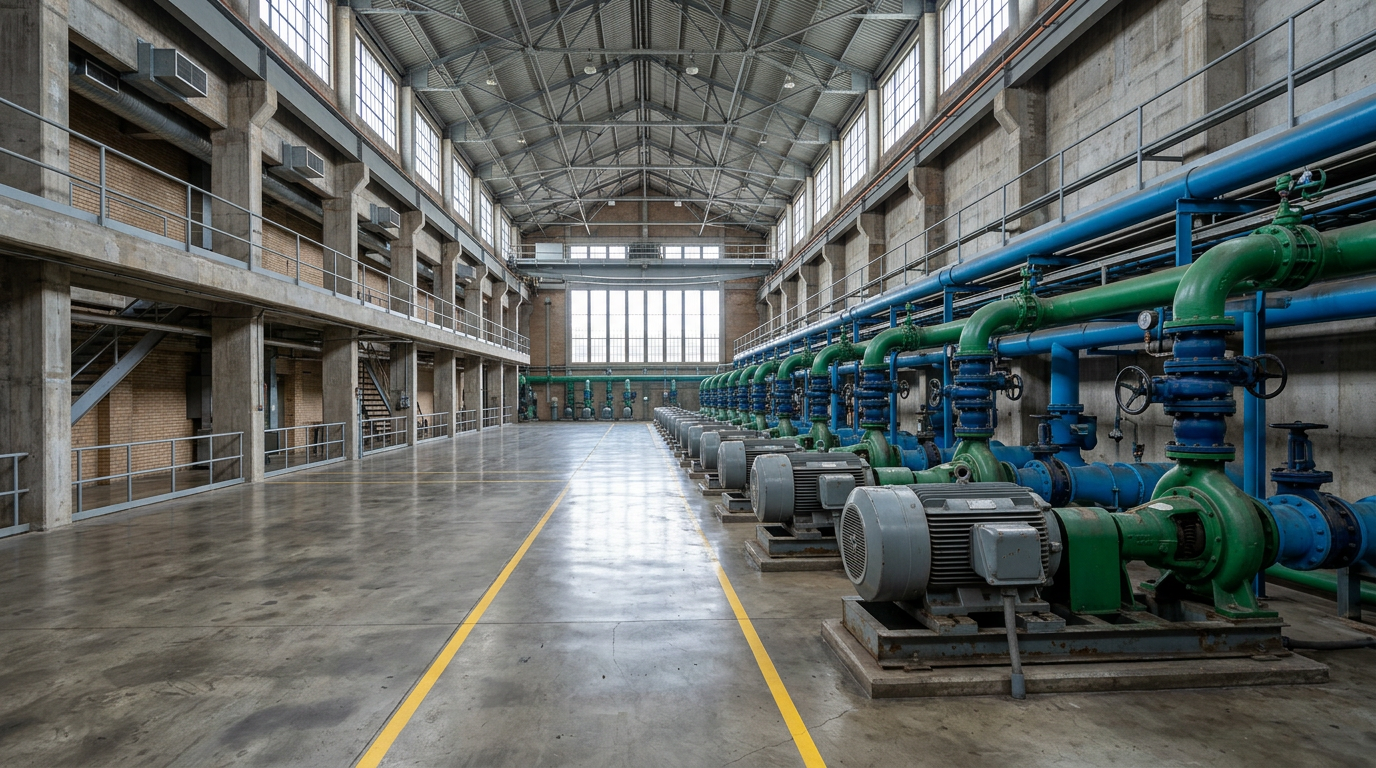
Key Takeaways
Thermal imaging predictive maintenance pays off when the system is specified around the fault it has to catch, and most of that work happens before anyone picks a sensor.
- Heat is the earliest visible sign of most electrical and mechanical faults, which makes infrared one of the widest-coverage tools in condition monitoring.
- Fixed, always-on systems are taking over from periodic handheld surveys, and that shift is the opening for OEMs and system integrators.
- Band, lens, and mounting decisions shape field performance more than headline camera specs do.
- Thermal imaging has real limits. Enclosure doors, shiny metal, heavy rain, and direct sun all need a design answer.
Start every specification with the target, the distance, and the environment, then choose the imaging chain that fits.
Thermal imaging predictive maintenance finds equipment faults by spotting abnormal heat early, so repairs happen on a schedule instead of during an outage. For the OEMs and system integrators who build monitoring platforms, the hard part comes later: specifying a system that still catches those faults once it's bolted to a wall in a working plant.
The stakes are easy to put a number on. Siemens' True Cost of Downtime 2024 report estimates that unplanned downtime costs the world's 500 largest companies about $1.4 trillion a year, or 11% of their revenue. The average large plant in its survey still loses 27 hours a month to unplanned downtime, even though nine in ten of those manufacturers already run some form of condition monitoring. Your customers believe in the approach. What they're buying from you is a system that works.
This guide covers what thermal imaging for industrial monitoring has to detect, why fixed systems are displacing handheld surveys, and the sensor, lens, and mounting decisions an OEM actually specifies. It's written for product managers, engineering leads, and procurement teams, and it stays out of the deep math.

What Is Thermal Imaging Predictive Maintenance?
Thermal imaging predictive maintenance is a way of monitoring equipment health by measuring the heat an asset gives off and flagging changes that point to a developing fault. An infrared camera turns that heat into an image or a stream of temperature data. Software then compares it against what normal looks like for that asset.
The idea rests on a simple fact: almost everything that fails gets hot first. A loose electrical connection adds resistance. A dry bearing adds friction. Each one changes the temperature pattern on the surface of the equipment before anything looks or sounds wrong.
Because the camera never touches the asset, predictive maintenance with thermal imaging works on energized, moving, or hard-to-reach equipment without stopping production. One camera can also watch dozens of components at once, where a contact sensor watches a single point.
How Does Thermal Imaging Detect Equipment Failure Before It Happens?
Thermal imaging detects equipment failure early by tracking each asset's temperature against a baseline and catching the drift. A single warm reading can mean very little. A connection that runs a little hotter every week is telling you something, and a system that trends that change gives the maintenance team time to plan.
The faults fall into a few familiar groups, and each one asks something different of the monitoring system. The table below maps them out.
|
Asset Type |
What Heat Reveals |
What the System Needs
|
|---|---|---|
|
Electrical: switchgear, panels, transformers |
Loose or corroded connections, overloaded circuits, unbalanced loads |
A clear line of sight to the connections, often through an infrared window |
|
Rotating: motors, pumps, compressors, conveyors |
Bearing wear, misalignment, lubrication problems, winding stress |
Rigid mounting and enough detail to separate one component from the next |
|
Process: heat exchangers, steam systems, insulated piping |
Fouling, blockages, failed steam traps, insulation breakdown |
Wide coverage of large surfaces and trending over time |
|
High-heat: furnaces, kilns, boilers |
Refractory wear, uneven burn, hot spots on the shell |
A band and optics suited to very hot targets |
Electrical monitoring deserves a special mention because standards now push it. The 2023 edition of NFPA 70B made inspection of all electrical equipment mandatory at least every 12 months, with thermographic inspection at least every six months for equipment in the poorest condition category. Its condition ratings also take notifications from continuous monitoring systems into account. For facilities that follow the standard, using infrared for predictive maintenance has moved from a good idea to an expectation.
Why Are Fixed Systems Replacing Handheld Surveys?
Fixed systems are replacing handheld surveys because a fault that develops between inspections is invisible to a camera that only visits once or twice a year. A permanently mounted predictive maintenance thermal camera watches the same asset from the same angle around the clock, so the data stays consistent and the trend is continuous.
Handheld surveys still have a place, and they're inexpensive to start. They also depend on a trained person standing in the right spot, at the right load, on the right day. Operators increasingly want monitoring built into the equipment or the plant itself, and that's where the OEMs and integrators who build industrial thermal imaging solutions come in.
|
Periodic Handheld Survey |
Fixed Continuous System
|
|
|---|---|---|
|
Coverage over time |
A snapshot on inspection day |
Around the clock |
|
Consistency |
Varies with operator, angle, and load |
Same view and settings every time |
|
Trending |
A few data points a year |
Continuous baseline and drift detection |
|
People near live equipment |
Required for every survey |
Limited to installation and service |
|
Who builds it |
Sold as a finished tool to end users |
Designed and integrated by OEMs and system integrators |
That last row matters most. Once the camera is a permanent part of a larger product, the buyer stops shopping for a tool and starts specifying a component.
What Does an OEM Actually Specify in a Thermal Imaging System?
An OEM specifies three things: the sensor that fits the target temperature, the lens that fits the scene, and the outputs the rest of the platform needs. The headline numbers on a datasheet matter less than whether those three choices match the job.
Sensor Selection: Match the Band to the Target
The infrared band is the first decision, and target temperature drives it. Most plant equipment runs near room temperature and gives off most of its heat in the long-wave band. Very hot processes and long viewing distances shift the answer. Here's how the three bands line up for thermal imaging predictive maintenance:
- Long-wave infrared (LWIR, 8 to 14 µm). The default for electrical panels, motors, bearings, piping, and most near-ambient equipment.
- Mid-wave infrared (MWIR, 3 to 5 µm). Suited to high-temperature processes and long-range monitoring, usually with cooled cameras.
- Broadband infrared (BBIR, 2 to 14 µm). Useful when one system has to cover a wide temperature range, as in furnace and boiler monitoring.
The cooled-versus-uncooled question usually answers itself once the band is set. Uncooled long-wave infrared camera systems need no cooling hardware, which keeps them compact, quick to start, and low-maintenance for 24/7 duty. Cooled cameras pick up finer temperature differences and reach farther, at a cost in size, power, and upkeep. For most equipment monitoring, uncooled is the practical choice.
Resolution and sensitivity come next. Resolution decides how small a hot spot the system can pick out at a given distance, and sensitivity decides how small a temperature change it can register. More of either costs more, so work backward from the smallest fault you need to see.

Lens Selection: Decide What the System Needs to See
The lens sets the field of view, and the field of view sets how much detail lands on each component. A wide lens takes in a whole motor control center from close range and spreads its pixels thin. A narrow lens puts more detail on a distant target and sees less of the room. Treating the lens as an afterthought is an expensive mistake, because a sensor only performs as well as the lens in front of it.
Three lens questions are worth settling early in any predictive maintenance thermal camera design:
- Field of view and working distance. Fix where the camera will mount first. The lens follows from that distance and the size of the smallest component you need to resolve.
- Focus across temperature. Plants swing from cold starts to hot afternoons. A lens designed to hold focus across that range keeps the image sharp without a focus motor or a service visit.
- Lens material and supply. Germanium has long been the standard material for infrared lenses, and its availability is a known supply chain concern. Germanium-free chalcogenide glass is worth evaluating for any product you plan to build for years.
Thermal imaging lens assemblies come off the shelf and custom. Off-the-shelf works when your geometry is ordinary. Custom earns its cost when space is tight or the target is unusual.
What Mounting and Environmental Constraints Shape the Design?
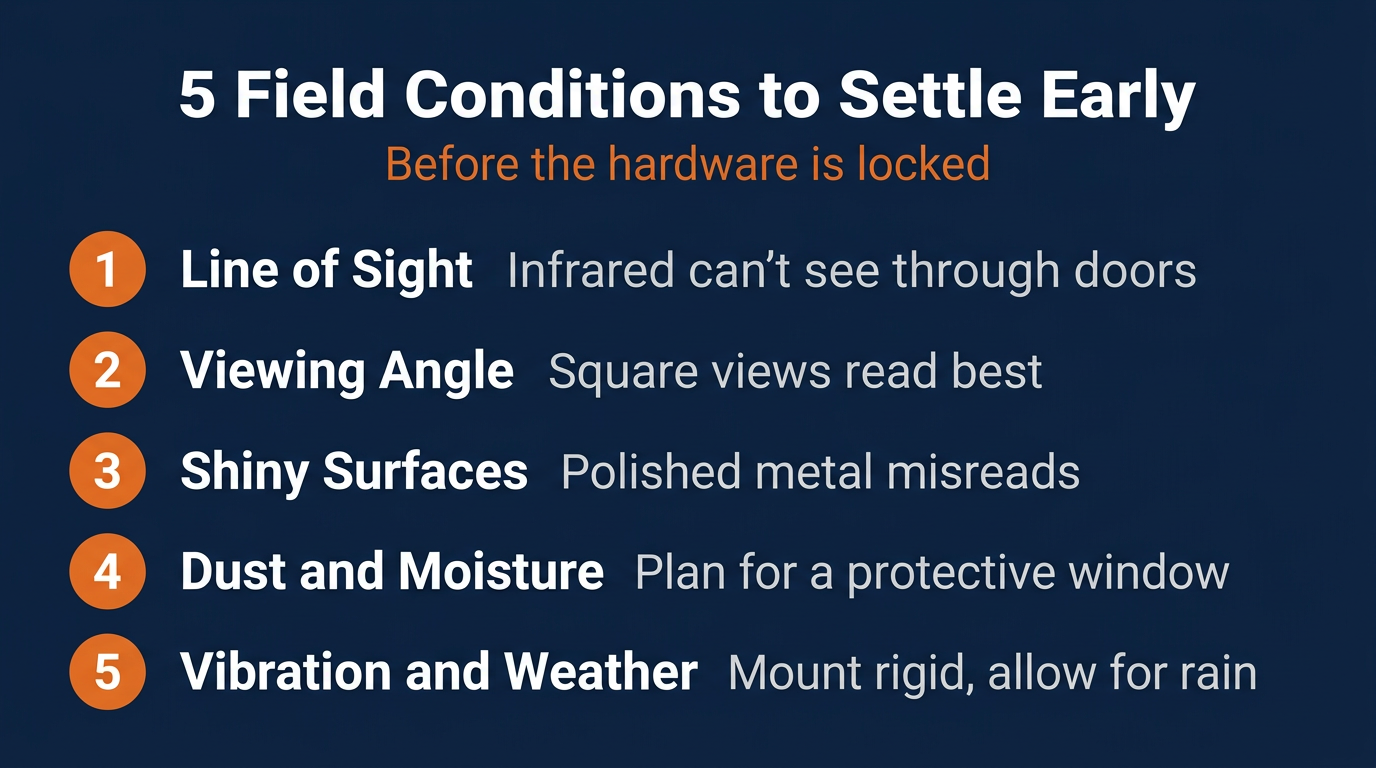
Five mounting and environmental constraints shape the design: line of sight, viewing angle, reflective surfaces, contamination, and vibration or weather. A thermal system can only measure what it sees clearly and steadily, and most field disappointments in thermal imaging equipment maintenance trace back to where and how the camera was installed.
Thermal imaging has real limits, and a good design plans around them. Settle these five before the hardware is locked.
- Line of sight. Infrared doesn't pass through ordinary glass, most plastic covers, or metal enclosure doors. Monitoring inside a cabinet means mounting the camera inside it or adding an infrared-transparent window.
- Viewing angle. A steep, oblique view gives less detail and a less trustworthy reading. Aim for as square a view of the target as the installation allows.
- Shiny surfaces. Bare, polished metal reflects heat from its surroundings and can read hotter or cooler than it really is. Painted, oxidized, or coated surfaces read far more reliably, so choose measurement points with that in mind.
- Dust, moisture, and washdown. Protective housings and windows keep the optics clean, and every window takes a little signal away. Account for that loss in the design and leave access for cleaning.
- Vibration and weather. A camera that shifts on its bracket loses its baseline, so mounts near rotating machinery need to be rigid. Outdoors, heavy rain cuts what the camera can see, and direct sun can warm a surface enough to hide a real fault.
Settling these five early is cheaper than any sensor upgrade later, and it's what separates a demo from a product.
Two site-specific requirements sit on top of those five. The first is the enclosure rating. IP67, which means dust-tight and protected against temporary immersion, is a common starting point for indoor plants, and washdown areas usually call for IP69K or a supplemental housing. The second is hazardous-area certification. Chemical and petrochemical sites with explosion-risk zones require certified equipment, and that requirement shapes the housing long before it shapes the optics.
How Does Thermal Imaging Fit With Other Condition Monitoring Equipment?
Thermal imaging works best as one layer in a broader system, alongside other condition monitoring equipment. It covers wide areas and catches electrical and heat-related faults early. Vibration and ultrasound sensors are stronger at pinpointing specific mechanical problems. A platform that combines them can check one signal against another before it raises an alarm.
That's why the camera's outputs matter as much as its image. Condition monitoring equipment has to hand its data to maintenance software (CMMS) and plant control systems (SCADA) without a custom project every time. Decide early how often the camera sends data, whether the analysis runs at the camera or on a server, and how an alarm becomes a work order.
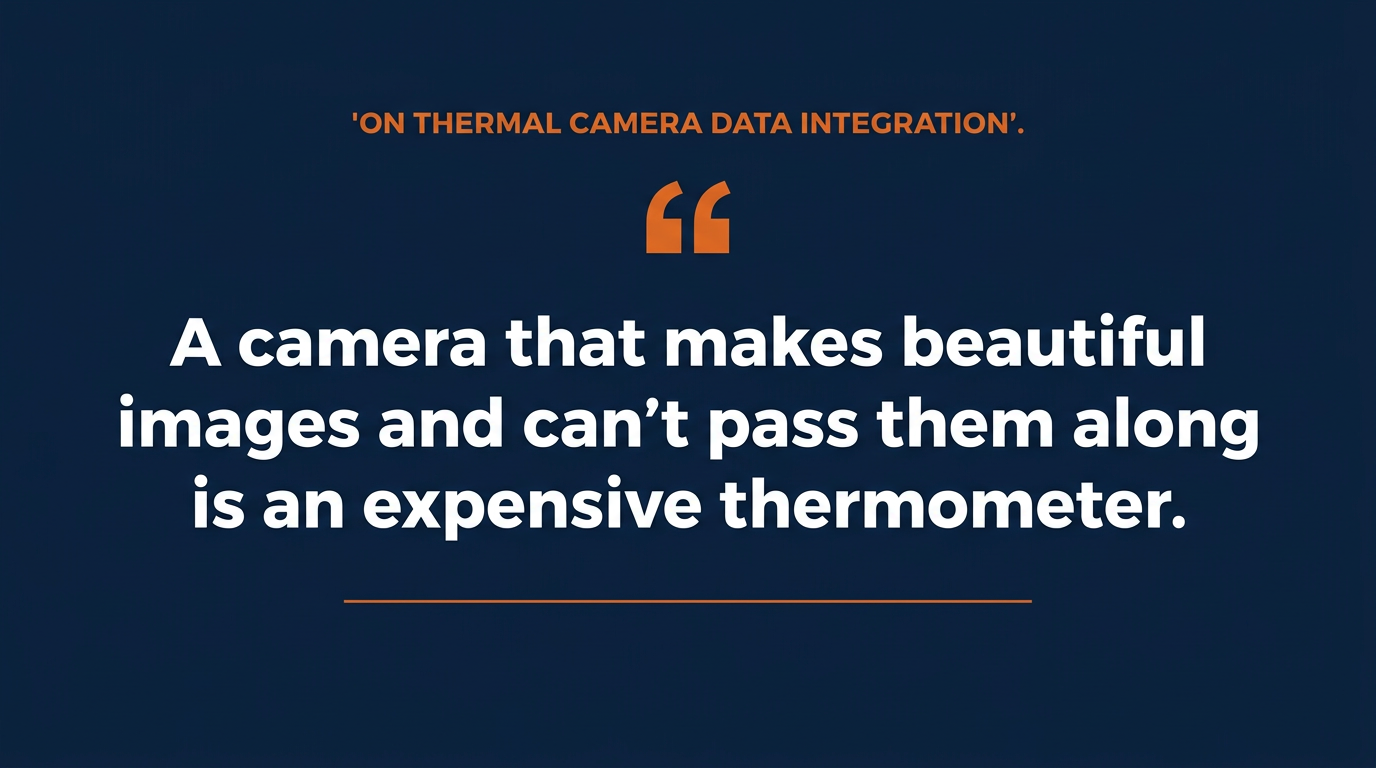
Teams running thermal imaging equipment maintenance programs across several sites care about this more than image quality. A camera that makes beautiful images and can't pass them along is an expensive thermometer. For a closer look at interfaces and architecture, see this guide to Thermal Imaging System Integration.
Frequently Asked Questions About Thermal Imaging Predictive Maintenance
These are the questions OEM and integrator teams raise most often when they scope predictive maintenance with thermal imaging.
What Is the Difference Between Predictive and Preventive Maintenance?
Preventive maintenance follows a calendar: parts get serviced or replaced on a fixed schedule whether they need it or not. Predictive maintenance acts on measured condition, and infrared for predictive maintenance supplies that measurement as heat data.
What Return Can Operators Expect From Predictive Maintenance?
The return comes from fewer unplanned stops and lower maintenance spending. The Siemens report cited above estimates that full adoption of condition monitoring and predictive maintenance across Fortune Global 500 industrial companies could save 2.1 million hours of downtime a year and $233 billion through a 40% reduction in maintenance costs. Those are estimates for a full program, of which thermal imaging is one part.
Does Equipment Need to Be Shut Down for Thermal Monitoring?
No, and it shouldn't be. Faults only show up as heat when equipment is running under load, so a predictive maintenance thermal camera does its best work during normal production.
Can the Same Thermal Camera Detect Gas Leaks?
Usually not. Gas leak detection uses optical gas imaging, where the camera is tuned to the narrow band a specific gas absorbs. It's a related technology with a different specification, so treat equipment monitoring and gas detection as separate design decisions.
How Often Do Fixed Thermal Cameras Need Recalibration?
It depends on the camera and the environment. Heavy vibration and wide temperature swings shorten the interval. Ask the supplier for the recommended interval and whether the camera carries a built-in calibration reference, then write both into the service plan.
Put the Right Imaging Chain Behind Your Monitoring Platform
Get the band, the lens, and the mounting right, and thermal imaging predictive maintenance becomes a dependable part of your product instead of a feature that looks good in a demo.
LightPath Technologies has more than 40 years in optics and is vertically integrated, making its own germanium-free infrared glass, lens assemblies, and complete cameras: uncooled long-wave and broadband systems and cooled mid-wave systems for long-range work. Its engineers work with OEM teams on off-the-shelf and custom designs, with manufacturing in the United States and Europe. Its Mantis cameras are already used to monitor high-temperature processes inside power plant boilers and furnaces. To talk through the specification for your platform, connect with LightPath's engineering team.