
Key Takeaways
LWIR thermal cameras are the technology of choice for OEMs building systems that must perform in the world's most demanding environments — from industrial facilities to active defense operations.
- Industrial thermal monitoring relies on long wave infrared cameras for predictive maintenance, gas leak detection, and high-temperature process oversight where contact-based sensors cannot survive
- Defense and surveillance programs depend on LWIR thermal cameras for perimeter security, counter-drone detection, and ISR missions requiring consistent performance across extreme environmental conditions
- Drone and UAV platforms increasingly integrate uncooled LWIR systems to balance detection capability with the SWaP constraints that define mission success on compact airborne platforms
- System architecture matters more than specs alone — purpose-built LWIR cameras with cold-shield optical design, appropriate IP ratings, and matched lens-to-sensor configurations consistently outperform adapted commercial alternatives
Specifying the right LWIR camera platform from the start determines whether your system delivers when conditions are harshest.
Program managers and engineering teams specifying thermal imaging systems face a consistent challenge: environments where the technology is most needed are also the ones most likely to destroy equipment that was not designed for them. Dust infiltrates unsealed housings. Vibration degrades alignment. Temperature extremes cycle electronics past their rated limits.
The thermal camera market reflects growing recognition of this reality. According to recent thermal camera market analysis, the global thermal camera market was valued at approximately $5.62 billion in 2025 and is projected to reach around $13.79 billion by 2035, growing at a CAGR of 9.39% — with defense and industrial sectors consistently driving the largest share of adoption. For engineers and procurement teams evaluating long wave infrared camera systems, understanding where LWIR technology delivers its greatest value across verticals and what specifications define reliable performance is the foundation of any sound sourcing decision.
This guide walks through LWIR camera applications by industry vertical, the environmental factors that separate mission-capable systems from commercial alternatives, and the specifications OEMs should prioritize when the operating environment is genuinely harsh.
Why Does an LWIR Camera Outperform Conventional Imaging in Harsh Conditions?
Long wave infrared cameras detect thermal radiation in the 8-14 µm wavelength band — the energy naturally emitted by objects at ambient temperatures, including personnel, vehicles, and industrial equipment. This passive detection approach requires no external lighting, no illumination source, and no active signal that could compromise operational security. The system simply observes thermal contrast that is always present.
This physics-based advantage translates directly to harsh environment performance. Smoke, dust, and light precipitation that scatter visible light and render conventional cameras useless have minimal effect on LWIR wavelengths. A soldier moving through smoke, a heat signature from malfunctioning electrical equipment behind a panel, or a gas plume invisible to the human eye — all of these are detectable with a properly specified LWIR camera while standard optical systems provide nothing useful.
The operational consequence for system builders is significant. A platform equipped with a calibrated long wave infrared camera maintains situational awareness and monitoring capability across conditions that would require visible-light systems to stand down entirely. For defense platforms operating in contested environments and industrial systems deployed in facilities with airborne particulates, that continuous capability is the core of the value proposition.
How Are LWIR Cameras Used in Industrial Environments?
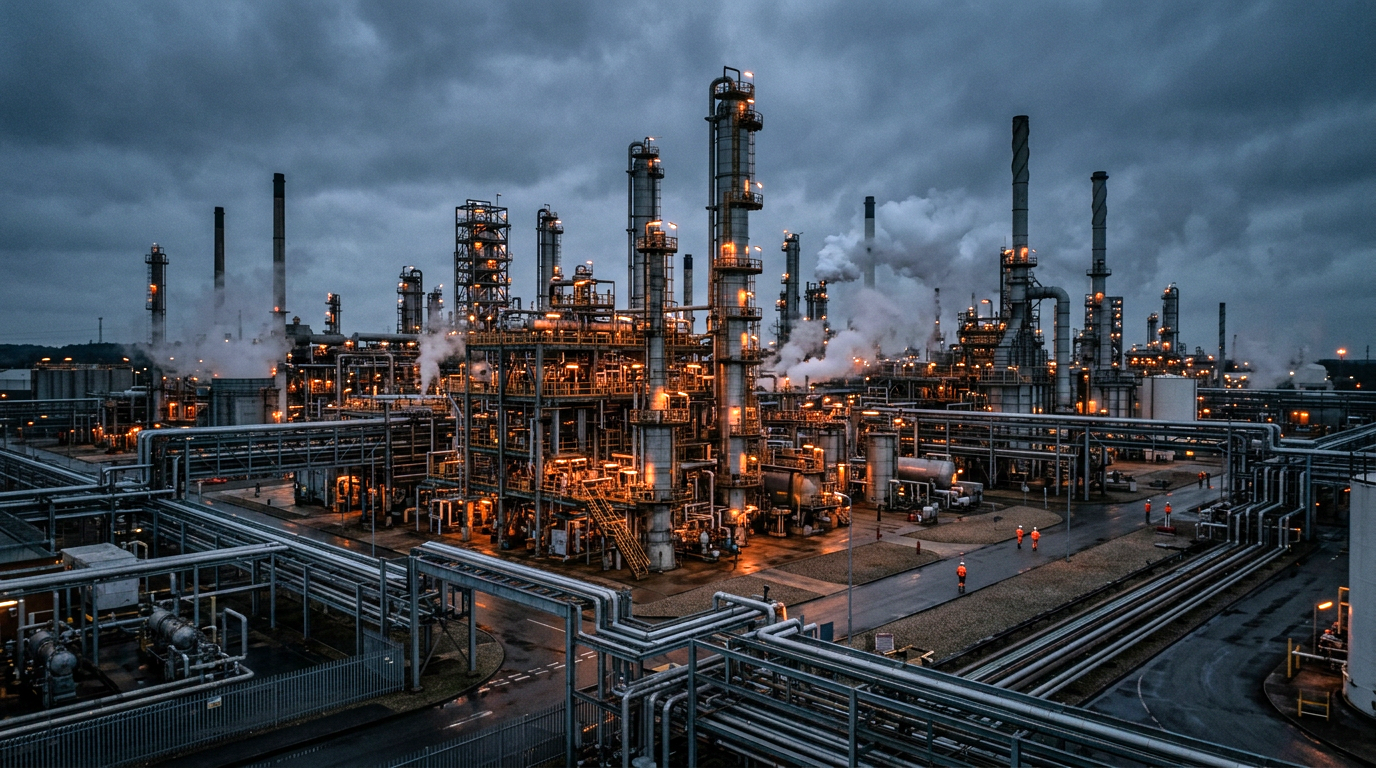
Industrial deployments represent one of the largest and most consistently growing application areas for LWIR thermal cameras. The combination of continuous operation requirements, challenging ambient conditions, and high cost-of-failure makes industrial monitoring an ideal fit for thermal imaging technology. Thermal imaging adoption across defense, automotive, and industrial manufacturing is accelerating, driven by the technology's ability to support early fault detection, condition-based maintenance, and continuous monitoring that reduces downtime and improves operational safety.
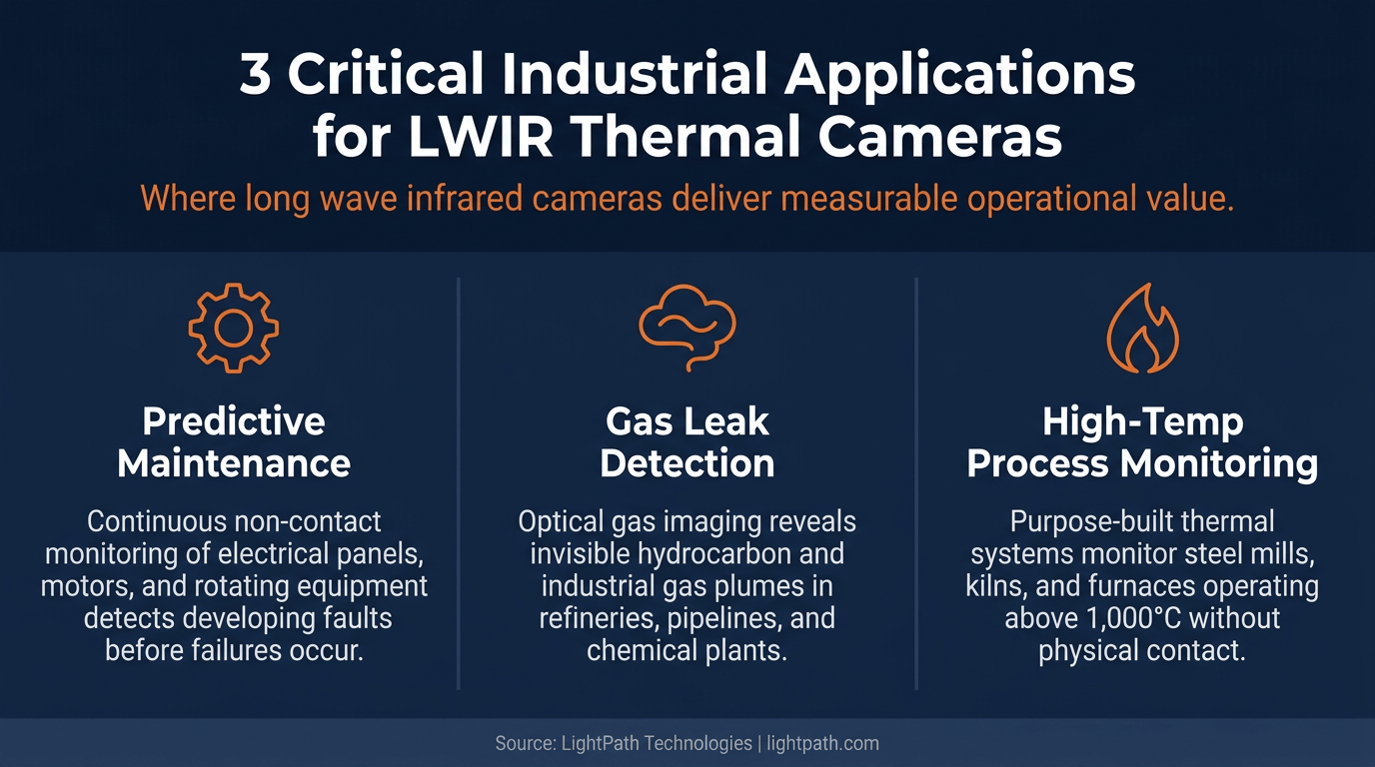
For OEMs developing industrial monitoring platforms, three application areas dominate specification conversations.
Predictive Maintenance and Electrical Monitoring
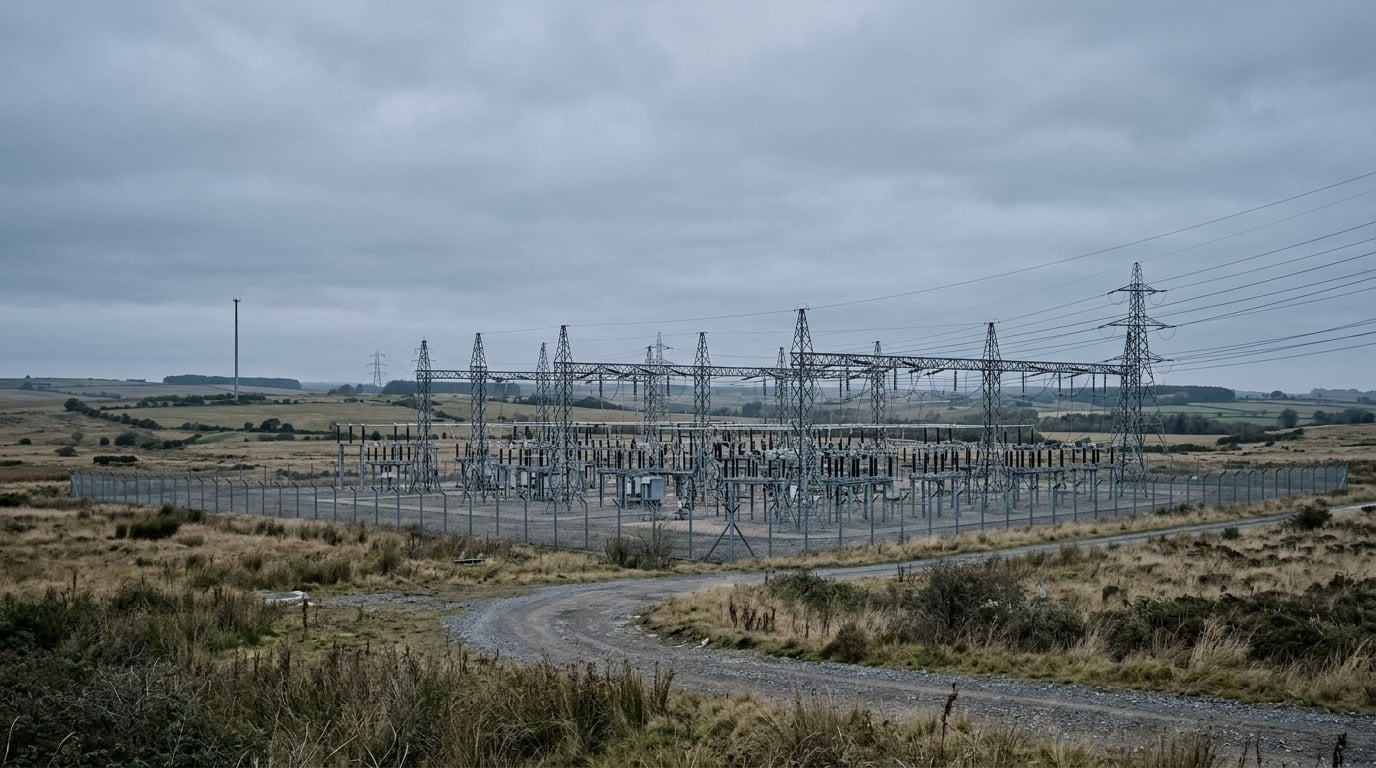
Manufacturing facilities and utilities deploy LWIR cameras on critical infrastructure to detect thermal anomalies before they become failures. Electrical panels, rotating machinery, transformers, and switchgear all exhibit predictable thermal signatures when developing faults — elevated resistance in a connection generates detectable heat well before the connection fails. A fixed long wave infrared camera installation monitors these signatures continuously without requiring physical access or shutdowns.
The value to OEM system builders is that the detection is non-contact and passive. Cameras can be positioned at safe distances from energized equipment, operate around the clock without maintenance intervention, and provide consistent thermal data to whatever analytics or alerting platform the OEM builds around them. Industrial thermal monitoring programs that integrate LWIR cameras into condition-based maintenance workflows reduce unplanned downtime and extend equipment service intervals.
Gas Leak Detection and Process Oversight
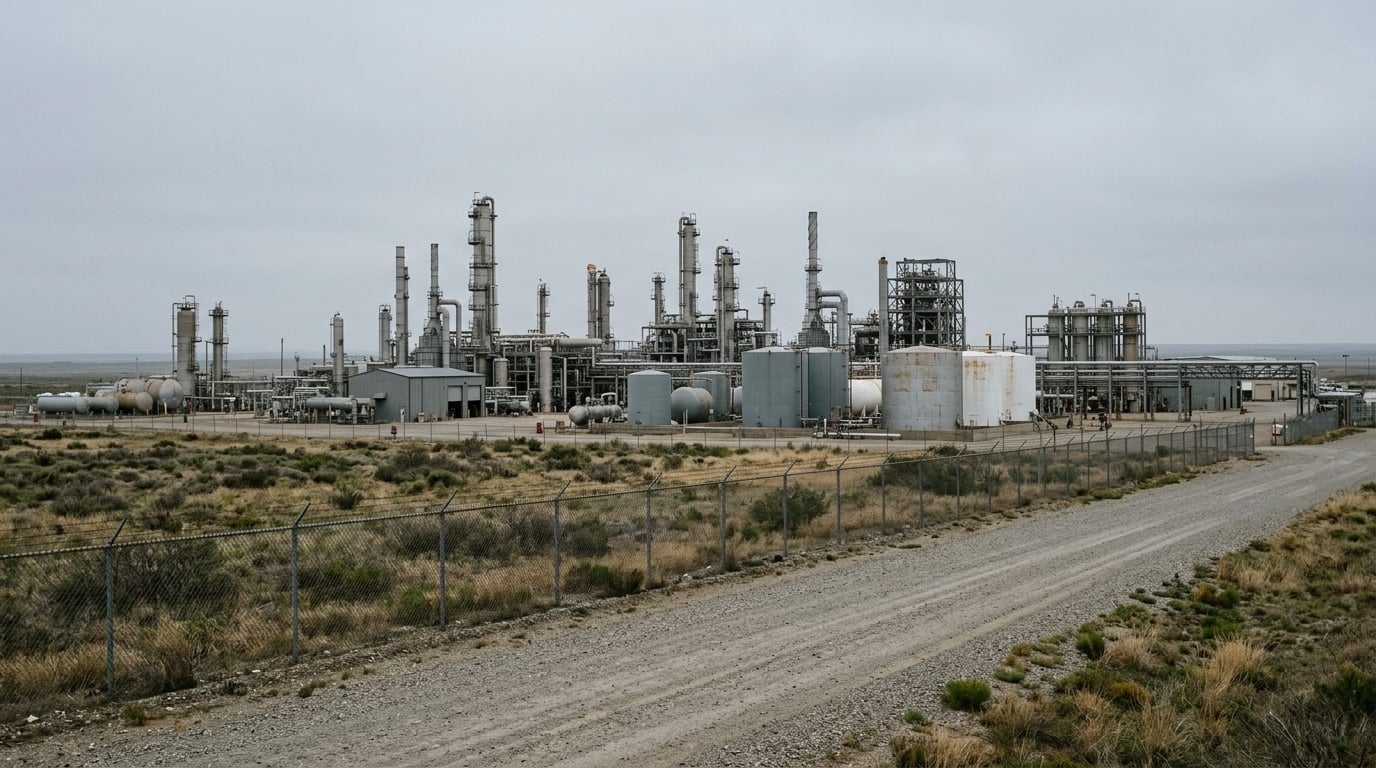
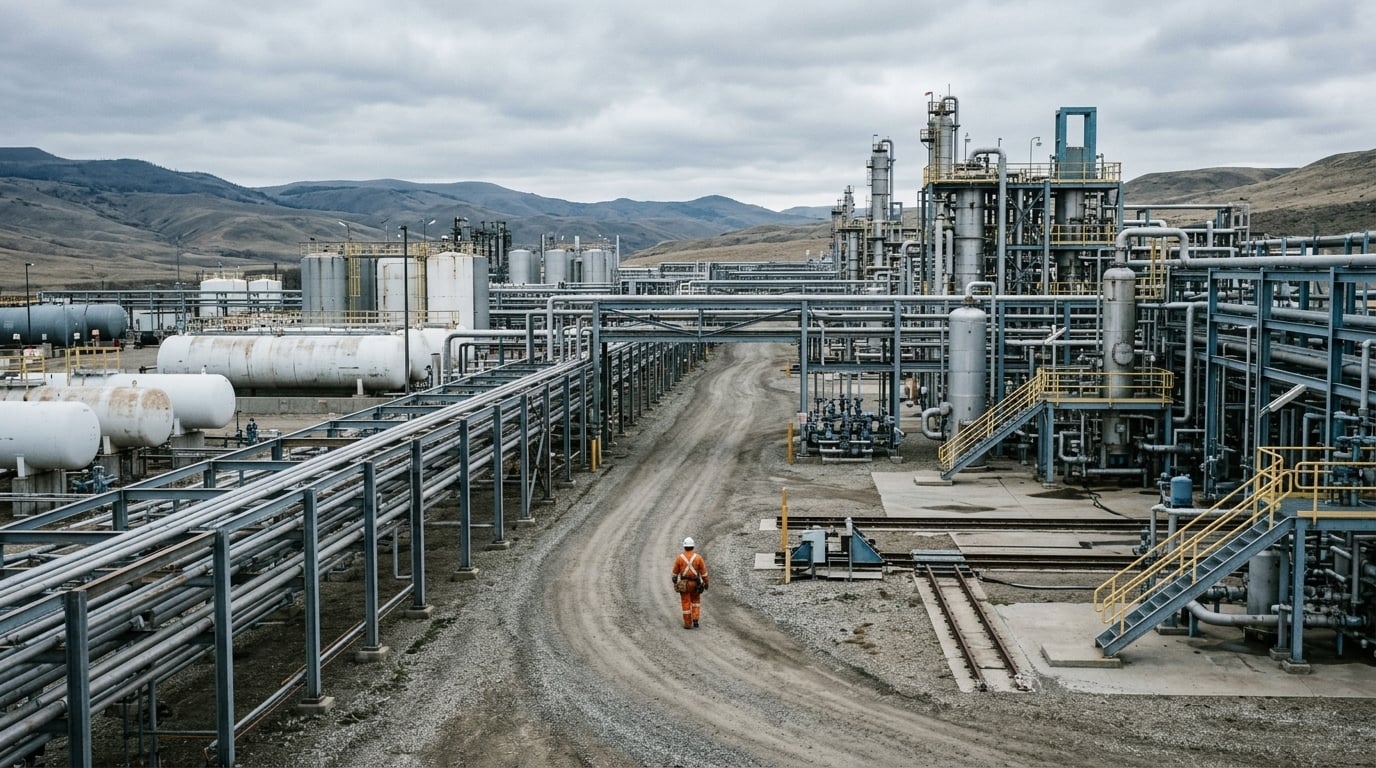
Refineries, chemical plants, and natural gas facilities present some of the most physically demanding environments for any instrumentation. High ambient temperatures, corrosive atmospheres, and explosion hazard classifications make standard camera systems unsuitable. LWIR cameras configured for optical gas imaging detect specific hydrocarbon and industrial gas plumes as they develop, enabling rapid identification of leaks that are invisible to the naked eye.
Pipeline operators and facility managers use these systems for continuous perimeter monitoring and process oversight. The cameras must survive environments with salt air exposure, chemical contamination risk, and temperature extremes. For LWIR camera platforms deployed in these settings, IP67 minimum ratings for dust and water ingress protection are a baseline requirement, not an optional specification.
High-Temperature Process Monitoring
Steel mills, glass manufacturing operations, and cement kilns require thermal monitoring in environments where ambient temperatures regularly exceed what commercial camera systems can survive. Purpose-built LWIR thermal cameras for these applications incorporate thermal management systems — heat shields, cooling assemblies, or water-cooled housings — that allow the camera electronics to function reliably while monitoring processes that can exceed 1,000°C. The imaging provides real-time process quality data and early detection of anomalies without physical contact with the process.
|
Environment |
Minimum IP Rating |
Operating Temp Range |
Key Consideration |
|
Outdoor industrial, general |
IP65 |
-20°C to +60°C |
UV-resistant housing |
|
Chemical plant / gas facility |
IP67 |
-20°C to +55°C |
Explosion-proof classification |
|
Furnace / kiln proximity |
IP67 |
-20°C to +65°C |
Thermal barrier or cooling assembly |
|
Arctic / extreme cold |
IP67 |
-40°C to +60°C |
Cold-rated electronics, heated housing |
|
Marine / offshore |
IP69K |
-40°C to +60°C |
Corrosion-resistant materials |
What Makes LWIR Cameras Essential for Defense Applications?
Defense programs place the most demanding requirements on any imaging system. According to SIPRI's 2024 military expenditure report, global military spending reached $2,718 billion in 2024 — a 9.4% year-on-year increase and the steepest rise since the end of the Cold War — reflecting sustained and accelerating investment in advanced surveillance and detection capabilities across every major theater.
That defense investment translates directly into thermal imaging demand: defense and military operations account for approximately 48.7% of the thermal camera market, the largest share of any end-user segment, driven by extensive use in surveillance, targeting, and reconnaissance. For program managers specifying LWIR cameras into defense platforms, the architecture decisions made during initial design determine whether the system meets program requirements or requires costly redesign during qualification testing.
Perimeter Security and Fixed Surveillance
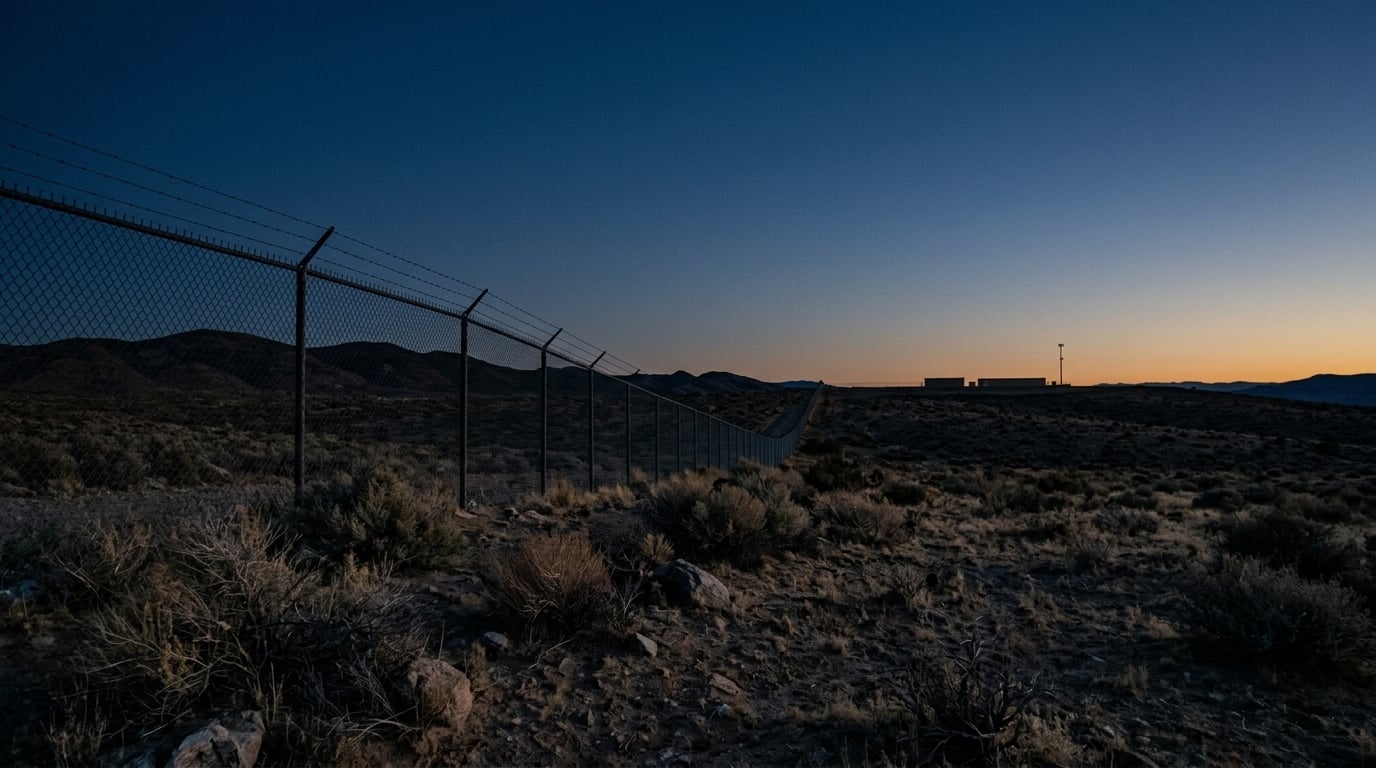
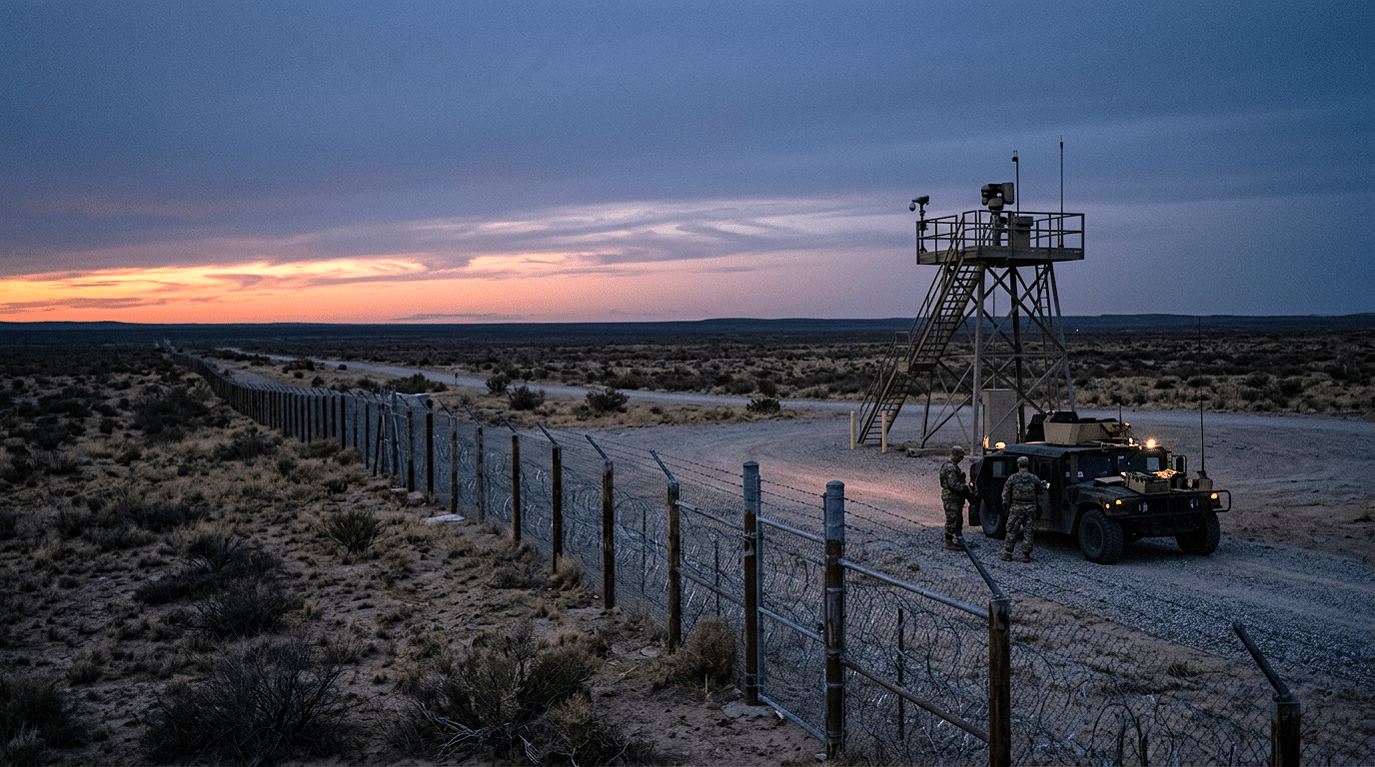
Border surveillance systems, forward operating base perimeter monitoring, and critical infrastructure protection all share a common requirement: 24-hour detection capability regardless of ambient light, weather, or deliberate obscurants. LWIR thermal cameras deployed in these roles are typically fixed installations rated for continuous outdoor operation.
For defense thermal imaging programs requiring extended detection ranges, cooled systems offer maximum sensitivity advantages. For perimeter security where personnel detection at moderate ranges is the primary requirement, uncooled LWIR cameras offer operational advantages: they operate without a cooler startup delay, consume less power, require minimal maintenance, and maintain complete shutterless operation so no frames are lost to calibration events.
Counter-Drone Detection and CUAS Integration
Counter-unmanned aircraft systems represent one of the fastest-growing application areas in defense thermal imaging. Small commercial drones present detection challenges for radar systems — their low radar cross-section and slow speeds make radar-based detection unreliable at tactically useful ranges. LWIR cameras detect the thermal contrast from drone motor heat and battery warmth against sky and terrain backgrounds, providing a detection mechanism that does not depend on a drone's radar reflectivity.
CUAS platforms typically integrate LWIR cameras as part of a multi-sensor suite, with the thermal channel providing detection cues that trigger higher-resolution tracking or engagement systems. The LWIR camera component must meet MIL-STD shock and vibration requirements for vehicle-mounted or man-portable deployment, maintain calibration accuracy after field handling, and operate reliably across the full temperature range of the expected theater of operations.
Ground Vehicle and Airborne Platform Integration
Vehicle-mounted thermal weapon sights and driver vision enhancement systems endure among the harshest operating profiles of any camera application. Shock loads from vehicle operation over rough terrain, continuous vibration, dust infiltration from unpaved roads, and temperature cycling between engine-heated vehicle interiors and cold external ambient temperatures all stress camera systems beyond what commercial-grade equipment can sustain.
Airborne platforms add altitude-driven temperature changes and vibration profiles from aircraft structures. Systems built for these applications require mechanical designs that maintain optical alignment through shock and vibration events, electronics rated for extended temperature ranges, and sealed optical assemblies that prevent internal contamination over operational service lives measured in years.
How Do LWIR Thermal Cameras Perform in Drone Surveillance Applications?
Drone and UAV platforms represent a unique convergence of demanding performance requirements and severe physical constraints. The thermal surveillance systems deployed on tactical drones must deliver detection capability that justifies the platform's operational cost while fitting within SWaP budgets that leave little room for compromise.
Uncooled LWIR cameras dominate drone thermal imaging applications for practical reasons. A cooled system adds the weight and power draw of a Stirling cryocooler to an already constrained payload budget. It also introduces startup latency — cooled detectors require time to reach operating temperature — and adds a mechanical wear component that reduces long-term reliability on platforms that may fly hundreds of hours per year. An uncooled LWIR camera starts immediately, draws significantly less power, weighs less, and requires no cooler maintenance.
The trade-off is sensitivity and detection range. For ISR missions requiring personnel detection at extended ranges or high-confidence target identification, cooled systems deliver advantages that justify the integration complexity. For surveillance, reconnaissance, and monitoring missions where detection at operationally useful ranges is achievable with uncooled technology, the SWaP advantages are decisive.
OEM system builders developing drone thermal payloads should evaluate these factors when specifying LWIR cameras:
- Resolution and pixel pitch: Higher resolution uncooled detectors support greater detection ranges without adding cooler weight; 640x480 is a commonly specified resolution for uncooled drone payloads, balancing detection capability with SWaP constraints
- Frame rate and export compliance: Certain frame rate thresholds trigger export control requirements under EAR/ITAR — OEM program teams should factor regulatory compliance into platform architecture decisions early, as these requirements shape supply chain structure and partner selection
- Interface compatibility: Modern GigE Vision and USB3 interfaces simplify integration into existing avionics architectures
- SWaP specification: Total camera system weight, power draw, and form factor must be evaluated as a system — not camera specifications in isolation
- Lens matching: Optical performance depends as much on the lens assembly as the detector; infrared optical assemblies matched to specific detectors outperform off-the-shelf component combinations
What Specs Should OEMs Prioritize When Selecting an LWIR Camera for Harsh Environments?
The performance of an LWIR camera in harsh conditions is determined less by detector specifications than by system-level engineering decisions that compound across housing design, optics, electronics, and thermal management. For OEM evaluation teams, the following specification areas separate mission-capable systems from commercially adapted alternatives.
Environmental protection is the first filter. IP ratings define the system's ability to survive dust, water, and pressure-washing events. IP67 provides dust-tight protection and temporary submersion resistance. IP69K adds high-pressure washdown survival for marine and offshore environments. MIL-STD-810 qualification validates performance through shock, vibration, temperature cycling, humidity, and altitude profiles that simulate realistic operational conditions.
Operating temperature range determines whether a system functions across its intended deployment envelope. Commercial systems specified to -20°C to +50°C will fail in Arctic surveillance or desert applications. Purpose-built LWIR cameras for harsh environments extend this to -40°C to +65°C or beyond, with thermal management systems that maintain electronics within operating limits at both extremes.
Optical design quality directly determines image consistency across environmental conditions. Cold-shield optical design in cooled systems eliminates thermal artifacts — corner shading and image non-uniformities that degrade image quality and reduce effective sensitivity. Lens-to-sensor matching optimizes the complete optical chain rather than combining components that meet individual specifications but underperform as a system.
Material selection affects long-term reliability in corrosive environments. Aluminum housings require protective coatings for saltwater exposure. Stainless steel or composite materials provide superior corrosion resistance for marine applications. Optical window materials and coatings must resist abrasion and chemical exposure without degrading transmission.
Supply chain considerations are increasingly relevant for long-duration programs. Germanium, the traditional material for LWIR lens elements, faces geopolitical supply risk and price volatility. Manufacturers offering chalcogenide glass alternatives provide supply chain resilience that reduces program risk — a factor that has become a primary OEM evaluation criterion alongside optical performance. For a deeper comparison of how LWIR and MWIR technologies compare across these demanding environments, the LWIR vs. MWIR selection guide for industrial applications covers the architectural trade-offs in detail.
|
Specification |
Commercial Grade |
Harsh Environment Grade |
Mission-Critical |
|
Ingress Protection |
IP54 |
IP67 |
IP67-IP69K |
|
Operating Temperature |
-20°C to +50°C |
-40°C to +65°C |
Extended with thermal mgmt. |
|
Shock Resistance |
10-20G |
40-100G |
MIL-STD-810 qualified |
|
Vibration Tolerance |
Limited |
10-2000 Hz tested |
Continuous operation rated |
Choosing the Right LWIR Camera Manufacturing Partner
Specification sheets tell part of the story. The manufacturing partner behind those specifications determines whether a system performs as documented, arrives on program timeline, and remains supportable throughout a multi-year deployment lifecycle.
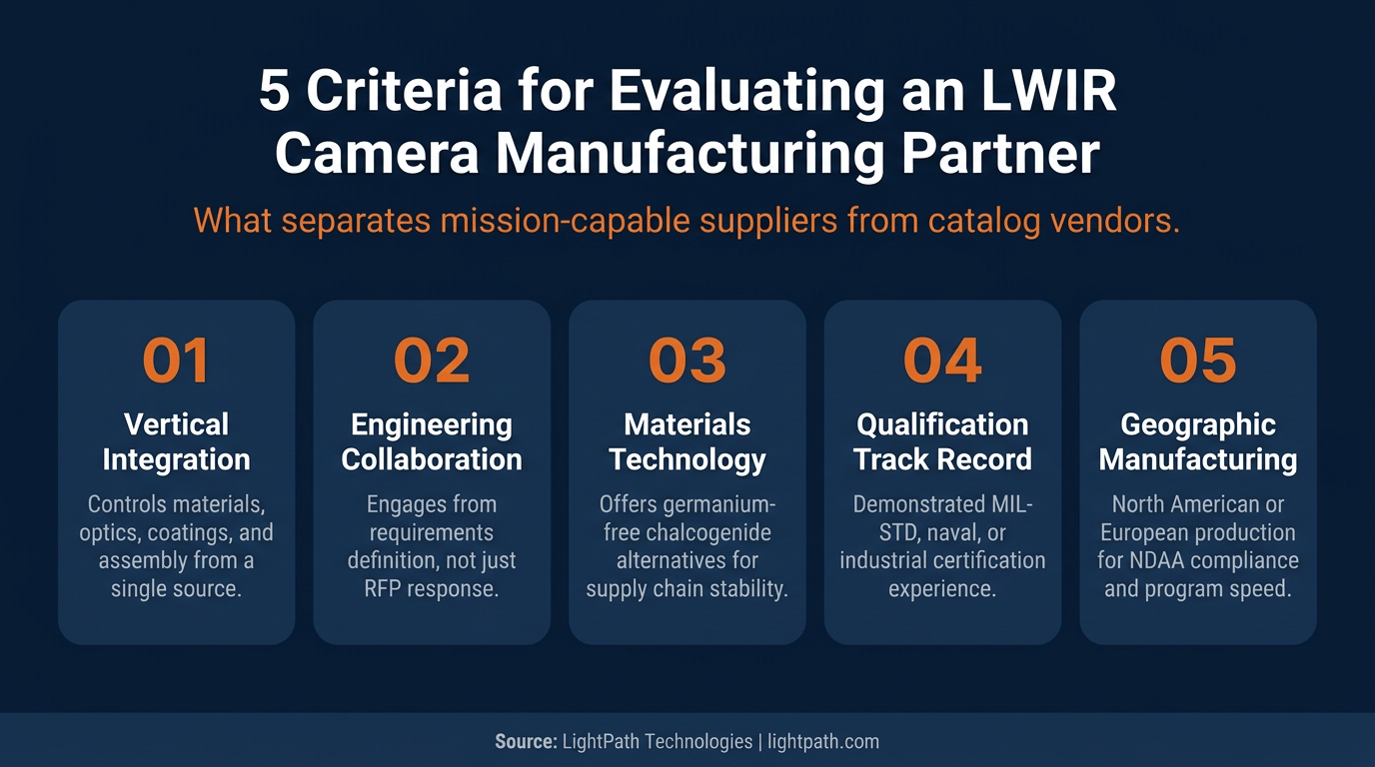
For OEM engineers and program managers, these criteria define what separates adequate suppliers from genuine partners:
- Vertical integration: Manufacturers who control materials, optics, coatings, and assembly can trace quality through every component, respond faster to custom requirements, and deliver more consistent performance than those assembling from multiple upstream vendors
- Engineering collaboration: Suppliers who engage from requirements definition rather than responding to completed RFPs deliver systems better aligned to actual program needs
- Materials technology: Proprietary optical materials — particularly germanium-free chalcogenide alternatives — provide supply chain stability critical for long-term programs
- Qualification experience: Demonstrated history with MIL-STD qualification testing, naval program experience, or industrial certifications reduces program risk during the qualification phase
- Geographic manufacturing: North American and European manufacturing supports NDAA compliance requirements and shortens supply chain response times for defense programs
Frequently Asked Questions
What is an LWIR camera and how does it work in harsh environments?
An LWIR camera detects thermal radiation in the 8-14 µm wavelength band emitted by objects at ambient temperatures. Unlike visible-light cameras that require illumination, LWIR systems passively detect heat signatures that are always present. In harsh environments, this means the camera continues operating in complete darkness, smoke, dust, and adverse weather conditions that defeat conventional imaging. Purpose-built harsh environment LWIR cameras add environmental sealing, corrosion-resistant materials, and extended temperature ratings to maintain this detection capability regardless of ambient conditions.
What IP rating do I need for an LWIR camera in an outdoor or industrial deployment?
The minimum for most outdoor industrial deployments is IP65, which protects against dust and water jets. Applications involving water immersion risk, pressure washing, or marine environments require IP67 (temporary submersion) or IP69K (high-pressure washdown). Defense programs typically reference MIL-STD-810 qualification, which validates performance through temperature cycling, shock, vibration, humidity, and altitude profiles that exceed commercial IP ratings. The appropriate rating depends on the specific operating environment, not simply whether a deployment is outdoor.
What is the difference between cooled and uncooled LWIR cameras for harsh environment applications?
Uncooled LWIR cameras use microbolometer detectors that operate at ambient temperature. They start immediately, consume less power, and require no cooler maintenance, making them well-suited for drone payloads, mobile platforms, and applications where SWaP constraints are significant. Cooled systems deliver greater thermal sensitivity and longer detection ranges at the cost of added weight, power consumption, cooler startup time, and maintenance requirements. Both can be engineered for harsh environments; the selection depends on mission performance requirements rather than environmental conditions alone.
How does supply chain stability affect LWIR camera selection for long-term programs?
Germanium, the traditional material for LWIR optical elements, is subject to geopolitical supply constraints and price volatility that create real program risk for multi-year deployments. Manufacturers offering chalcogenide glass alternatives provide a supply chain path that reduces dependence on a single material source. For program managers specifying LWIR cameras into defense or industrial programs with five-to-ten-year deployment horizons, evaluating the supplier's materials strategy alongside optical performance specifications has become a standard part of the procurement process.
Partner with Experts Who Engineer for Harsh Environments
Selecting an LWIR camera platform for genuinely harsh conditions is an engineering decision that compounds through every stage of system development. The right architecture, the right materials, and the right manufacturing partner determine whether the system performs consistently across the industrial facilities, defense platforms, and drone payloads where reliability is non-negotiable.
LightPath Technologies brings four decades of optical and thermal imaging experience to harsh environment programs across aerospace, defense, and industrial markets. With proprietary Black Diamond chalcogenide glass that eliminates germanium supply chain exposure, vertically integrated manufacturing across North America, and custom-engineered thermal imaging solutions built around OEM program schedules, LightPath delivers LWIR camera systems designed for the conditions your platform will actually face. When you're ready to discuss your program requirements, connect with the LightPath engineering team to start the conversation.