
Key Takeaways
Thermal inspection cameras are transforming how industrial OEMs build predictive maintenance platforms — shifting customers from costly reactive repairs to continuous, non-contact equipment monitoring.
- According to the U.S. Department of Energy's Federal Energy Management Program, facilities using predictive maintenance can reduce maintenance costs by 30-40% compared to reactive approaches
- Thermal inspection cameras enable non-contact monitoring of electrical systems, rotating machinery, process equipment, and critical infrastructure without disrupting operations
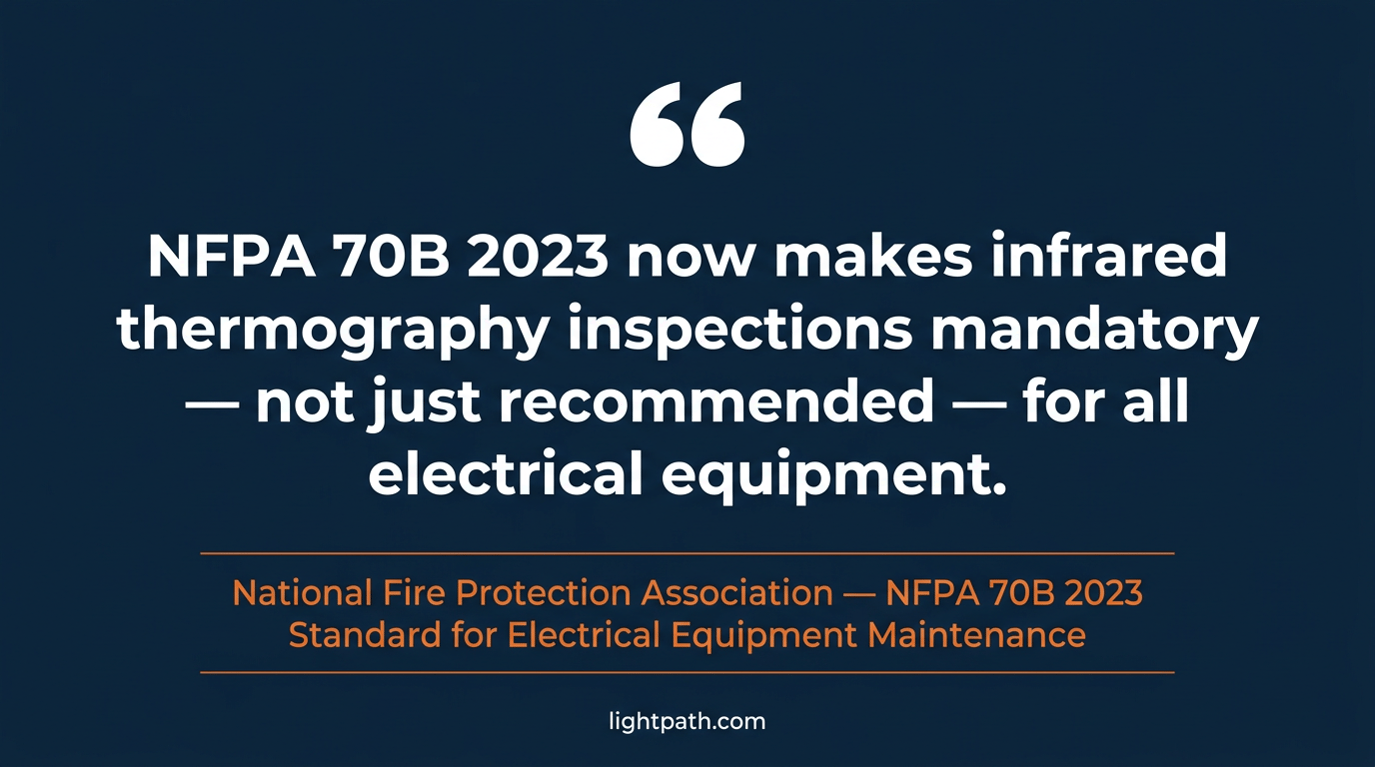
- NFPA 70B 2023 now mandates annual infrared thermography inspections for electrical equipment, creating sustained regulatory demand for integrated thermal monitoring platforms
- OEMs who partner with vertically integrated thermal imaging suppliers reduce development time and deliver more reliable, performance-matched systems to end customers
If you're building industrial monitoring platforms, thermal imaging is no longer optional infrastructure — it's the performance differentiator your customers are asking for.
Equipment failures don't announce themselves in advance. A loose electrical connection, a bearing running warm, a heat exchanger losing efficiency — these issues develop over weeks and months, invisible to standard inspection methods, right up until the point they become expensive emergencies. That's precisely where a thermal inspection camera earns its place in the industrial stack.
The global thermal imaging market is projected to grow from roughly $8 billion in 2025 to over $17 billion by 2035, driven significantly by industrial adoption across manufacturing, energy, utilities, and process industries. For OEMs and system integrators building the platforms behind that growth, the choices you make at the component and system level determine how well your end customers perform.
This guide covers the core applications, the ROI case for thermal inspection, infrastructure monitoring use cases, and what separates a capable thermal imaging partner from a parts supplier.
Why Are Thermal Inspection Cameras Becoming Essential for Industrial Monitoring Systems?
Every piece of operating equipment generates heat, and changes to those heat patterns are often the earliest reliable signal that something is wrong. A thermal inspection camera captures infrared radiation emitted by equipment surfaces and converts it into temperature data that maintenance systems and operators can act on. Unlike point-contact measurement tools, thermal imaging captures the thermal profile of an entire system or asset in real time, giving maintenance teams comprehensive visibility across critical equipment simultaneously.
For OEMs building monitoring platforms, this matters enormously. Your end customers need continuous, actionable data — not snapshots taken during periodic manual walkthroughs. Systems built around integrated infrared inspection technology can monitor electrical distribution panels, rotating machinery, process vessels, and building infrastructure around the clock, feeding data into analytics layers that identify developing anomalies before they become failures.
The technology also addresses a persistent operational constraint: safety. High-voltage electrical equipment, rotating machinery at speed, and high-temperature process systems are difficult or dangerous to inspect directly. Thermal imaging allows these assets to be monitored at safe distances, in real time, without interrupting operations — a capability end users in manufacturing, energy, and utilities increasingly treat as a baseline requirement.
The Regulatory Momentum Behind Thermal Inspection
A major update to NFPA 70B — the National Fire Protection Association's standard for electrical equipment maintenance — now mandates annual infrared thermography inspections for all electrical equipment. Higher-risk installations require inspections as frequently as every six months. This regulatory shift isn't just a compliance issue for facility operators. It's a sustained demand signal for OEMs developing fixed-mount and integrated monitoring platforms that help their customers meet these requirements automatically.
Building ongoing inspection and data-logging capability into your platform architecture positions your offering as a compliance solution, creating additional value that goes well beyond performance monitoring alone.
What ROI Can End Users Expect from Predictive Maintenance Thermal Imaging?
The financial case for predictive maintenance thermal imaging is well-documented and compelling. According to the U.S. Department of Energy's Federal Energy Management Program O&M Best Practices Guide, properly implemented predictive maintenance programs deliver savings of 30-40% over reactive maintenance approaches. For industrial operations spending millions annually on equipment upkeep, that's a material operational advantage.
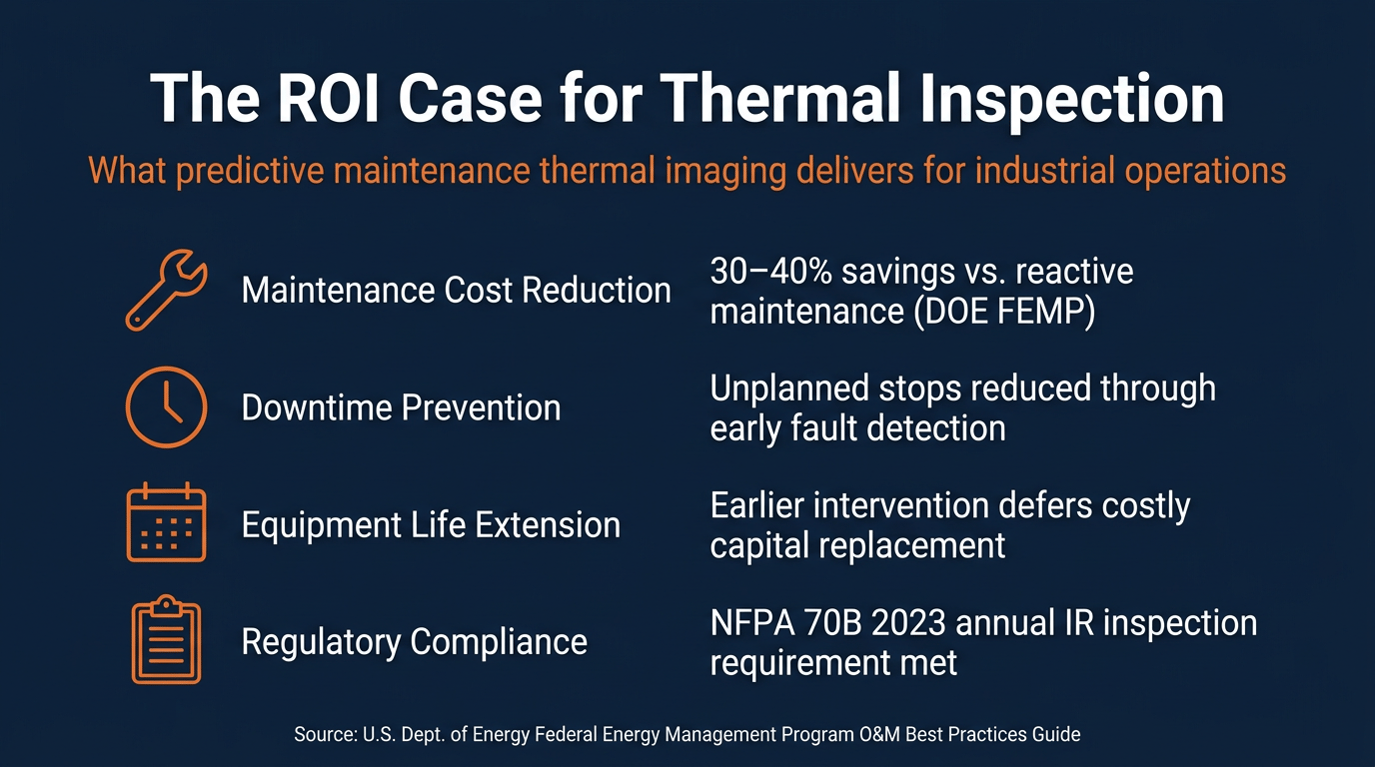
Those savings come from several directions at once. Reduced emergency repair costs are the most immediate benefit — when your platform catches a developing fault early, the customer replaces a bearing or tightens a connection during scheduled downtime rather than calling in emergency contractors after a line shutdown. Extended equipment life follows naturally from early intervention: addressing problems when they're minor prevents the compounding damage that shortens asset lifespan and drives capital replacement costs upward.
The most significant cost avoided, though, is unplanned downtime. Across manufacturing, energy, and process industries, production downtime is typically orders of magnitude more expensive than the maintenance intervention that could have prevented it. For OEMs, these hard outcomes translate into strong customer retention. When your platform demonstrably protects your customers' equipment and operational budgets, it becomes infrastructure they build processes around.
|
Benefit Category |
Typical Impact |
What It Means for End Users |
|
Maintenance Cost Reduction |
30-40% vs. reactive maintenance |
Lower operational expenses, better budget predictability |
|
Downtime Prevention |
Significant reduction in unplanned stops |
Maintained production output and revenue |
|
Equipment Life Extension |
Earlier fault detection extends useful life |
Deferred capital replacement investments |
|
Regulatory Compliance |
NFPA 70B annual IR requirement met |
Reduced liability and audit exposure |
Where Does a Thermal Inspection Camera Add the Most Value?
Thermal inspection delivers measurable returns across a wide range of industrial applications. Understanding where the technology performs best helps OEMs design monitoring platforms that address the highest-priority use cases for their customers.
The applications below represent the strongest adoption areas — and the clearest platform differentiation opportunities for OEM developers.
Electrical Systems and Distribution Equipment
Electrical infrastructure is where infrared inspection has the longest track record, and for good reason. Electrical connections develop increased resistance as they age, loosen, or corrode — and that resistance generates heat that a calibrated thermal inspection camera identifies long before a fault causes failure or a fire. Motor control centers, distribution panels, switchgear, bus connections, and transformer terminations are all prime candidates for continuous thermal monitoring.
The NFPA 70B update makes this application particularly timely for OEMs. Customers who currently rely on periodic manual infrared surveys have an obvious path to more reliable compliance: integrated fixed-mount monitoring that captures continuous data and generates alerts automatically. This is a strong product differentiation angle for platforms targeting industrial and utility customers.
Rotating Machinery
Motors, pumps, compressors, fans, and conveyor drives all generate characteristic thermal signatures during normal operation. When bearings begin to wear, friction increases and temperatures rise — often weeks before vibration analysis or other diagnostic methods would identify the same problem. A thermal inspection camera monitoring these assets continuously detects early-stage temperature changes that enable intervention during planned downtime windows rather than emergency shutdowns.
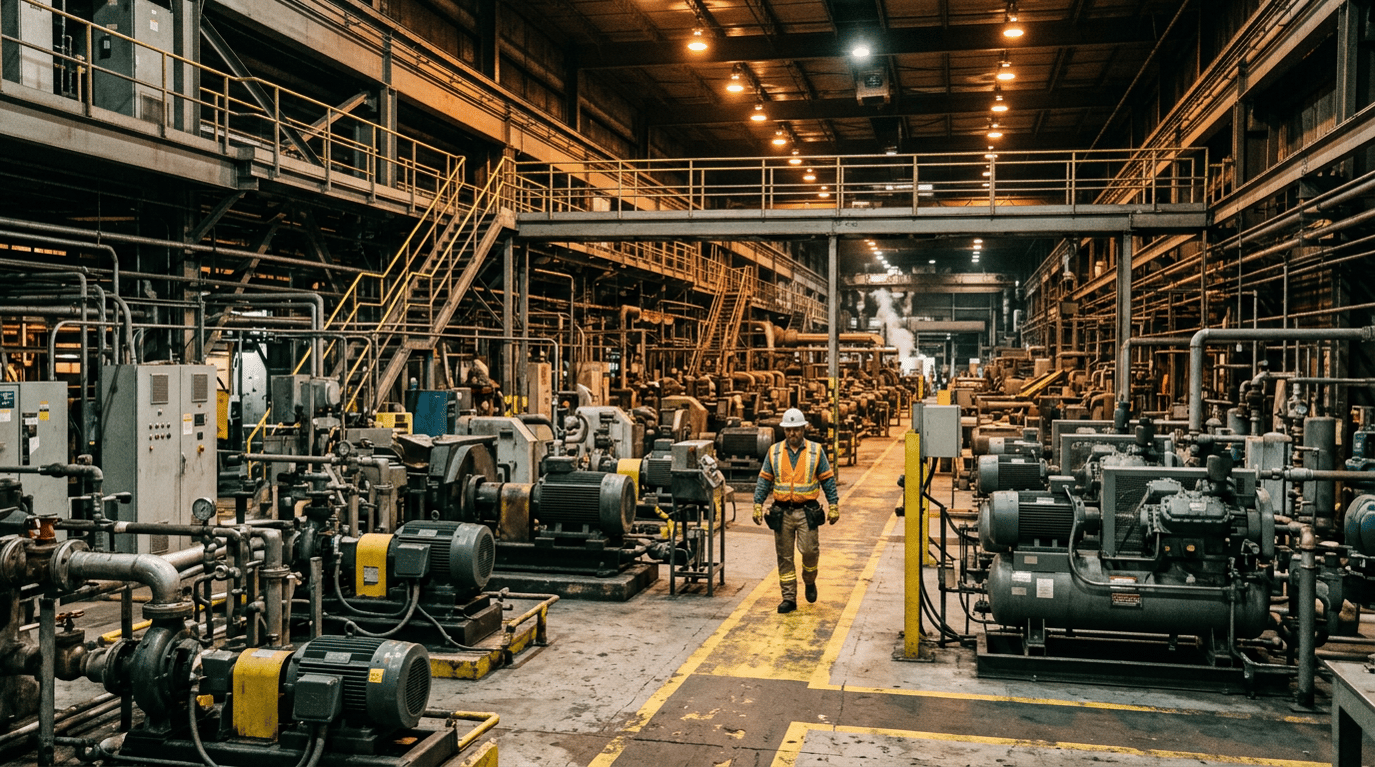
Coupling and belt drive systems respond similarly. Misalignment and wear create distinct heat patterns that appear in thermal data before they progress to catastrophic bearing or motor damage. For OEMs, these are the use cases that demonstrate clearest time-to-value for end customers evaluating a new platform.
Process Equipment and High-Temperature Applications
Manufacturing processes involving heating, cooling, or temperature-controlled reactions depend on equipment operating within defined ranges. Heat exchangers, furnaces, kilns, and reaction vessels benefit from continuous infrared inspection that identifies efficiency losses, developing blockages, or insulation degradation in real time. For process industries like chemical production, glass manufacturing, and metals, thermal monitoring supports both quality control and safety compliance simultaneously.
High-temperature applications across the 2-14 µm broadband infrared range allow OEMs to address a wide spectrum of industrial environments with a single platform architecture — from ambient-temperature electrical monitoring to furnace and kiln inspection within the same facility.
Infrastructure Monitoring
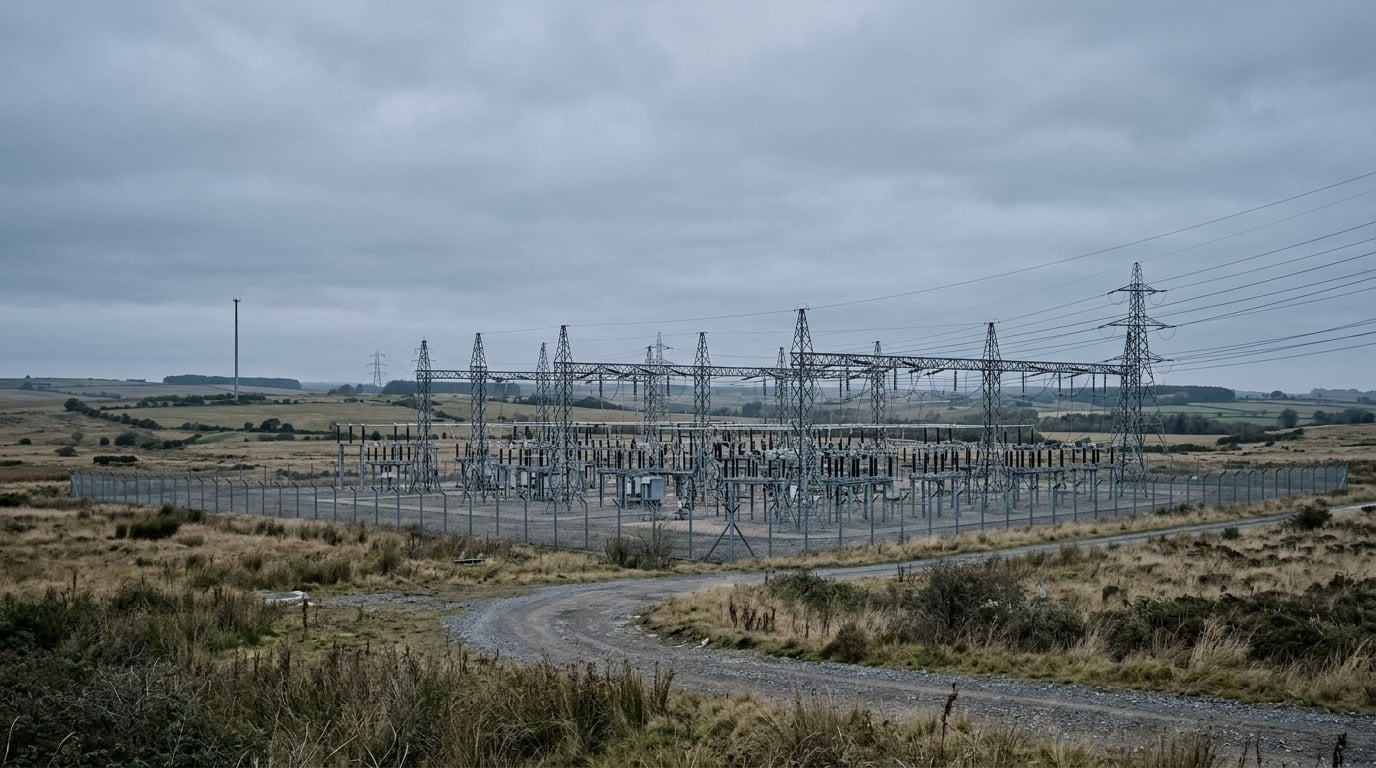
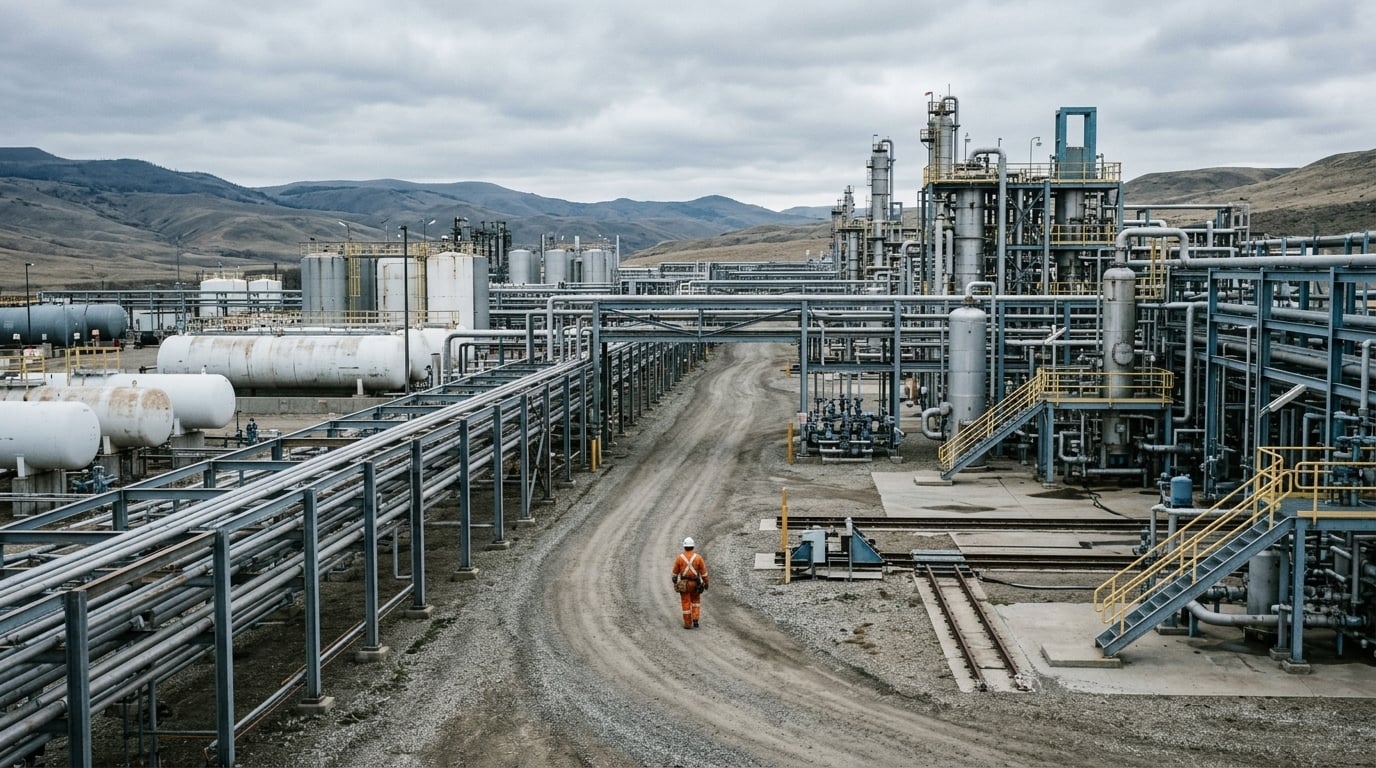
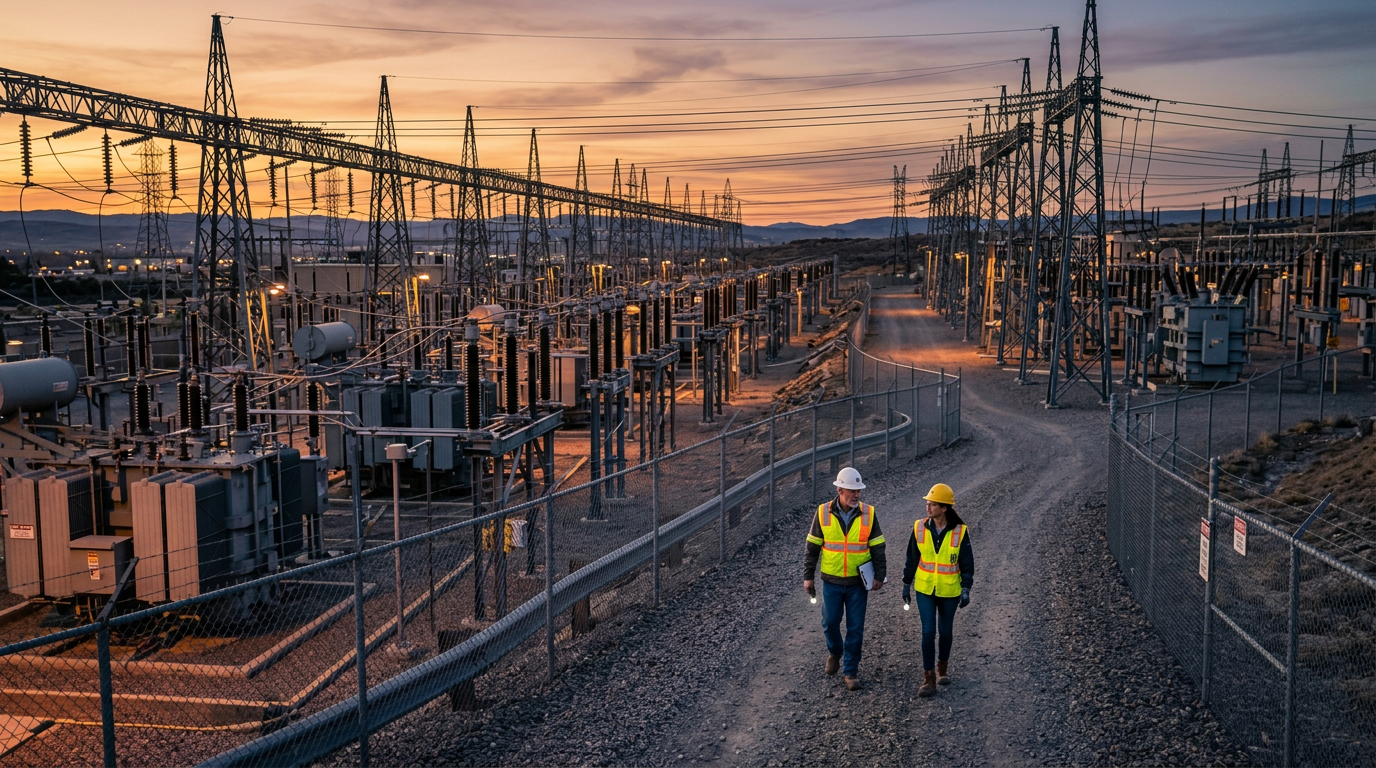
One of the fastest-growing application segments for industrial thermal inspection is critical infrastructure — specifically utilities, substations, and transmission infrastructure. Electrical utilities deploy fixed-mount thermal inspection cameras on substations and outdoor switchgear to monitor transformers, bus connections, and fusing equipment continuously. These installations operate around the clock in outdoor environments, detecting developing hot spots that indicate failing connections, overloaded circuits, or corrosion-related degradation before they cause outages.
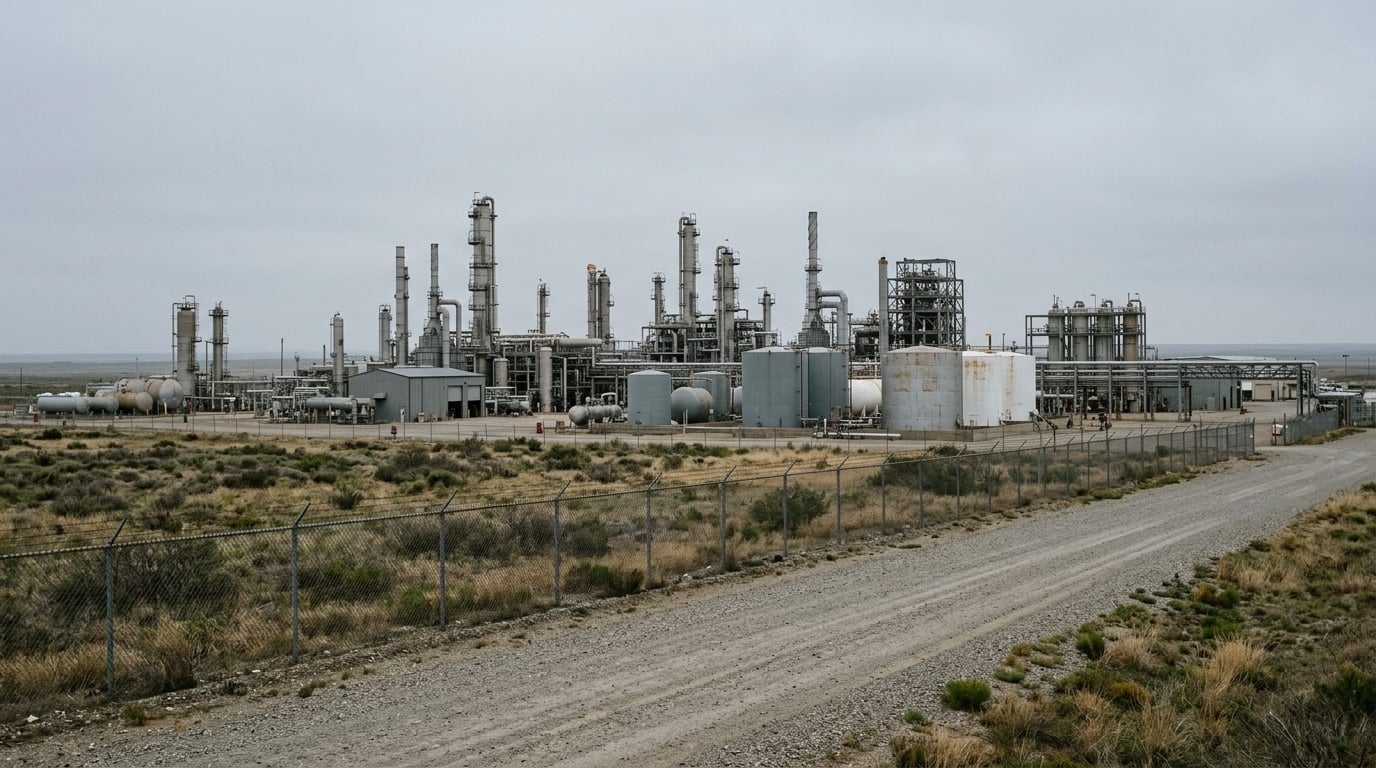
Pipeline monitoring represents another strong growth area, particularly for natural gas and chemical facilities where optical gas imaging and thermal inspection are frequently deployed together on the same platform. Energy efficiency monitoring — identifying insulation failures, HVAC inefficiencies, and facility envelope air leakage — rounds out the infrastructure segment with a compelling energy cost reduction story.
Key Capabilities to Build Into an Industrial Thermal Monitoring Platform
OEMs designing industrial monitoring systems around thermal inspection technology should think carefully about how platform-level capabilities compound the value of the underlying imaging hardware. End customers consistently prioritize systems that do more than capture temperature — they want platforms that turn data into decisions.
Here are the core capabilities that distinguish high-value industrial monitoring platforms from basic thermal camera deployments:
- Continuous, automated alerting: Threshold-based alerts that notify maintenance teams when temperature anomalies develop, enabling rapid response without requiring constant manual monitoring
- Baseline documentation and trending: Capturing temperature profiles over time and comparing current signatures against established baselines — this is what separates predictive capability from reactive inspection
- CMMS integration: Connection to computerized maintenance management systems so thermal alerts automatically generate work orders, creating auditable response trails
- Non-contact, non-disruptive operation: Monitoring that runs continuously without affecting production schedules or requiring equipment shutdowns for inspection
- Multi-asset coverage: Platform architectures that monitor multiple asset types — electrical, mechanical, process — through a unified data layer, giving maintenance teams a complete operational picture
Research on automated infrared thermography for industrial maintenance confirms that systems combining continuous monitoring with automated anomaly detection consistently outperform periodic manual inspection approaches for both detection accuracy and maintenance cost outcomes.
How Does Thermal Inspection Integrate with Predictive Maintenance Programs?
Thermal inspection data is most powerful when it feeds a broader predictive maintenance strategy rather than functioning as a standalone tool. For OEMs, this means designing systems with data interoperability in mind — outputs that connect cleanly to enterprise asset management systems, analytics platforms, and maintenance scheduling workflows.
Building Effective Baseline Programs
Before any anomaly can be identified, a thermal monitoring system needs reference data: what does this motor bearing look like at normal operating temperature under typical load conditions? Effective platform designs capture baseline thermal data at commissioning and update those references as equipment ages and operational conditions evolve. This baseline infrastructure is what allows the analytics layer to distinguish meaningful anomalies from normal operational variation.
OEMs who build baseline documentation capability into their platforms — with timestamps, load conditions, and environmental metadata attached to each capture — give their end customers significantly more actionable maintenance intelligence than those offering raw temperature alerts alone.
Pairing Thermal Inspection with Complementary Sensing
Thermal imaging is a powerful standalone tool, and it becomes more powerful still when paired with complementary condition monitoring technologies. Vibration analysis, acoustic emission monitoring, and oil sampling each reveal different failure modes at different stages of development. Thermal inspection excels at electrical faults and early-stage bearing degradation. Vibration analysis adds diagnostic depth for rotating machinery. Acoustic monitoring contributes to leak detection and structural assessment.
OEMs designing multi-sensor industrial monitoring platforms have a strong architectural story to tell: a thermal inspection camera as the primary non-contact monitoring layer, augmented by additional sensing modalities for comprehensive asset health coverage.
What Should OEMs Look for in a Thermal Imaging Component Partner?
Selecting a thermal imaging supplier for an industrial monitoring platform isn't purely a hardware decision. The capabilities of your component partner shape your development timeline, your integration flexibility, and your long-term platform reliability. Here are the criteria that separate suppliers who accelerate your program from those who complicate it.
|
Evaluation Criteria |
Why It Matters for OEMs |
|
Vertical integration |
Consistent performance, single-source accountability, supply chain control |
|
Custom engineering capability |
Application-specific design without compromising timelines |
|
Materials innovation |
Chalcogenide glass alternatives for stable, predictable production supply |
|
Interface flexibility |
GigE Vision, USB3 and custom options to match existing platform architectures |
|
Industrial and defense heritage |
Application knowledge that reduces program risk and accelerates integration |
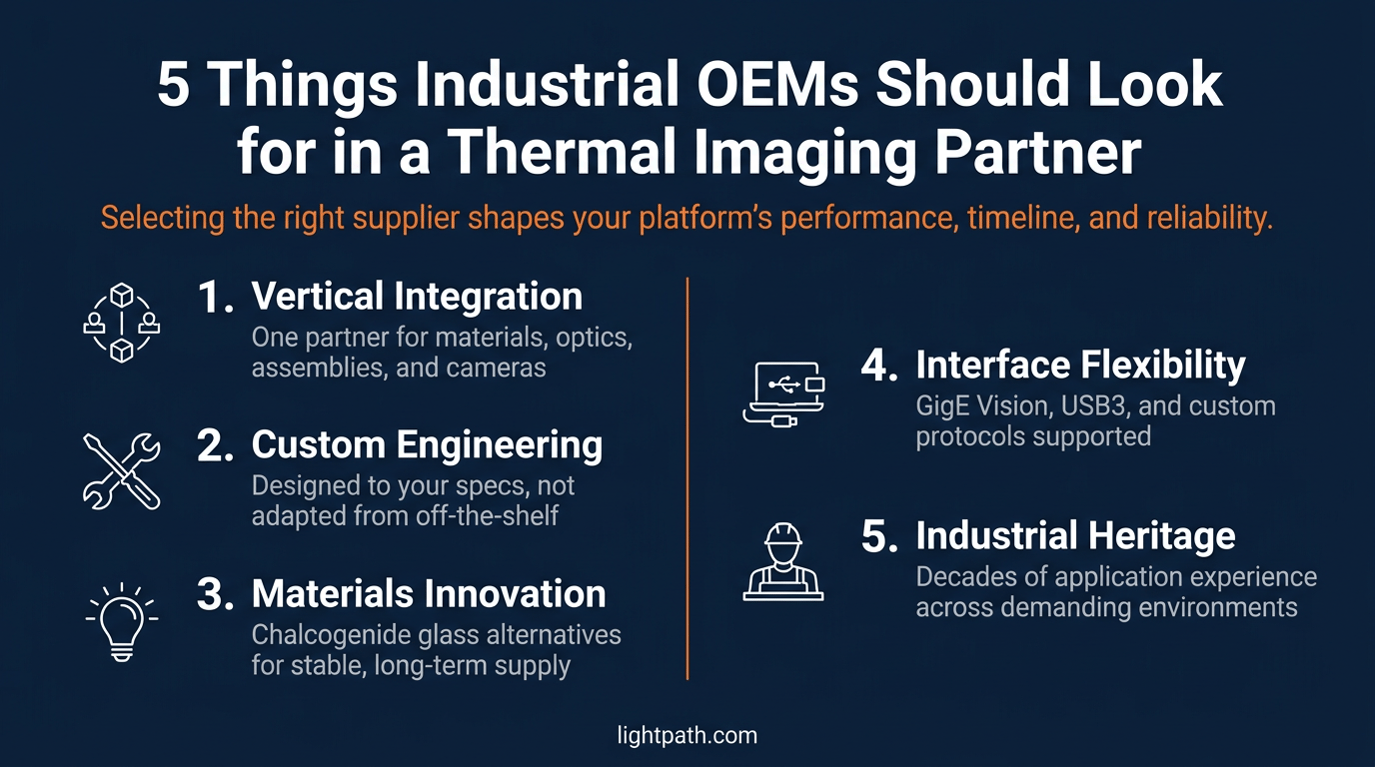
The most important of these is often underestimated: vertical integration. Suppliers who design and manufacture their own optical materials, lenses, assemblies, and camera systems can optimize performance at every level of the stack. That means fewer integration surprises, more consistent performance across production volumes, and a single point of accountability when challenges arise. For platforms targeting government, utility, or defense-adjacent markets, North American manufacturing and supply chain transparency become additional differentiators that customers increasingly require.
Frequently Asked Questions
What is the difference between a thermal inspection camera and a standard infrared thermometer? A standard infrared thermometer measures temperature at a single point. A thermal inspection camera captures the full thermal profile of an equipment surface or system simultaneously, enabling maintenance teams to see temperature distributions across entire assets, identify anomalous zones, and track changes over time. For industrial monitoring platforms, full-field imaging is essential.
Which industrial applications benefit most from continuous thermal monitoring? Electrical distribution equipment, rotating machinery (motors, pumps, bearings), process equipment (furnaces, heat exchangers, kilns), and utility infrastructure (substations, transformers, pipelines) represent the highest-value applications. Any asset where early detection of temperature anomalies prevents costly failures or safety incidents is a strong candidate.
How does NFPA 70B 2023 affect OEM platform design? The 2023 update mandates annual infrared thermography inspections for all electrical equipment in industrial and commercial facilities, with semi-annual requirements for higher-risk installations. For OEMs, this creates regulatory demand for platforms that enable customers to meet compliance requirements continuously — making automated alerting, data logging, and documentation trail features critical platform components.
What integration standards matter most for industrial thermal inspection systems? GigE Vision and USB3 are the dominant modern interface standards for industrial thermal cameras. CMMS integration capability — enabling thermal alerts to automatically trigger work orders — is increasingly a baseline requirement for facilities with mature maintenance management programs.
Build Your Platform on a Partner That's Been Here Before
The case for thermal inspection camera integration into industrial monitoring systems has never been stronger. Growing regulatory requirements, well-documented ROI, and expanding application environments across electrical infrastructure, rotating machinery, process equipment, and critical utilities are all pulling demand in the same direction. What separates winning OEM platforms from commodity products is the quality of the imaging technology at the core and the engineering expertise behind it.
LightPath Technologies brings four decades of optical and thermal imaging expertise to partnerships with OEMs and system integrators building industrial monitoring solutions. From proprietary optical materials and precision lens assemblies to fully integrated cooled and uncooled thermal cameras, our vertically integrated manufacturing approach means every component is optimized to work together. We work alongside your engineering team from initial program requirements through deployment — because the best thermal monitoring platforms are built collaboratively. Connect with our team to discuss how our capabilities align with your development goals.