
The thermal imaging market is accelerating, and LWIR cameras are leading the charge for OEMs building defense, aerospace, and industrial platforms.
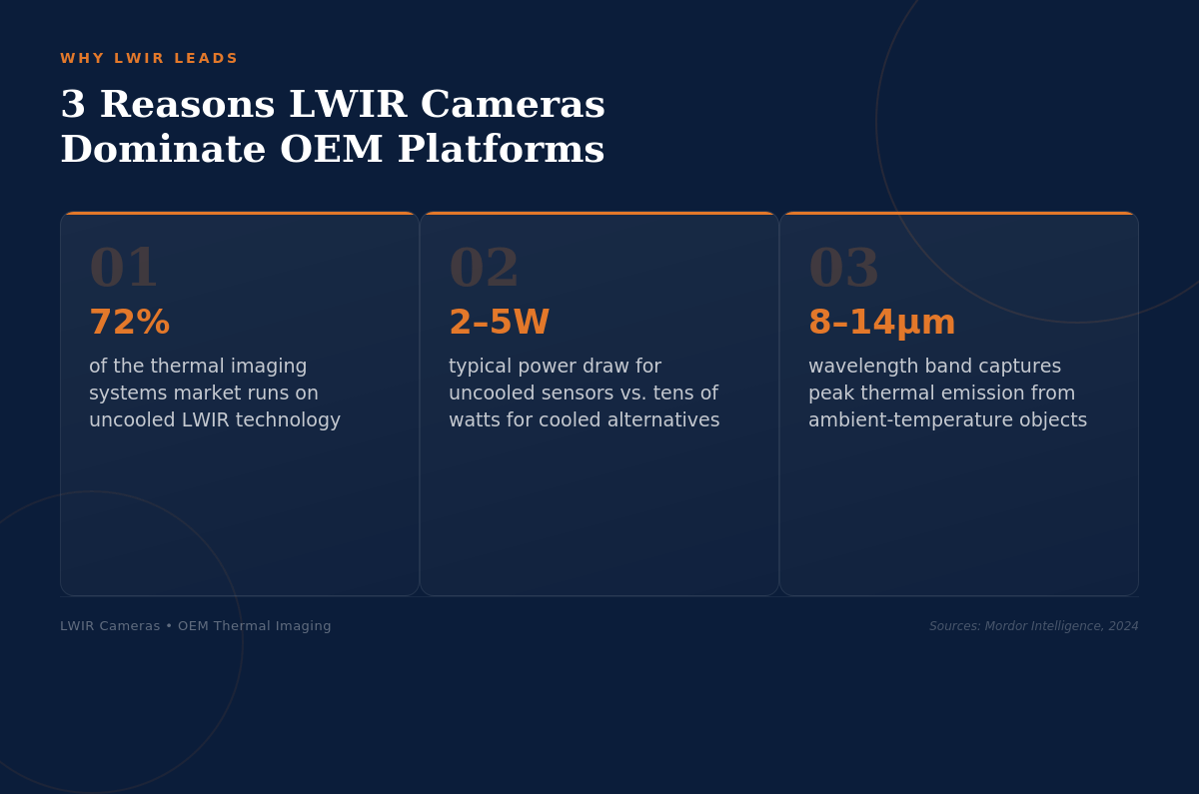
- Uncooled long wave infrared camera technology accounts for over 72% of the thermal imaging systems market, making it the most widely deployed infrared solution across industries.
- LWIR cameras operating in the infrared 8–14µm band detect thermal radiation from ambient-temperature objects without cooling systems, reducing size, weight, power, and cost for system integrators.
- Germanium supply chain disruptions are driving OEMs toward alternative optical materials, reshaping how organizations source and build their thermal imaging platforms.
- Selecting the right manufacturing partner matters as much as selecting the right wavelength, especially for programs that demand custom engineering and long-term supply stability.
If your next platform requires reliable thermal detection, understanding the business case for LWIR is the first step toward a competitive advantage.
The global thermal camera market reached $5.13 billion in 2024 and shows no signs of slowing down. For OEMs and system integrators developing the next generation of surveillance, monitoring, and detection platforms, that growth translates directly into opportunity. But capitalizing on it means making smart decisions about which thermal imaging technology anchors your system architecture.
Long wave infrared technology has become the default choice for the majority of these platforms, and for good reason. They deliver consistent performance across the widest range of real-world conditions, integrate cleanly into compact system designs, and offer a cost structure that makes volume production viable. Whether you are building ground-based surveillance systems, industrial monitoring equipment, or airborne sensor payloads, LWIR sits at the center of most thermal imaging conversations happening in engineering departments today.
This guide breaks down why that is the case, how LWIR stacks up against other infrared wavelengths, and what OEMs should prioritize when choosing a manufacturing partner for their next program.
What Makes LWIR Cameras the Standard for Thermal Imaging?
Long wave infrared technology operates in the 8–14µm wavelength band, a region of the electromagnetic spectrum where everyday objects, people, vehicles, and equipment emit peak thermal radiation at ambient temperatures. That characteristic makes these sensors uniquely effective at detecting thermal signatures without any external illumination or active signal emission.
The practical result is a passive sensor that works identically at midnight and midday. Your platform does not broadcast its position, does not depend on lighting infrastructure, and does not degrade when clouds roll in or the sun sets. For defense applications, that passivity is a tactical advantage. For industrial deployments, it means around-the-clock monitoring without supplemental equipment.
How Uncooled Detectors Changed the Game
The real inflection point for LWIR adoption came with the maturation of uncooled microbolometer detector technology. Earlier generations of infrared cameras required cryogenic cooling systems to achieve usable sensitivity levels. Those coolers added weight, consumed significant power, demanded regular maintenance, and drove up unit costs considerably.
Modern uncooled detector technology eliminated those constraints. Today's microbolometer arrays deliver thermal sensitivity in the 20–50 millikelvin range, which is more than sufficient for personnel detection beyond 1,000 meters, equipment monitoring, gas leak identification, and dozens of other operational scenarios. The removal of the cooling requirement opened thermal imaging to applications and price points that simply were not feasible a decade ago.
For OEMs, this means you can design lighter platforms, extend mission endurance through lower power consumption, and offer thermal capabilities at price points your customers can actually approve through procurement.
How Do LWIR Cameras Compare Across Infrared Wavelengths?
One of the first decisions any system architect faces is wavelength selection. Each infrared band serves different operational profiles, and understanding those differences prevents costly mismatches between your system design and your end user's actual operating environment.
The table below provides a practical comparison across the three primary infrared imaging bands relevant to OEM platform development.
|
Feature |
LWIR (8–14µm) |
MWIR (3–5µm) |
SWIR (0.9–1.7µm) |
|
Primary Detection |
Ambient-temperature objects |
High-temperature targets, long-range |
Reflected light imaging |
|
Cooling Required |
Typically uncooled |
Typically cooled (Stirling) |
Uncooled (InGaAs sensors) |
|
Relative System Cost |
Lower |
Higher |
Moderate |
|
SWaP Impact |
Compact, low power |
Larger, higher power |
Compact |
|
Atmospheric Performance |
Strong through smoke, dust, particulates |
Strong in humidity, fine aerosols |
Limited by atmospheric absorption |
|
Best Fit Applications |
Surveillance, predictive maintenance, perimeter security, gas detection |
Long-range targeting, missile guidance, high-temp process monitoring |
Laser gating, semiconductor inspection, covert illumination |
|
Typical Sensitivity |
20–50 mK (uncooled) |
<20 mK (cooled) |
N/A (reflective imaging) |
For the majority of defense surveillance, industrial monitoring, and security applications, LWIR imaging systems offer the best balance of performance, integration simplicity, and total cost of ownership. MWIR becomes the right answer when your application demands maximum detection range or involves high-temperature targets where the 3–5µm band provides stronger signal contrast. SWIR fills a different niche entirely, leveraging reflected infrared rather than emitted thermal radiation.
The key takeaway for program managers: do not over-specify. Many programs default to cooled MWIR systems when an uncooled long wave infrared camera would deliver equivalent operational results at a fraction of the cost and complexity.
What Are the Top Applications Driving LWIR Camera Adoption?
These thermal sensors have moved well beyond their military origins into a broad range of sectors. The following applications represent the highest-growth areas for OEMs building thermal imaging solutions into their platforms.
Defense and Aerospace
Military platforms remain the single largest market driver. Counter-unmanned aircraft systems (CUAS) rely on thermal detection to identify and track small drones that evade radar. Vehicle-mounted surveillance and targeting systems use LWIR for situational awareness in day and night operations. Shipboard electro-optical/infrared (EO/IR) systems integrate thermal sensors for harbor monitoring, threat detection, and navigation in low-visibility maritime conditions.
Airborne ISR (intelligence, surveillance, and reconnaissance) payloads increasingly rely on uncooled LWIR sensors for wide-area persistent monitoring, where lower SWaP requirements translate directly into longer flight times and greater coverage.
Industrial Monitoring and Predictive Maintenance
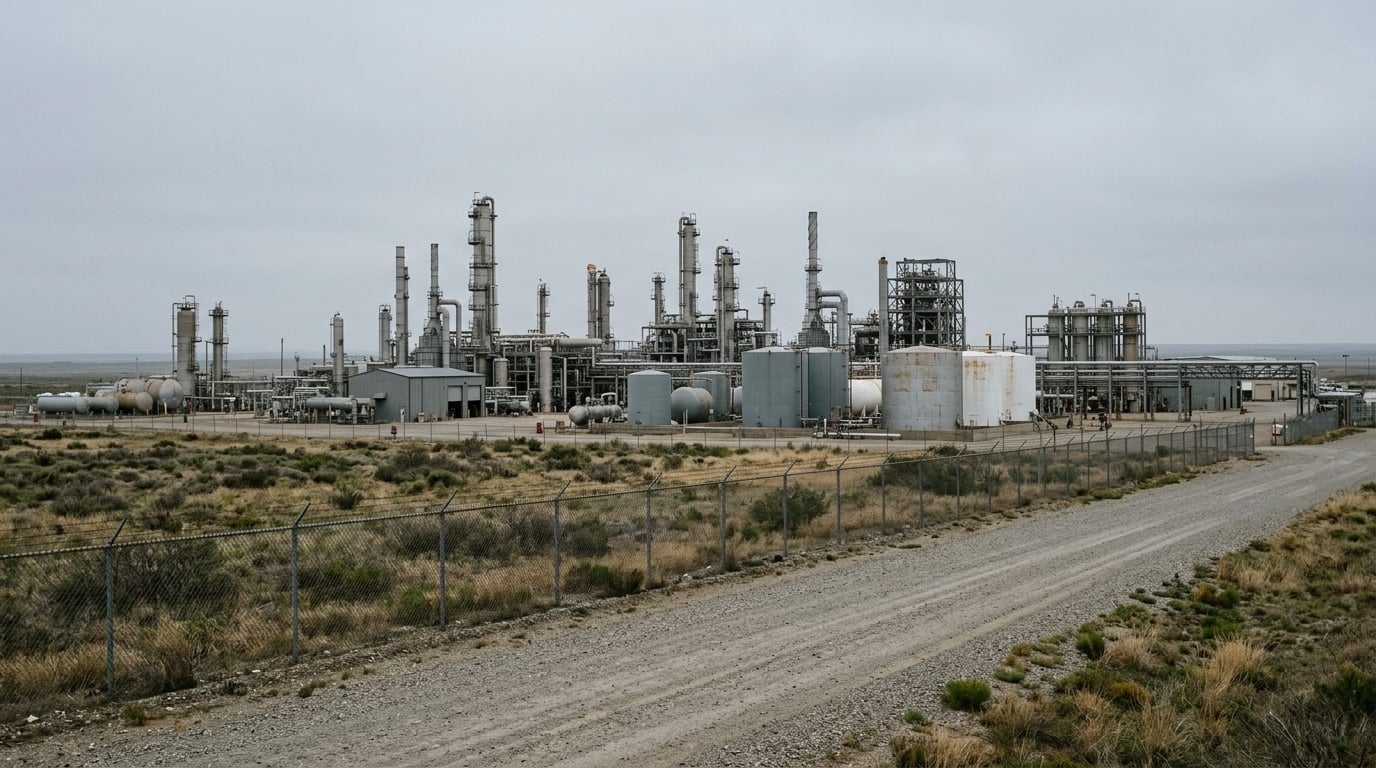
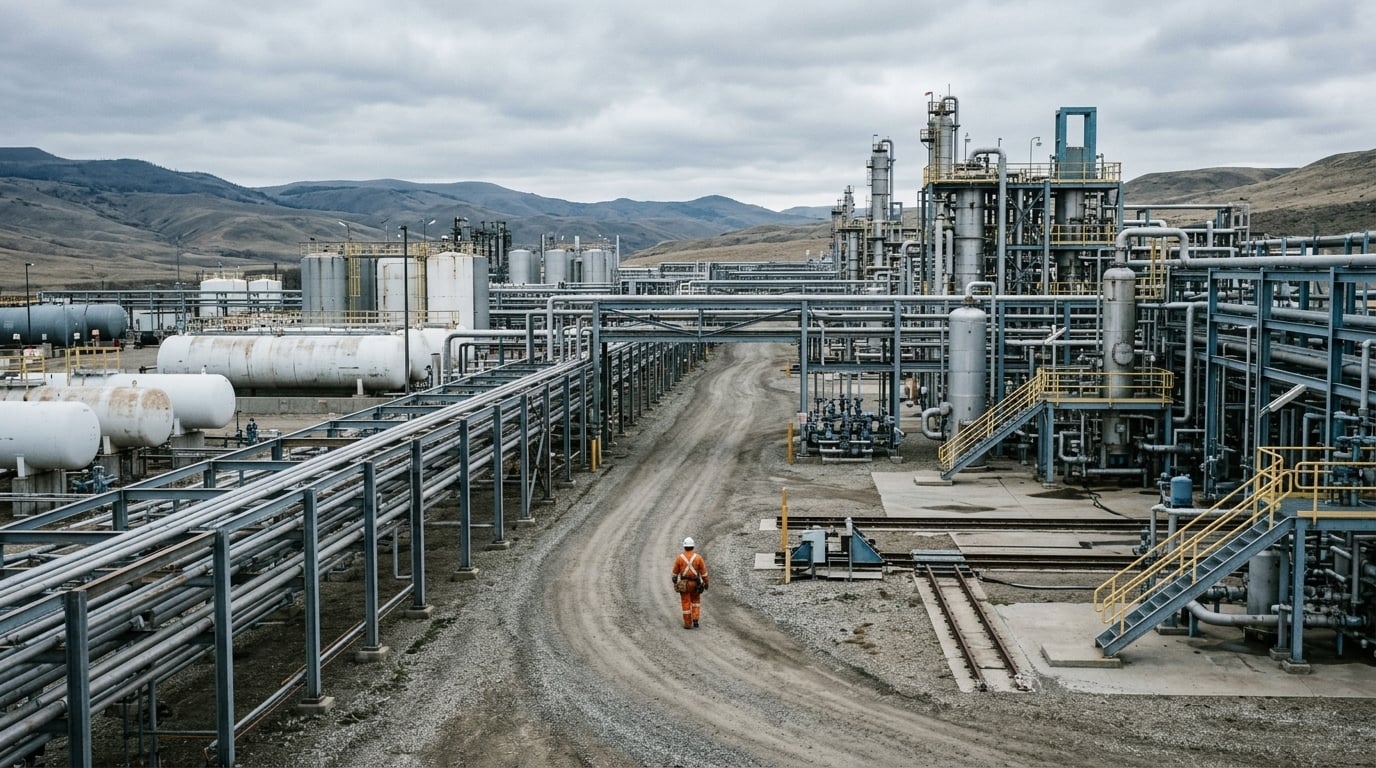
Manufacturing facilities, power utilities, and process plants deploy thermal imaging for continuous equipment monitoring. Failing bearings, overloaded electrical connections, and degrading insulation all generate temperature anomalies that thermal imaging detects well before a visible failure occurs. The operational benefit is straightforward: fewer unplanned shutdowns, lower maintenance costs, and extended equipment life.

Optical gas imaging (OGI) represents another high-growth industrial application. Calibrated LWIR imaging systems detect methane, sulfur hexafluoride, and other greenhouse gases by visualizing their absorption signatures in the infrared 8–14µm band. Regulatory pressure around emissions monitoring continues to expand, pushing more OEMs to integrate OGI capabilities into their platforms.
Border Security and Critical Infrastructure
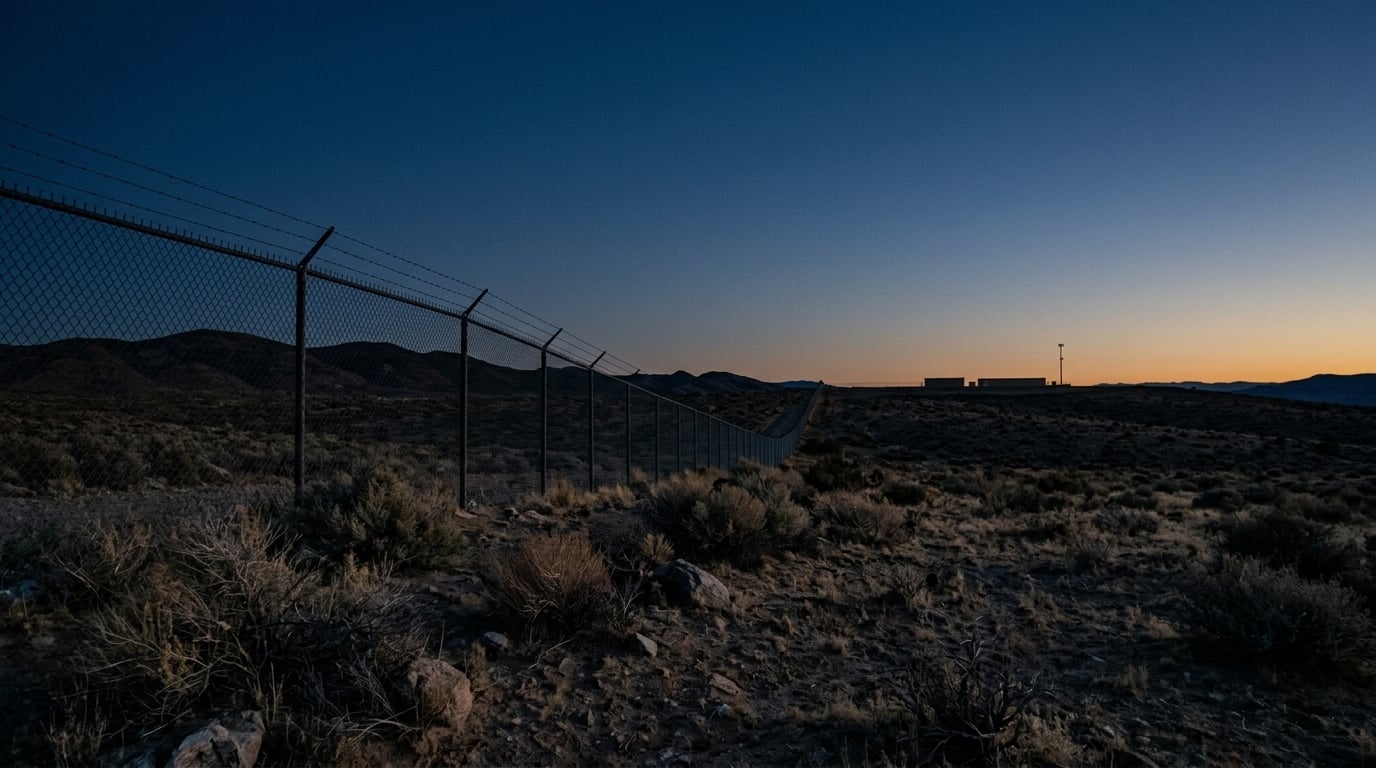
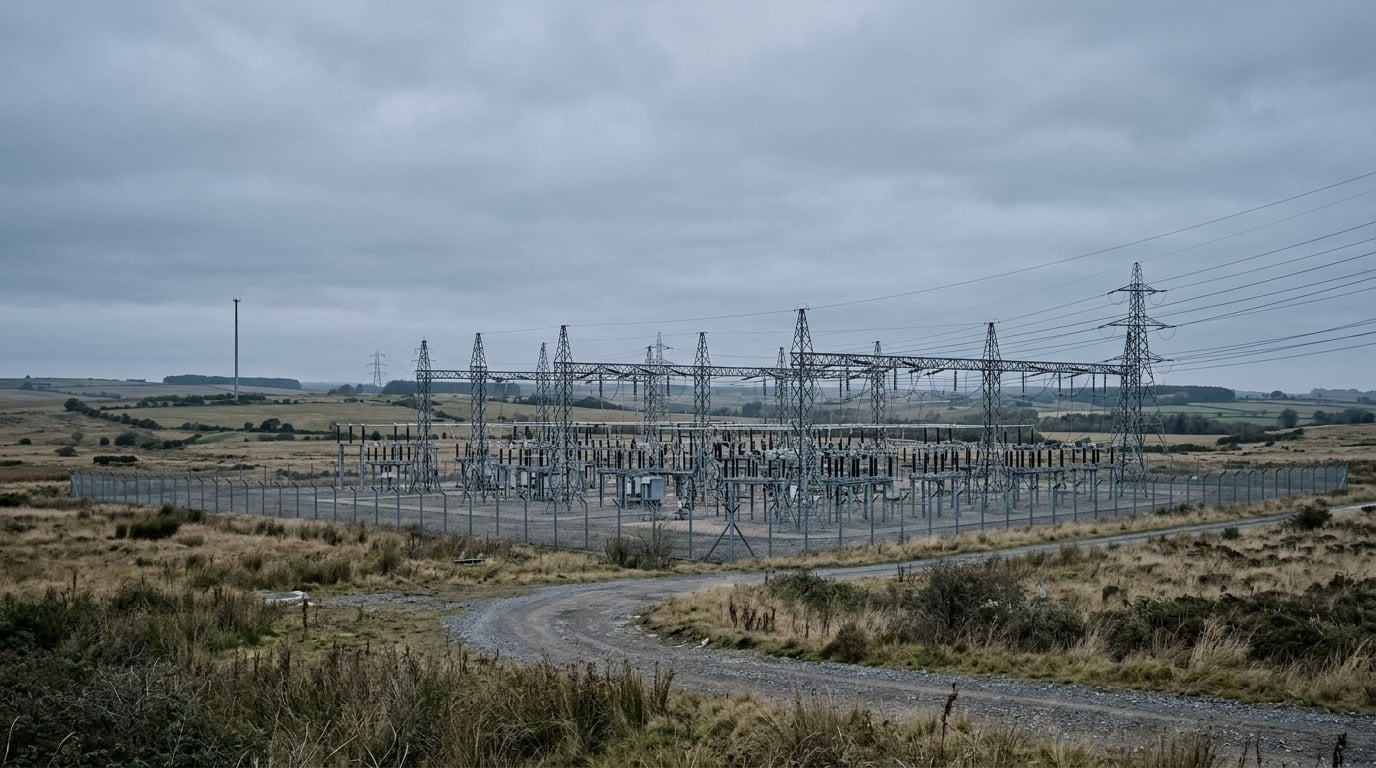
Thermal perimeter systems provide 24/7 detection regardless of lighting or weather conditions. These systems reduce false alarm rates compared to motion-based alternatives while extending detection ranges for personnel and vehicles. Border surveillance installations, port facilities, and utility substations all represent active procurement opportunities for system integrators offering reliable thermal platforms.
Why Are OEMs Choosing Uncooled LWIR Imaging Systems?
Beyond the technical performance, the business case for uncooled LWIR is compelling. Program managers and procurement leads care about total cost of ownership, production scalability, and field maintainability. Uncooled LWIR technology delivers advantages across all three.
Uncooled thermal sensors typically consume between 2 and 5 watts, compared to tens of watts for cooled MWIR alternatives. That power difference cascades through your entire system design, affecting battery sizing, thermal management, and operational endurance. For drone payloads and man-portable devices, these savings are program-defining.
The absence of a mechanical cooler also eliminates the single highest-maintenance component in a cooled infrared system. Stirling coolers have finite lifespans and require periodic replacement, adding through-life cost and logistical complexity that many programs underestimate during initial system design. Uncooled sensors, by contrast, operate continuously without scheduled maintenance interventions.
Production scalability is another factor. Uncooled microbolometer manufacturing has reached a level of maturity that supports high-volume production with consistent quality. For OEMs planning programs that move from prototype to full-rate production, this manufacturing readiness reduces schedule risk and cost uncertainty.
How Is the Germanium Supply Chain Reshaping LWIR Camera Development?
Every long wave infrared camera needs optics that transmit infrared radiation efficiently, and for decades, germanium has been the default lens material. That dependence has become a strategic vulnerability.
China produces approximately 60% of the world's refined germanium. In December 2024, China banned all exports of germanium to the United States, escalating restrictions that had already tightened supply since August 2023. A U.S. International Trade Commission analysis underscored the severity of U.S. import reliance, noting that over 50% of domestic germanium consumption depends on foreign sources. Germanium metal prices rose from $1,550 per kilogram in January 2024 to $2,950 per kilogram by September 2024, and continued climbing through 2025.
For OEMs building thermal imaging platforms, this is not an abstract geopolitical concern. It directly affects your bill of materials, your lead times, and your ability to commit to production schedules. Programs with germanium-dependent optical designs face real risk of cost overruns and delivery delays.
The industry response has moved in two directions. First, government investment in domestic germanium processing is increasing, with the U.S. Department of Defense awarding funding to expand germanium wafer manufacturing capacity. Second, alternative optical materials are gaining traction. Chalcogenide glass formulations now offer infrared transmission properties competitive with germanium while eliminating the single-source supply risk.
For program managers evaluating LWIR camera partners, the question is no longer just about optical performance. It is about whether your supplier has a credible material strategy that protects your program from supply disruptions over a multi-year production horizon.
What Should Program Managers Consider When Selecting an LWIR Camera Partner?
Choosing the right manufacturing partner is arguably more important than choosing the right sensor specification. The thermal imaging components inside your platform will define its performance ceiling, and the partner behind those components will determine whether you hit your development timeline and production targets.
Here are the criteria that separate strong LWIR camera partners from adequate ones.
Vertical Integration
Manufacturers who control the full stack, from raw optical materials through lens fabrication, coating, assembly, and final camera integration, resolve issues faster and deliver more consistent quality. When your optics supplier is also your camera assembler, you eliminate finger-pointing between vendors and reduce the coordination burden on your engineering team.
Custom Engineering Support
Off-the-shelf modules work for some applications, but mission-critical platforms typically require optimization. Look for partners who assign dedicated engineering resources to your program and collaborate from initial requirements through qualification testing, rather than handing you a datasheet and a purchase order.
Supply Chain Resilience
Given the germanium situation, ask pointed questions about material sourcing. Partners with proprietary alternative materials or diversified supply strategies offer meaningfully lower program risk than those still entirely dependent on traditional germanium supply chains.
Production Readiness
A partner who can build five prototypes is not necessarily a partner who can deliver five hundred production units on schedule. Evaluate manufacturing capacity, quality systems, and track record on volume programs before committing.
|
Selection Criteria |
What to Look For |
Why It Matters |
|
Vertical Integration |
Materials, optics, coatings, cameras from one source |
Faster issue resolution, consistent quality |
|
Engineering Support |
Dedicated team from design through qualification |
Optimized performance for your specific platform |
|
Material Strategy |
Germanium alternatives or diversified sourcing |
Protection against supply disruptions |
|
Production Capacity |
Demonstrated volume manufacturing with QC systems |
Confidence in delivery timelines |
|
Domain Expertise |
Proven track record in your target market (defense, industrial) |
Fewer integration surprises, faster development |
Frequently Asked Questions
What is the difference between cooled and uncooled LWIR cameras?
Cooled systems use cryogenic cooling to enhance detector sensitivity, achieving performance below 20 mK. They are typically used in specialized long-range or scientific applications. Uncooled systems use microbolometer detectors that operate at ambient temperature, offering 30–50 mK sensitivity with significantly lower size, weight, power, and cost. For the majority of surveillance, monitoring, and security applications, uncooled technology delivers the performance OEMs need without the maintenance and complexity of cooling systems.
How do LWIR cameras perform in adverse weather conditions?
Thermal sensors operating in the infrared 8–14µm band perform well through smoke, dust, light fog, and complete darkness because they detect emitted thermal radiation rather than reflected light. Heavy rain and dense fog reduce detection range, but thermal signatures remain visible in conditions where visible-light cameras become effectively useless. This all-weather capability is a primary reason defense and industrial OEMs specify LWIR imaging systems for continuous-monitoring platforms.
Why is germanium supply a concern for LWIR camera programs?
Germanium has been the traditional lens material for LWIR optics due to its excellent infrared transmission. However, China controls roughly 60% of global refined production and has imposed export restrictions on shipments to the United States. This has driven significant price increases and created supply uncertainty for OEMs planning multi-year production programs. Alternative materials like chalcogenide glass are emerging as viable replacements that reduce single-source dependency while maintaining the optical performance these systems require.
Build Your Next Platform on Proven LWIR Performance
The thermal imaging landscape is evolving rapidly, with market growth, shifting supply chains, and advancing detector technology all creating new opportunities for OEMs who move decisively. LWIR cameras remain the foundation of that opportunity for the vast majority of defense, aerospace, and industrial platforms.
The organizations winning in this space share a common approach: they partner with manufacturers who bring deep infrared imaging expertise, vertically integrated manufacturing, and material innovation to the table. LightPath Technologies delivers exactly that combination, with four decades of optical and thermal imaging experience, proprietary Black Diamond chalcogenide glass technology, and a collaborative engineering approach built around your program's specific requirements. Connect with our team to discuss how the right LWIR solution can give your next platform the edge it needs.