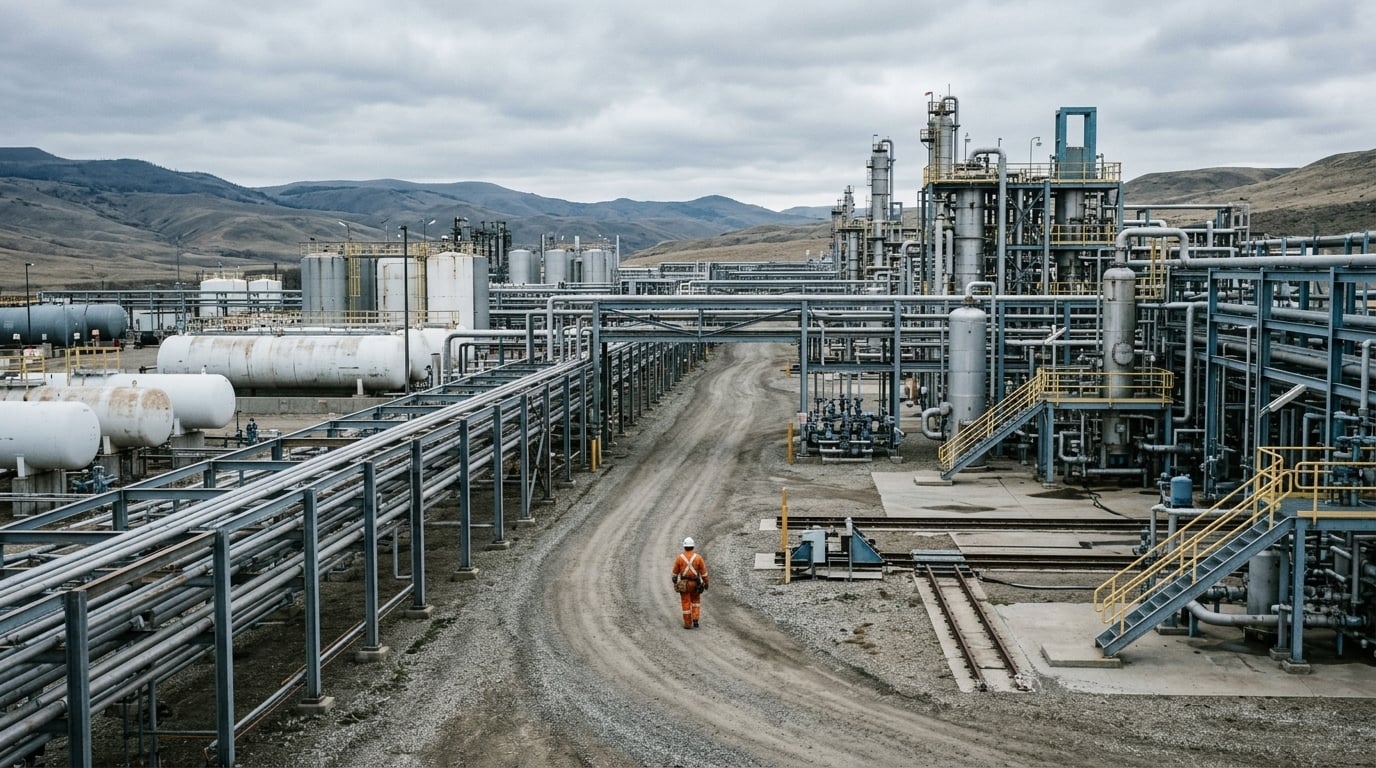

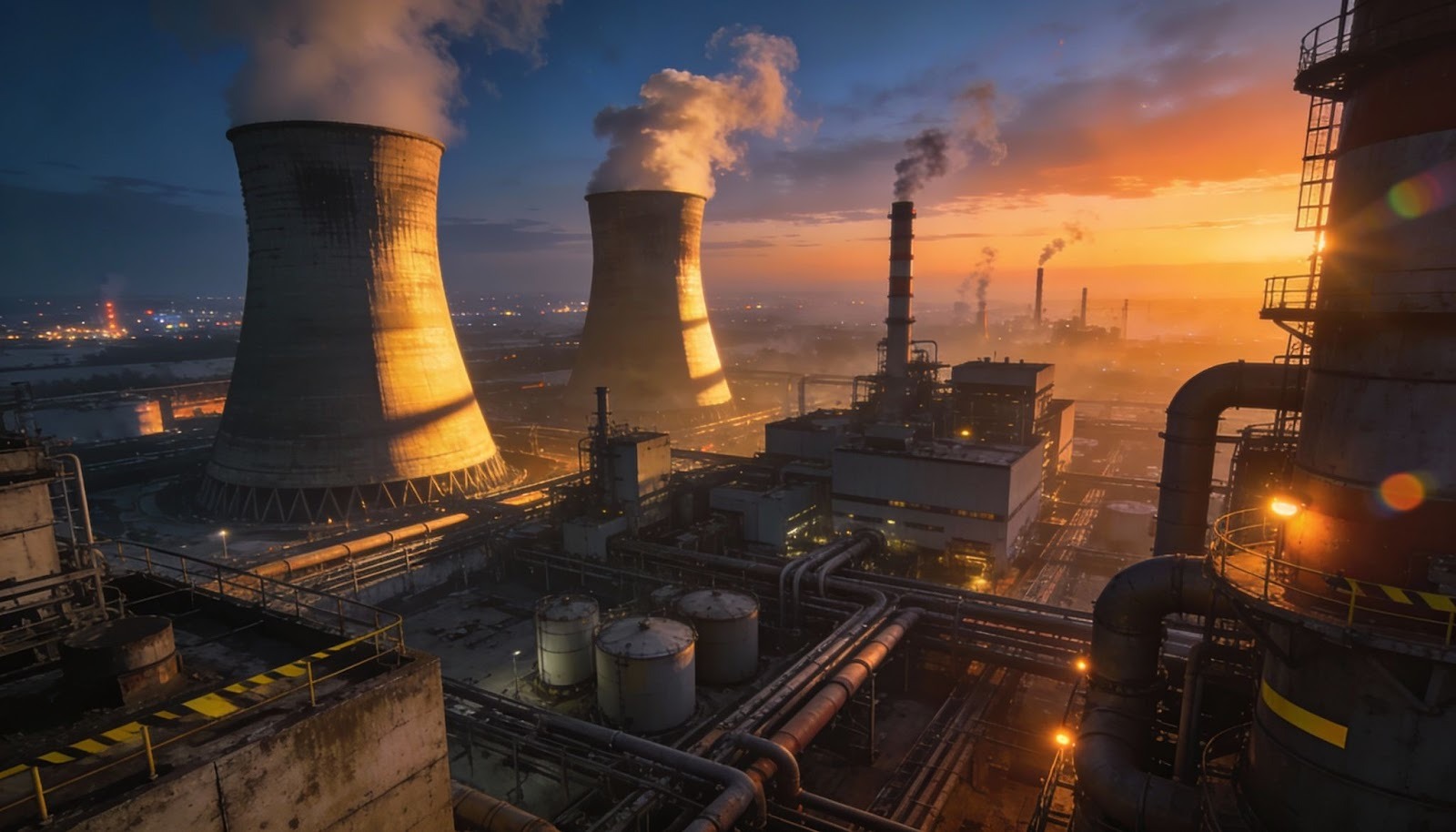
Key Takeaways
LWIR thermal camera systems have become essential infrastructure for organizations requiring reliable detection in challenging environments.
- Long wave infrared technology operates in the 8-14 µm wavelength range, detecting heat signatures from ambient-temperature objects without external lighting or cooling systems
- Uncooled LWIR systems offer significant cost, weight, and maintenance advantages while delivering performance that meets most industrial monitoring and defense surveillance requirements
- Industrial applications span predictive maintenance, electrical inspection, and process monitoring, while defense deployments include perimeter security, counter-drone systems, and situational awareness platforms
- Selecting the right solution requires evaluating integration needs, environmental conditions, and partnering with manufacturers who understand custom engineering for demanding applications
The global thermal imaging camera market reached $4.12 billion in 2024, with surveillance applications accounting for nearly 29% of market share as defense and industrial sectors continue driving adoption. For engineers, program managers, and procurement teams evaluating thermal imaging solutions, understanding LWIR thermal camera technology has moved from optional to essential.
Whether you're specifying components for a next-generation surveillance platform or integrating monitoring systems into industrial facilities, long wave infrared imaging delivers capabilities that visible-light cameras simply cannot match. The technology sees what traditional cameras miss, operating effectively in complete darkness, through smoke and fog, and across environmental conditions that would blind conventional systems.
This guide breaks down what LWIR technology actually does, where it excels, and what OEMs and system integrators need to consider when selecting solutions for demanding applications.
What Is an LWIR Thermal Camera and How Does It Work?
An LWIR thermal camera detects thermal radiation in the long wave infrared portion of the electromagnetic spectrum, specifically wavelengths between 8 and 14 micrometers. Unlike visible-light cameras that capture reflected light, these systems detect heat energy emitted by objects based on their temperature.
Every object above absolute zero radiates thermal energy. Objects at ambient temperatures, including people, vehicles, machinery, and buildings, emit most of their thermal radiation in the long wave infrared band. This physical principle makes LWIR imaging ideal for detecting temperature variations without any external illumination source.
Modern LWIR systems typically use uncooled microbolometer detectors made from materials like vanadium oxide or amorphous silicon. These detectors change electrical resistance when infrared radiation warms them, and processing electronics translate those resistance changes into thermal images. Because uncooled detectors operate at room temperature, they avoid the complexity, cost, and maintenance burden associated with cryogenic cooling systems.
The result is a passive detection technology that works identically whether it's noon on a sunny day or midnight with no moon. Your system sees thermal signatures regardless of lighting conditions, making long wave infrared solutions invaluable for continuous monitoring applications.
Why Do Industrial and Defense Teams Choose Long Wave Infrared Technology?
The advantages of LWIR thermal camera systems extend well beyond simple night vision capability. Organizations across sectors choose this technology because it solves problems that other imaging approaches cannot address.
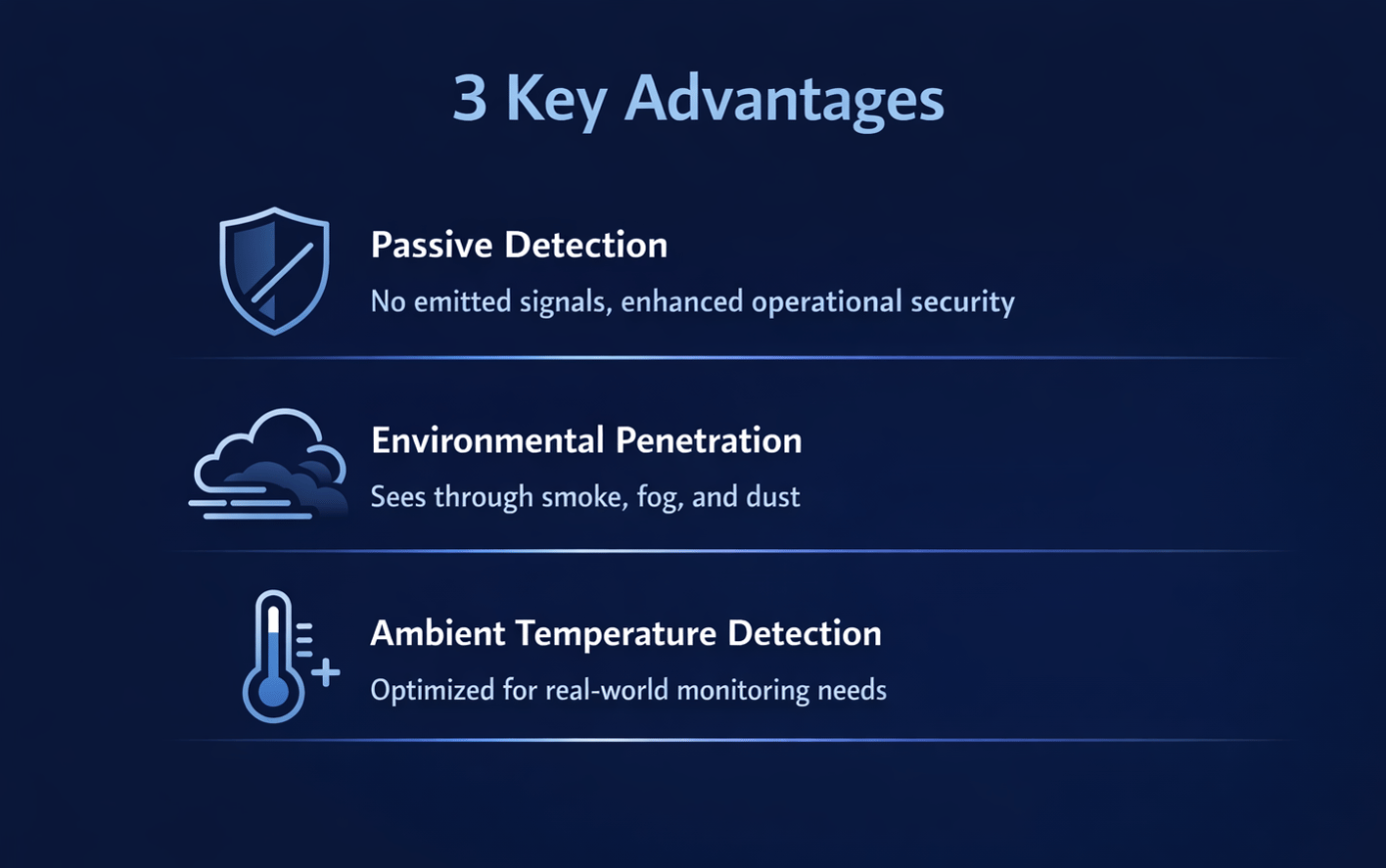
Passive detection means LWIR imaging systems don't emit signals that could compromise operational security or alert targets. The technology observes thermal signatures already present in the environment rather than illuminating scenes with detectable energy. This matters significantly for defense applications where emissions control is critical.
Environmental penetration sets thermal imaging apart from visible-light systems. While fog, smoke, dust, and light precipitation scatter visible wavelengths and degrade traditional camera performance, long wave infrared wavelengths pass through these obscurants with minimal scattering. Industrial facilities with airborne particulates and tactical environments with smoke or dust maintain visibility when conventional cameras fail.
Ambient temperature detection makes LWIR particularly effective for the objects most organizations need to monitor. The technology excels at detecting people, vehicles, equipment, and infrastructure operating at normal temperatures, which represents the vast majority of real-world detection requirements.
|
Feature |
LWIR Thermal Camera |
Visible-Light Camera |
|
Night Operation |
Full capability without illumination |
Requires external lighting |
|
Smoke/Fog Performance |
Maintains visibility |
Severely degraded |
|
Detection Method |
Passive (detects emitted heat) |
Active (captures reflected light) |
|
Temperature Visualization |
Shows heat signatures and variations |
Cannot detect temperature |
|
Cooling Requirement |
Uncooled systems available |
Not applicable |
|
Typical Detection Range |
1000+ meters for personnel |
Limited by lighting conditions |
What Are the Top Industrial Applications for LWIR Imaging?
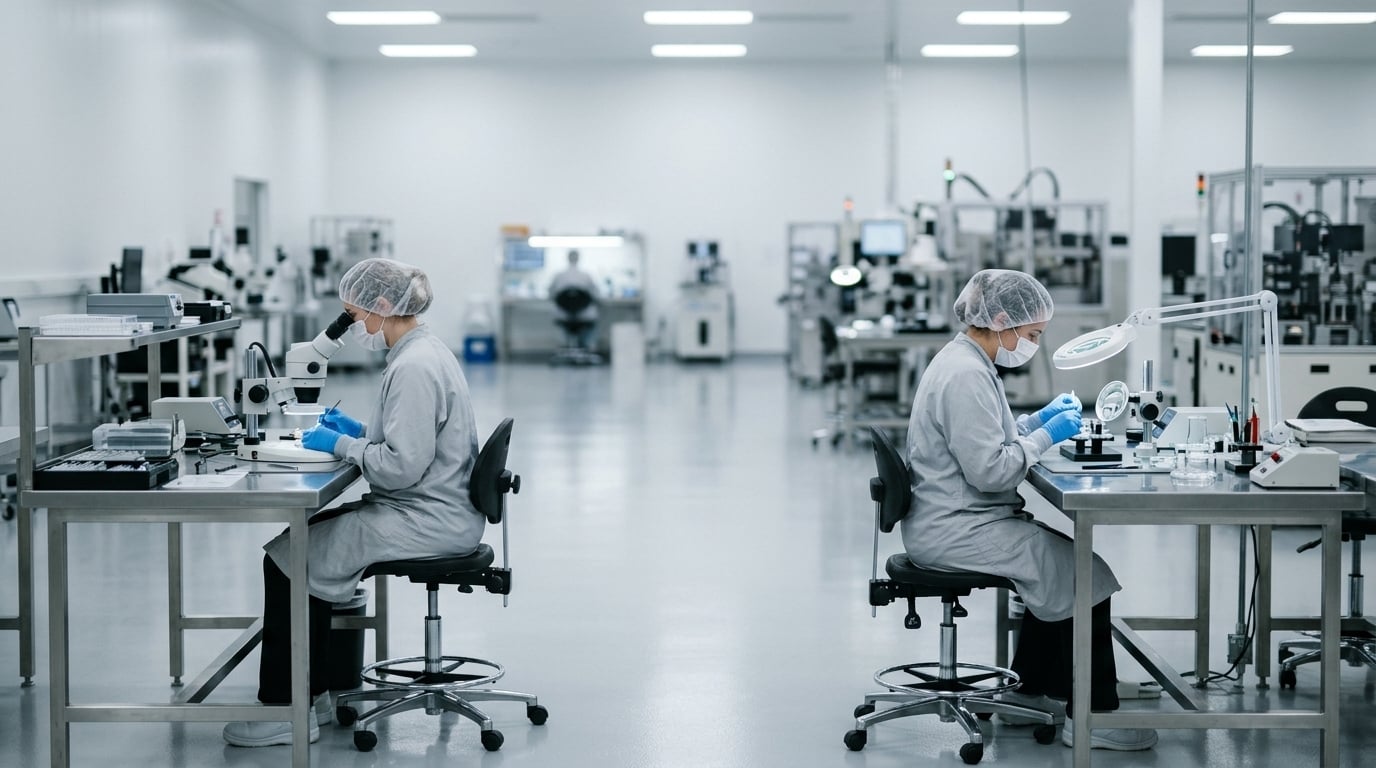
Industrial thermal imaging has evolved from specialized inspection tool to essential monitoring infrastructure. Manufacturing facilities, utilities, and process industries deploy LWIR systems across applications where early detection prevents costly failures.
Predictive maintenance represents the largest growth driver for industrial thermal imaging. According to the U.S. Department of Energy's Federal Energy Management Program, facilities implementing predictive maintenance can achieve 30% to 40% cost savings compared to reactive maintenance approaches.
LWIR cameras enable these savings by detecting elevated temperatures in electrical panels, motors, bearings, and rotating equipment before visible symptoms appear. Catching a failing bearing or loose electrical connection weeks before catastrophic breakdown transforms maintenance from reactive emergency response to planned intervention.
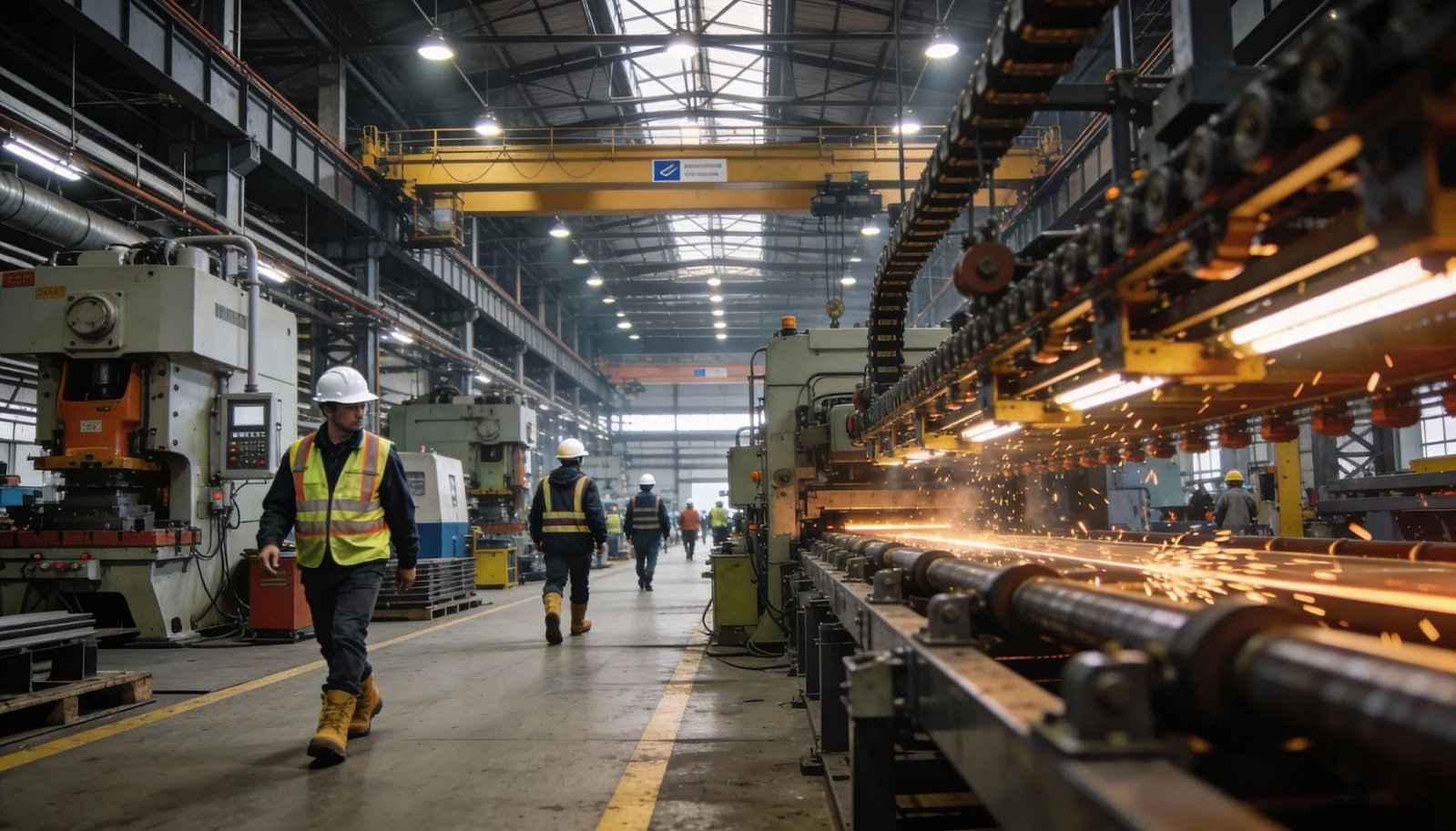
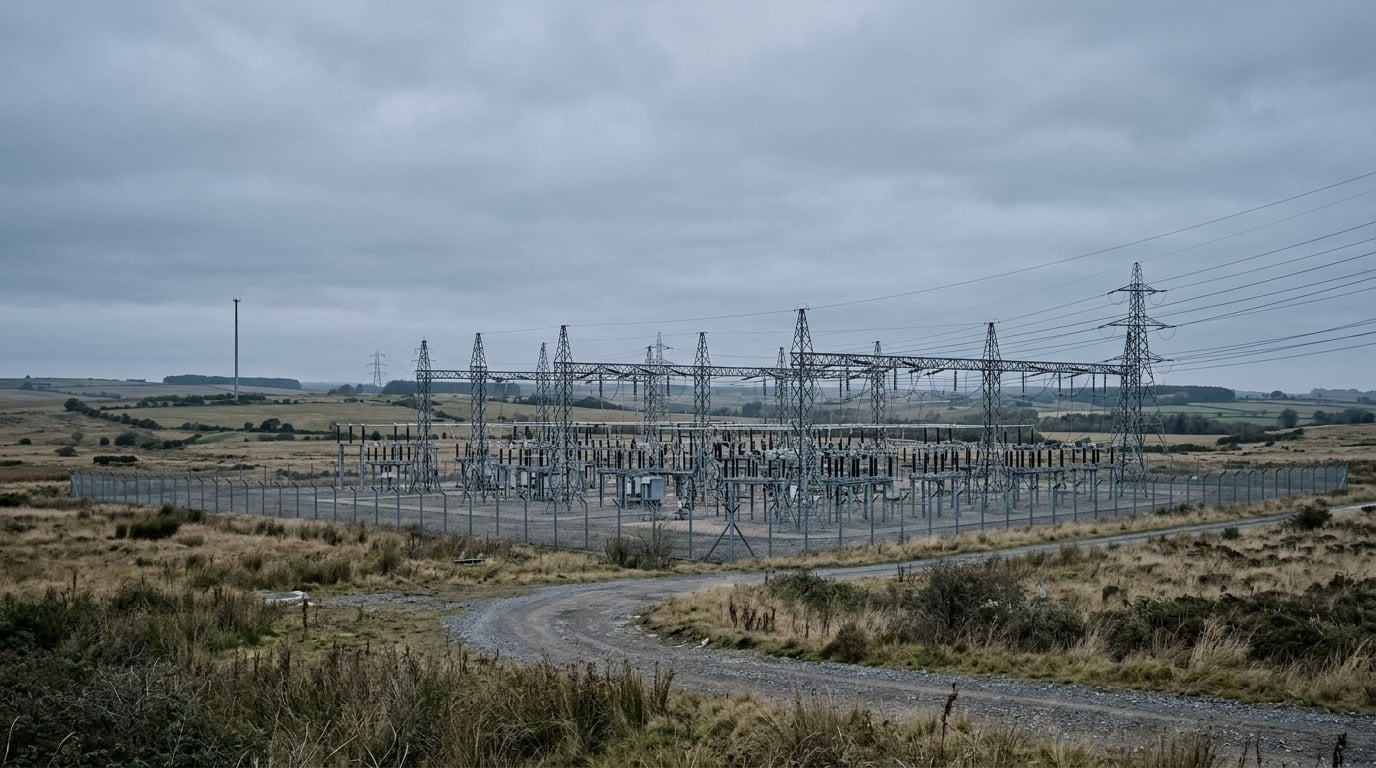
Electrical system inspection leverages thermal imaging to identify hot spots indicating overloaded circuits, loose connections, or failing components. Utility companies monitor substations and transmission infrastructure using LWIR systems that detect developing problems across distributed networks without requiring physical access to energized equipment.
Process monitoring applications include furnace inspection, kiln monitoring, and continuous temperature verification in steel, glass, cement, and chemical production. These environments demand imaging systems built for extreme conditions and continuous operation.
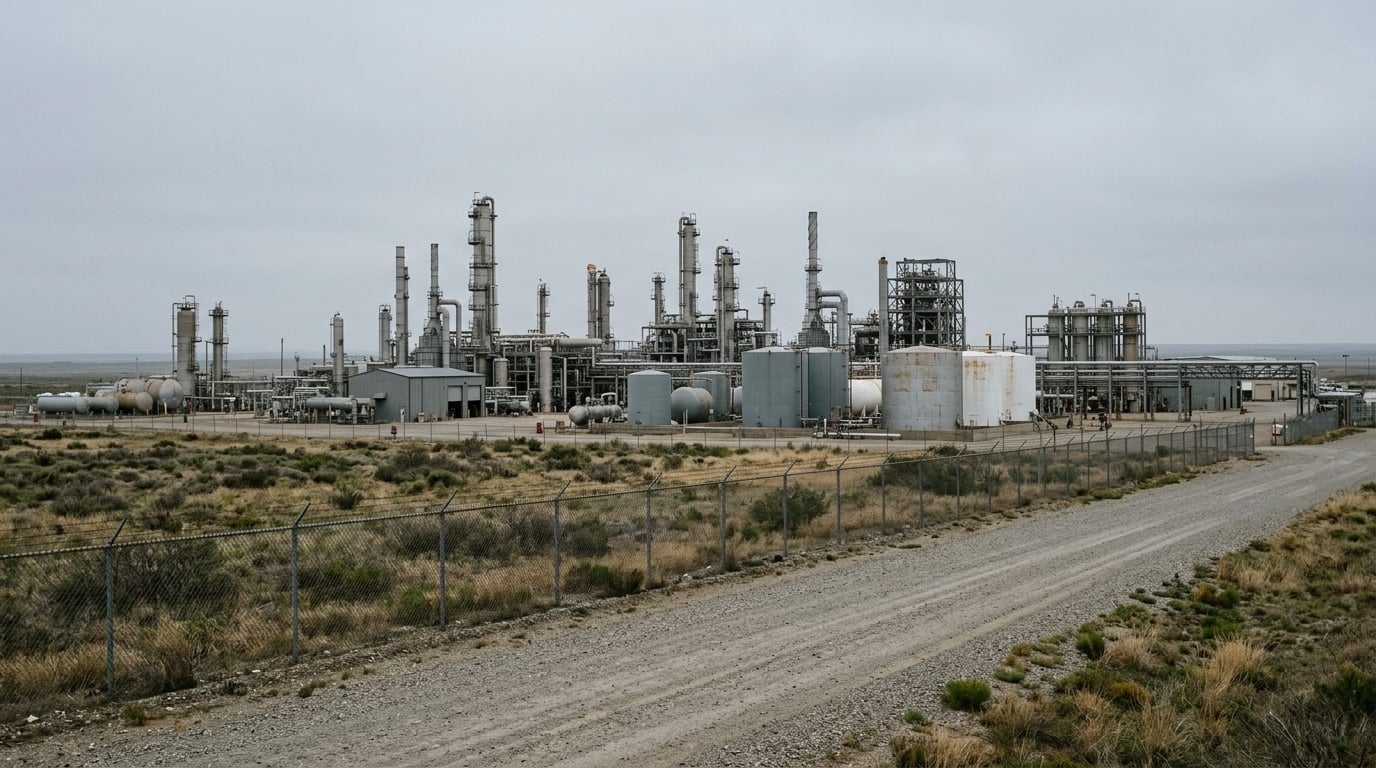
Gas leak detection uses specialized LWIR and broadband cameras to visualize methane, propane, and other hydrocarbon emissions invisible to standard cameras. Refineries, pipelines, and natural gas facilities deploy optical gas imaging for compliance monitoring and environmental safety.
Key Industrial Thermal Imaging Applications:
- Electrical panel and switchgear inspection for fault prevention
- Motor and bearing temperature monitoring for predictive maintenance
- Steam trap and heat exchanger efficiency verification
- Roof and building envelope thermal surveys for energy audits
- Production line quality control through temperature verification
- Safety monitoring in high-temperature manufacturing environments
How Are Thermal Cameras for Defense Transforming Modern Operations?
Thermal cameras for defense applications have moved from specialized capability to baseline requirement across ground, air, and naval platforms. The technology's ability to detect threats regardless of lighting or weather conditions makes it indispensable for modern military and security operations.
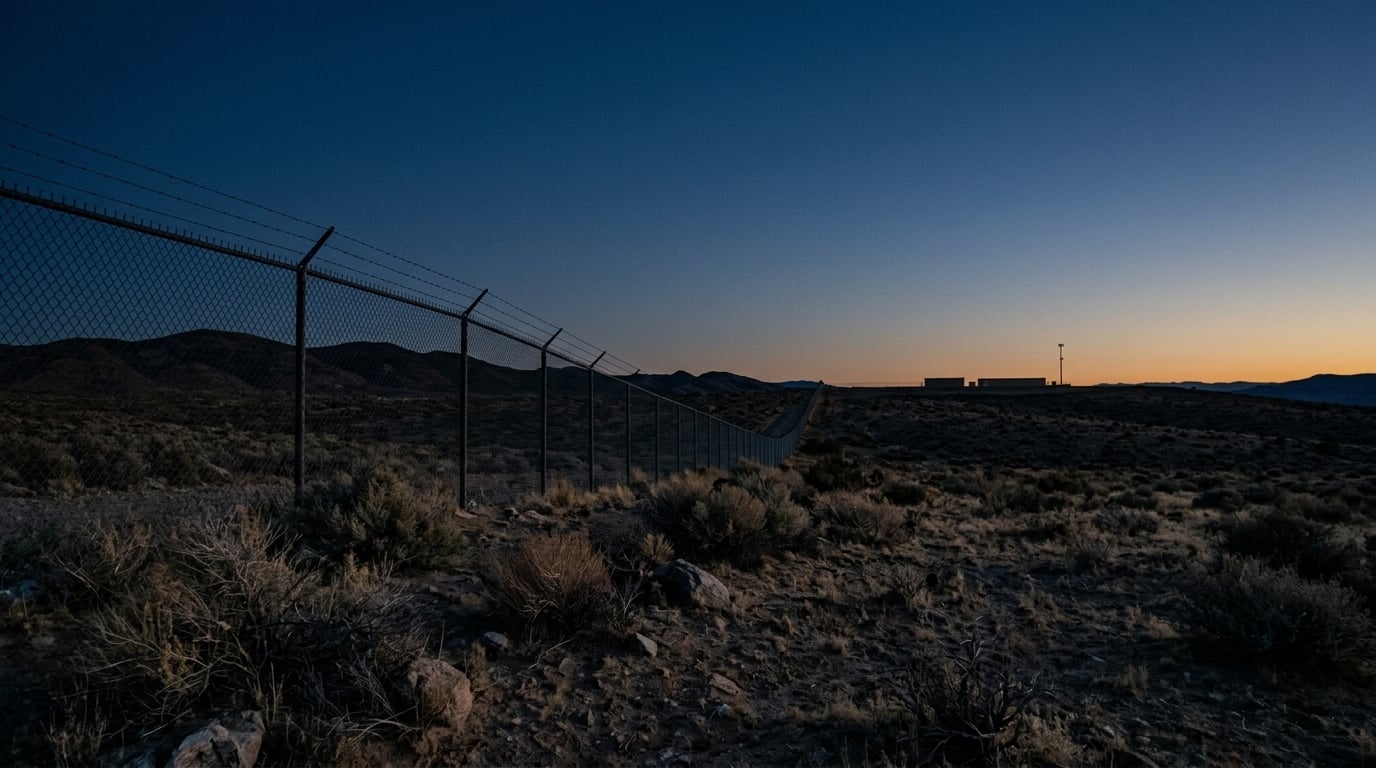
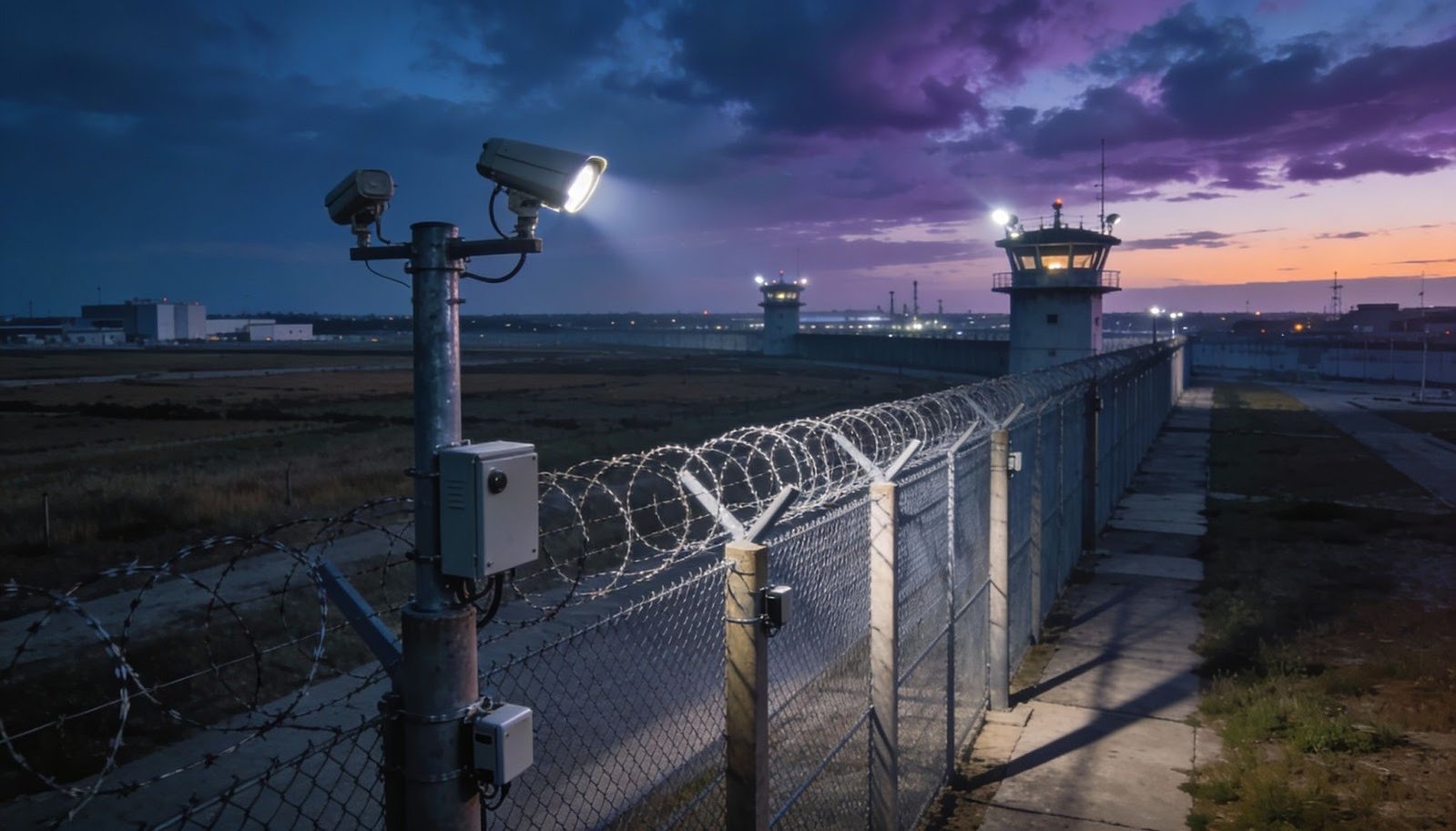
Perimeter security and surveillance systems integrate LWIR thermal camera modules to provide continuous monitoring without dependence on ambient light or active illumination. Border security installations, critical infrastructure protection, and forward operating bases rely on thermal imaging for aerospace and defense applications requiring detection ranges measured in kilometers rather than meters.
Counter-unmanned aircraft systems (CUAS) represent a rapidly growing application for thermal cameras for defense. Detecting small drones against varying backgrounds requires thermal contrast that visible-spectrum cameras cannot provide. LWIR systems identify the heat signatures of drone motors and batteries even when the aircraft is otherwise invisible against terrain or sky backgrounds.
Vehicle-mounted systems provide driver vision enhancement, threat detection, and situational awareness for ground platforms operating in low-visibility conditions. The same technology that enables 24-hour surveillance also protects vehicle crews by revealing hazards hidden from visible-light systems.
Airborne platforms integrate thermal imaging for intelligence gathering, target acquisition, and reconnaissance missions. Payload weight and power constraints make uncooled LWIR systems attractive for unmanned aerial vehicles where every gram and watt affects mission endurance.
The defense sector's continued investment reflects recognition that thermal cameras for defense applications deliver capabilities no other sensing technology can match. When operations must continue regardless of lighting conditions, thermal imaging becomes non-negotiable infrastructure.
What Should OEMs Consider When Selecting LWIR Solutions?
System integrators and OEMs face considerations beyond basic specifications when selecting LWIR thermal camera components. The right choice depends on understanding how various factors affect long-term program success.
Resolution and sensitivity specifications tell only part of the story. A higher-resolution sensor paired with mediocre optics may underperform a well-designed system with lower pixel count. Cold shield efficiency, optical coatings, and lens-to-sensor optimization affect real-world performance more than headline specifications suggest.
Size, weight, and power (SWaP) constraints drive decisions for platforms where every gram matters. Uncooled LWIR systems offer inherent advantages, but substantial variation exists among available options. Understanding how SWaP trade-offs affect your specific platform prevents specification creep that derails integration schedules.
Supply chain stability affects program viability as much as technical performance. Traditional thermal optics rely heavily on germanium, which faces availability constraints and cost volatility. Alternative materials including chalcogenide glasses provide more predictable supply chains for production programs requiring consistent component availability.
|
Selection Criteria |
Questions to Address |
|
Performance Requirements |
What detection ranges and temperature sensitivities does your application actually need? |
|
Integration Constraints |
What size, weight, power, and interface requirements does your platform impose? |
|
Environmental Conditions |
Will the system operate in extreme temperatures, humidity, or corrosive atmospheres? |
|
Production Volume |
Does your program require prototype quantities or sustained production support? |
|
Supply Chain Risk |
How important is material availability and manufacturing location for your program? |
|
Customization Needs |
Does your application require off-the-shelf solutions or custom engineering? |
Regulatory compliance adds complexity for programs involving export or defense applications. ITAR and EAR classifications affect what technologies are available and how supply chains must be structured. Working with manufacturers experienced in defense programs prevents compliance surprises late in development.
Frequently Asked Questions
What is the difference between LWIR and MWIR thermal cameras?
LWIR (long wave infrared) operates in the 8-14 µm wavelength range and excels at detecting ambient-temperature objects using uncooled detectors. MWIR (mid-wave infrared) operates in the 3-5 µm range, typically requires cooling, and offers advantages for high-temperature targets and certain atmospheric conditions. Most surveillance and industrial monitoring applications choose LWIR for its cost and maintenance advantages.
Can LWIR thermal cameras see through walls?
No. While LWIR imaging penetrates smoke, fog, and dust effectively, solid materials block thermal radiation. The technology detects surface temperatures, which may indicate heat sources behind thin barriers, but this represents temperature mapping rather than true through-wall imaging.
Why are uncooled LWIR systems preferred for many applications?
Uncooled LWIR thermal camera systems eliminate the complexity, cost, and maintenance requirements of cryogenic coolers. This makes them lighter, more compact, more power-efficient, and more reliable for continuous operation. For most detection and monitoring applications, uncooled systems deliver adequate sensitivity at significantly lower total cost of ownership.
What industries benefit most from industrial thermal imaging?
Manufacturing, energy, utilities, oil and gas, and process industries derive significant value from industrial thermal imaging. Applications include predictive maintenance, electrical inspection, process monitoring, and safety compliance. Any operation where early detection of temperature anomalies prevents equipment failures or safety incidents can benefit from LWIR monitoring systems.
Partner With Experts Who Understand Your Mission
Selecting LWIR thermal camera technology for industrial monitoring or defense applications requires more than comparing specification sheets. You need partners who understand how optical design, material innovation, and system integration combine to deliver solutions that actually perform in demanding environments.
LightPath Technologies brings over 40 years of infrared innovation and vertically integrated manufacturing to every thermal imaging solution. From proprietary BlackDiamond™ chalcogenide glass that reduces supply chain risk to complete camera systems engineered for your exact requirements, we help OEMs and system integrators build competitive advantages through premium optical technology. Ready to discuss how LWIR imaging can enhance your next platform? Connect with our engineering team to start the conversation.