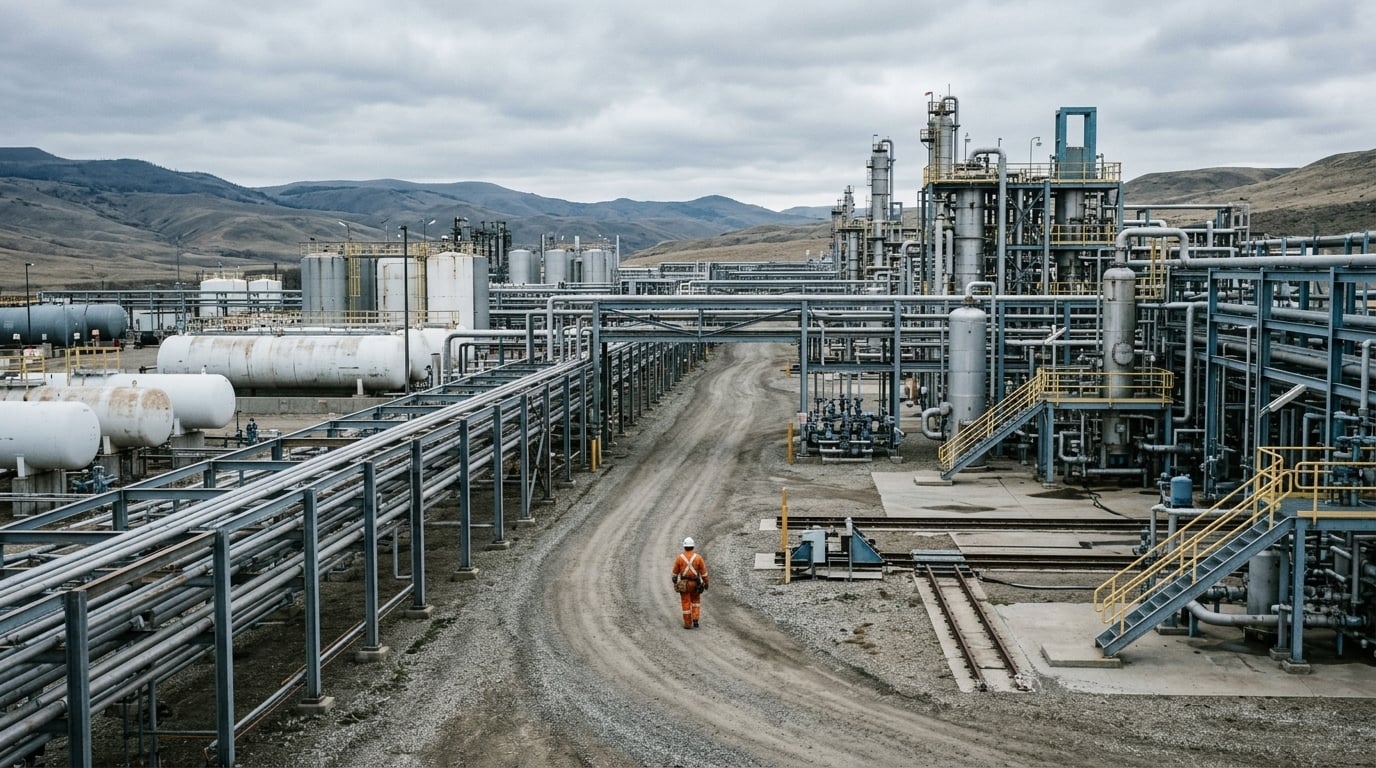

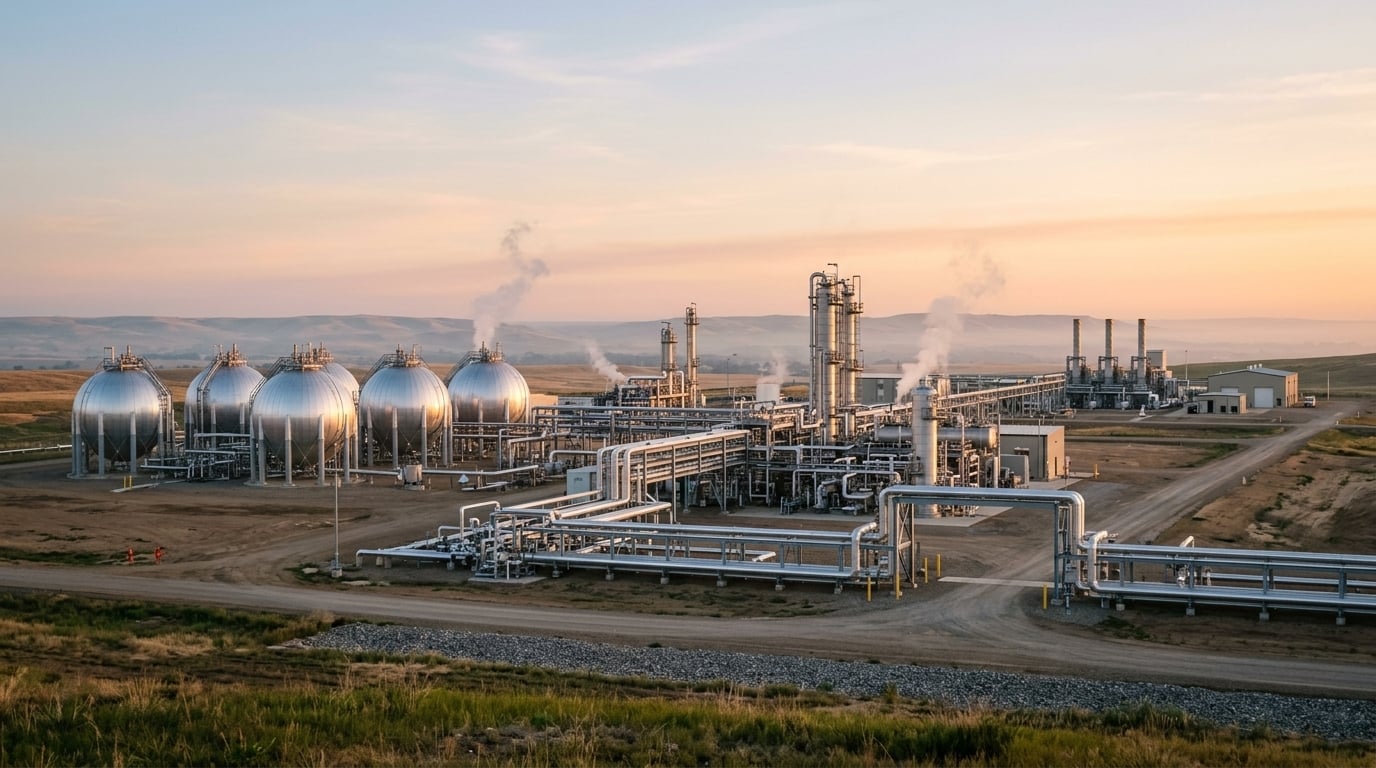
Optical gas imaging turns invisible methane and VOC leaks into visible plumes on a screen, and MWIR camera systems are the reason it works.
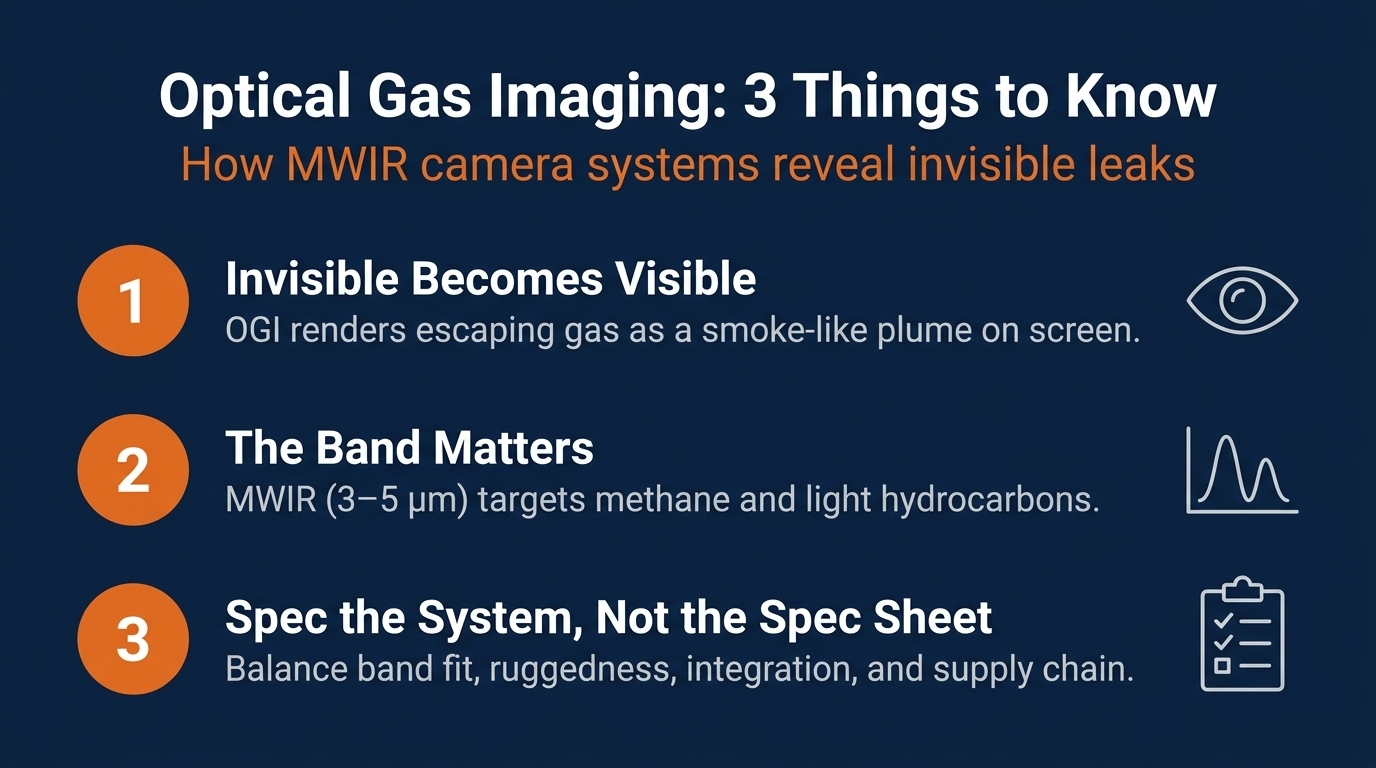
- Many hazardous and valuable industrial gases absorb infrared energy in the mid-wave band, which is exactly where MWIR systems "see."
- Regulatory pressure and the plain economics of wasted product are pushing energy, oil and gas, and process operators toward continuous and survey-based gas detection.
- The band matters: MWIR (3 to 5 µm) is the sweet spot for methane and light hydrocarbons, while other gases push you toward different wavelengths.
- Choosing a deployable system is less about chasing one spec sheet and more about detector fit, ruggedness, integration, and a reliable optics supply chain.
If your team builds or specifies monitoring systems, treat OGI capability as a core requirement because your customers increasingly expect it.
Optical gas imaging solves a problem that has frustrated energy and process operators for decades. Many of the most valuable and dangerous gases at a facility are completely invisible to the human eye. A methane plume drifting off a compressor seal looks like nothing at all until a camera turns it into a visible cloud on a display. The International Energy Agency estimates that the energy sector accounts for more than 35% of human-caused methane emissions, and a large share of that is preventable with better detection. If you build infrared imaging systems that industrial operators depend on, understanding this technology has become table stakes.
The core idea is refreshingly simple, even if the engineering behind it is not. Here's how the technology works, why the mid-wave band does the heavy lifting, and what matters when you spec a system for real-world monitoring.
What Is Optical Gas Imaging?
Optical gas imaging is a technique that uses specialized infrared cameras to visualize gas leaks that the naked eye cannot see. Instead of sampling the air at a single point with a probe, an OGI system images a whole scene at once and renders escaping gas as a smoke-like plume. An inspector or an automated system can spot a leak from a safe distance, cover a lot of equipment quickly, and pinpoint the exact source rather than just confirming that "something" is leaking somewhere nearby.
How OGI Turns Invisible Leaks Into Visible Plumes
Gases like methane absorb infrared energy at specific wavelengths. When a plume drifts in front of a background at a slightly different temperature, it changes how much infrared radiation reaches the camera. The system captures that difference and amplifies it, so the plume appears as moving haze against the scene. Thermal contrast matters because the bigger the temperature difference between the gas and its background, the easier the leak is to see. A system performs best in favorable conditions and can struggle when contrast is low, wind is high, or the background is uncooperative. That honest limitation is worth designing around rather than ignoring.
The Regulatory and Economic Pressure Behind Adoption
Detection is no longer just a safety nicety. The U.S. Environmental Protection Agency describes oil and natural gas operations as the largest industrial source of methane pollution in the country, and its recent standards push operators toward routine leak detection and repair programs using approved technologies. Compliance timelines have shifted more than once, but the underlying expectation to find and fix fugitive emissions has not gone away.
There's a straightforward business case too. Methane is the main ingredient in natural gas, so a leak is literally lost product. A Stanford-led study published in Nature put the lost commercial value of methane leaked and vented across major U.S. oil and gas operations at roughly one billion dollars a year. When detection pays for itself in recovered product and avoided penalties, adoption tends to follow.
Why Is MWIR the Right Band for Gas Detection?
MWIR gas detection has become the default for methane and light hydrocarbons for a simple reason. Those molecules absorb strongly in the mid-wave region. Passive OGI systems built around this band deliver the best detection limits for the gases that matter most in oil and gas.
The Physics in Plain Terms
Every gas has an infrared "fingerprint," a set of wavelengths where it soaks up energy. Peer-reviewed testing of quantitative OGI systems confirms that most methane cameras operate in the 3 to 5 µm range, which lines up with the absorption window of methane and similar hydrocarbons. Tune a methane detection camera to that band, and hydrocarbon plumes jump out. Point a camera tuned to the wrong band at the same leak, and you may see very little. MWIR gas detection is effective for the fuels and feedstocks that dominate energy and petrochemical sites.
What About LWIR and Other Bands?
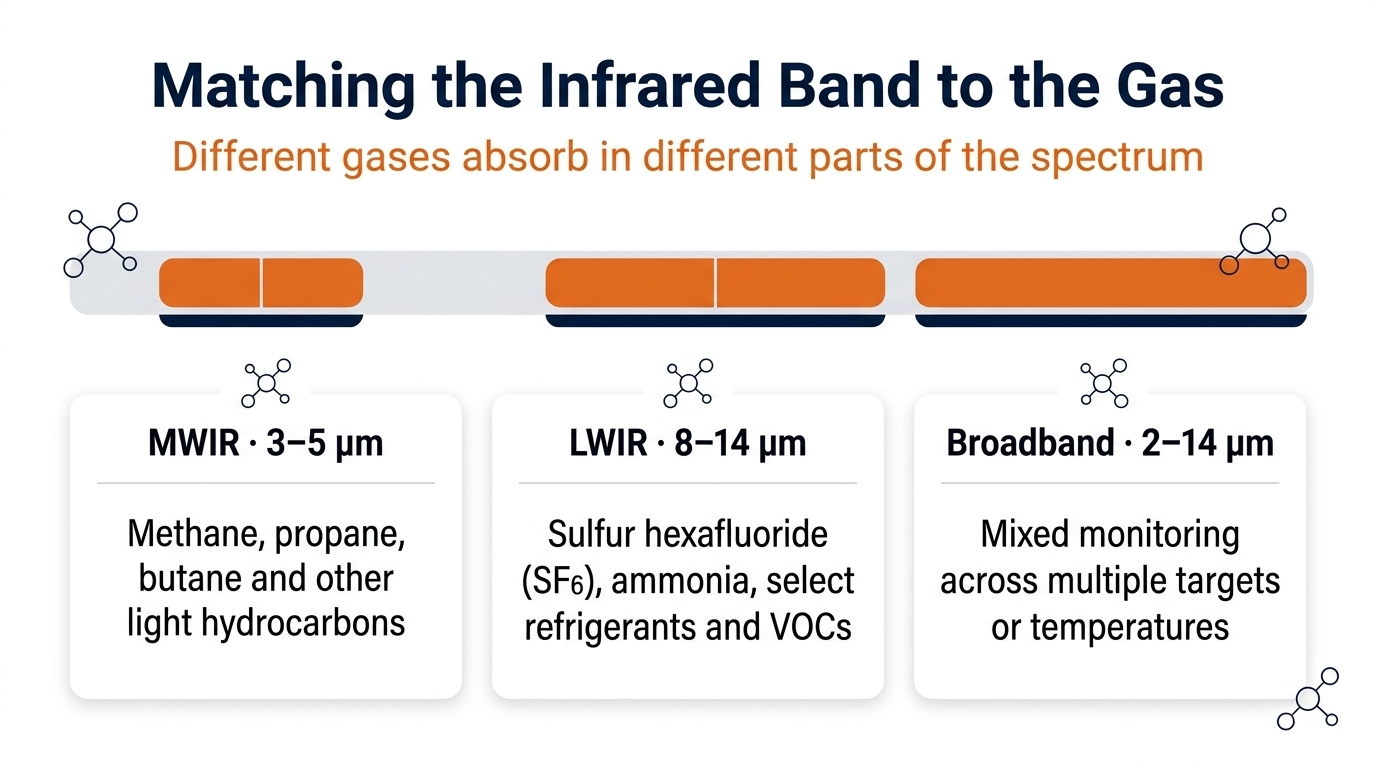
Mid-wave is not the answer for every gas. Long-wave infrared, which works in the 8 to 14 µm range, is better suited to certain other compounds, and the two bands each have strengths depending on the target and the environment. The gas you need to see determines the band you need to buy. For a closer look at how the bands compare across industrial and monitoring tasks, this comparison of MWIR and LWIR is a useful primer before you commit to a design.
|
Infrared band |
Typical range |
Best-fit gas targets |
|
MWIR |
3 to 5 µm |
Methane, propane, butane, and other light hydrocarbons |
|
LWIR |
8 to 14 µm |
Sulfur hexafluoride (SF6), ammonia, and select refrigerants and VOCs |
|
Broadband |
2 to 14 µm |
Mixed monitoring, where multiple targets or temperatures are in play |
What Gases Can an OGI Camera System Detect?
The headline target is methane, but a well-chosen system does much more. A methane detection camera built for the mid-wave band will also flag many related hydrocarbons, which is why refineries and gas processing plants lean on it so heavily. Broaden the scope to other bands, and you cover an even wider list. Effective VOC leak detection is a major driver in petrochemical and chemical settings, where volatile organic compounds carry both safety and emissions consequences.
Here is where a capable gas imaging camera system shines across industrial sites:
- Methane and light hydrocarbons at wellheads, compressor stations, pipelines, valves, and flanges.
- VOCs around storage tanks, loading racks, and chemical processing equipment, where VOC leak detection supports both compliance and worker safety.
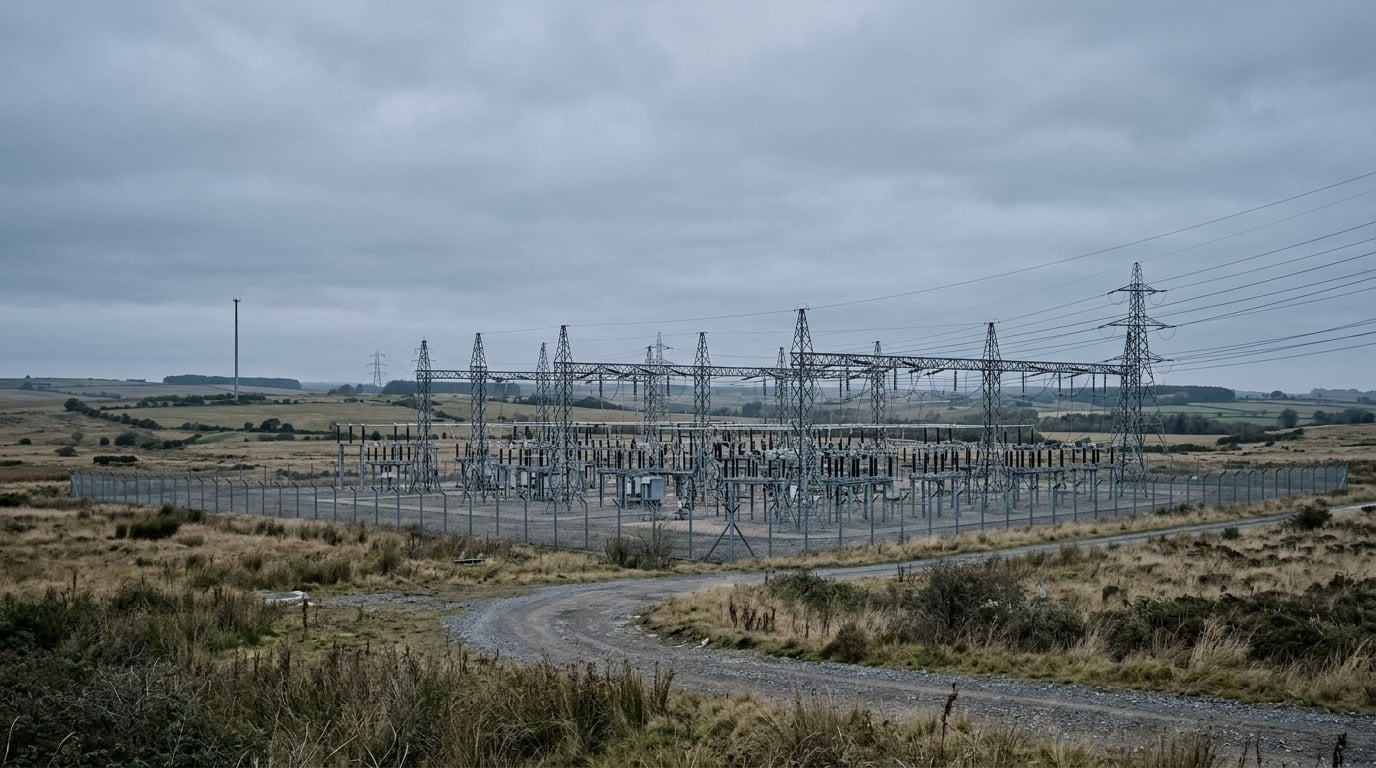
- SF6 and specialty gases in electrical utilities, where leaks from switchgear are costly and environmentally significant.
Because a single camera platform can address several of these targets, buyers increasingly want one flexible system rather than a drawer full of single-purpose tools.
What Should You Look For in a Deployable OGI System?
It's tempting to fixate on one number on a spec sheet, but the systems that hold up in the field balance several factors. If you're specifying a gas imaging camera system for a monitoring program, these are the considerations that consistently matter:
- Band and detector fit. Match the camera's band to your primary gases first. A beautiful image in the wrong wavelength is useless for your targets, so start with the chemistry and work back to the hardware.
- Realistic sensitivity for your conditions. Ask how a system performs at the thermal contrast, distances, and wind you actually encounter, rather than only in an ideal lab. Honest performance envelopes beat optimistic headline claims.
- Ruggedness and continuous operation. Fixed monitoring and long survey days punish fragile equipment. Look for designs built for vibration, temperature swings, and dust so the methane detection camera keeps working shift after shift.
- Integration and SWaP. Whether the system rides on a tower, a vehicle, or a portable rig, size, weight, power, and data outputs determine how cleanly it drops into your platform.
- Optics and supply chain behind the lens. The infrared optics inside the camera depend on specialized materials. A partner with a vertically integrated MWIR supply chain and material alternatives to scarce germanium can protect your program from delays and price shocks.
- Engineering support. Off-the-shelf rarely fits perfectly. A team that can tailor optics and assemblies to your exact application shortens development and reduces integration risk.
Treating these factors as a package, rather than a single spec, is how a gas imaging camera system moves from "impressive in the room" to "dependable in the field."
Where Are OGI Camera Systems Deployed?
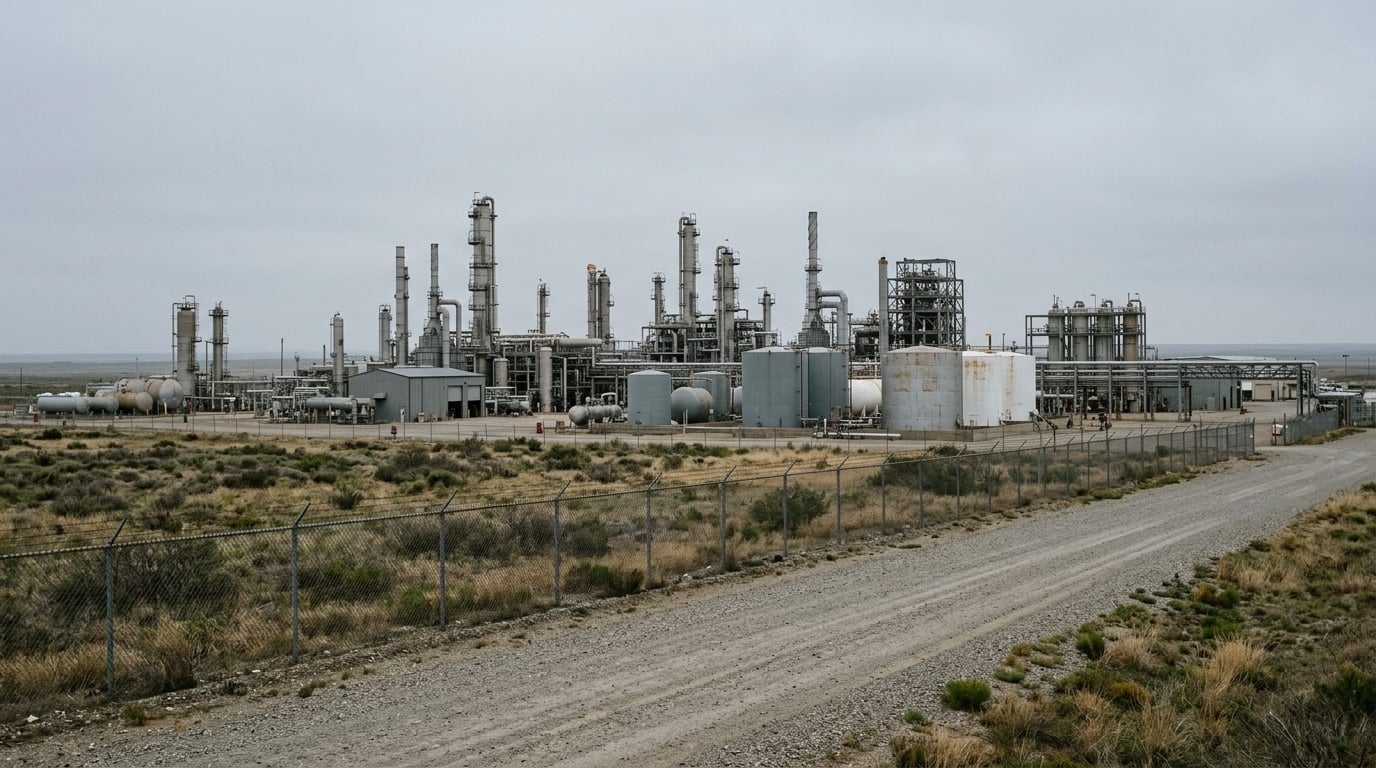
Optical gas imaging shows up anywhere invisible emissions carry a safety, financial, or compliance cost. In oil and gas operations, OGI supports leak detection and repair across upstream, midstream, and downstream sites. Chemical and petrochemical plants use it for VOC leak detection around process equipment. Utilities deploy it to catch SF6 escaping from electrical infrastructure. Across broader industrial thermal imaging programs, the same imaging discipline overlaps with process monitoring and predictive maintenance, so a single investment often supports more than one operational goal.
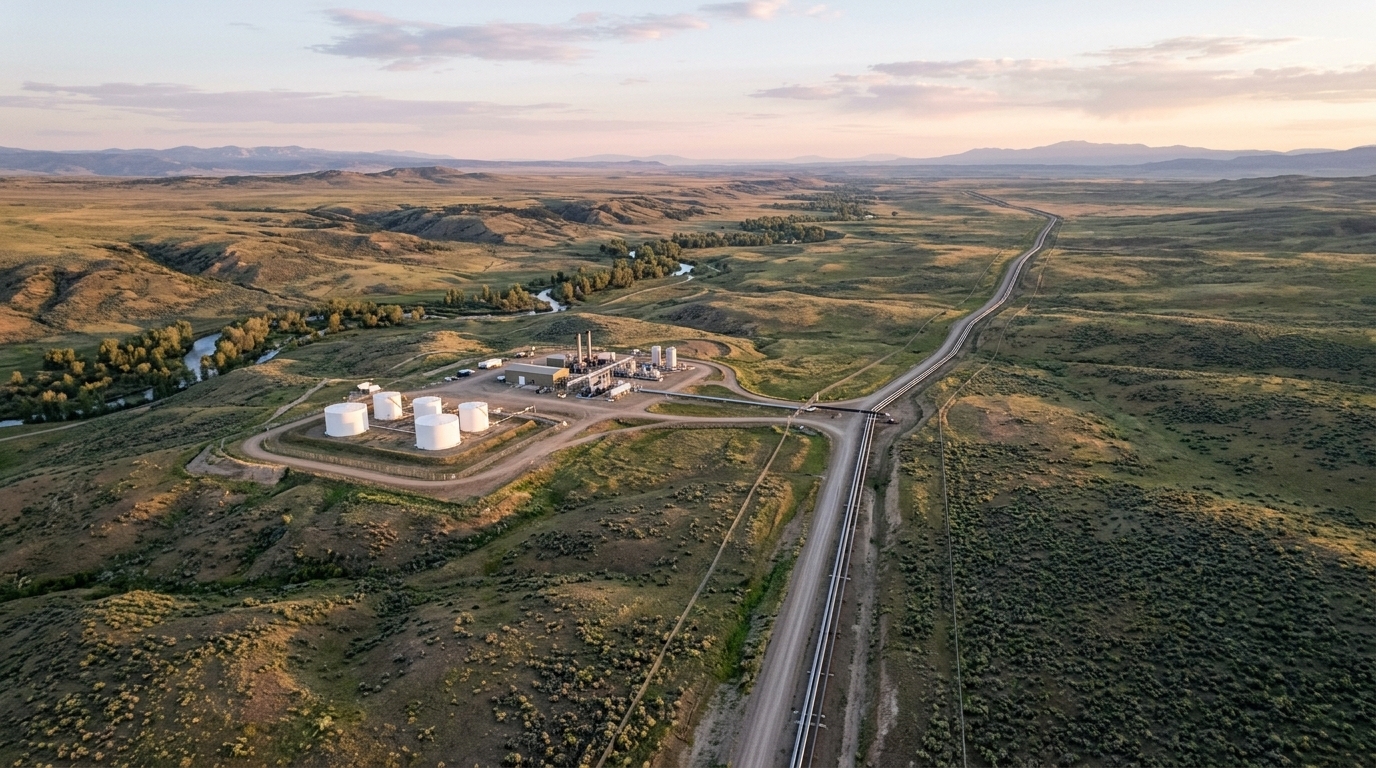
Deployment formats vary too. Some teams run handheld surveys, others mount fixed systems for continuous monitoring, and a growing number integrate imaging payloads onto vehicles or aerial platforms to cover hard-to-reach assets. The right format depends on how often you need to look and how much ground you need to cover.
Frequently Asked Questions About Optical Gas Imaging
Does OGI actually detect the gas, or just heat? It detects gas by how that gas interacts with infrared energy. A plume changes the infrared radiation reaching the camera, and the system renders that change as a visible cloud, so you are seeing the gas made visible rather than a generic hot spot.
Why do most methane cameras use MWIR instead of another band? Methane and similar hydrocarbons absorb strongly in the 3 to 5 µm mid-wave region. Because MWIR gas detection lines up with that absorption window, it delivers the clearest, most reliable images of hydrocarbon leaks.
Can one system see every industrial gas? No single band covers everything. A mid-wave system excels at methane and light hydrocarbons, while other gases, such as SF6 or ammonia, are better matched to different wavelengths. Define your target gases before choosing a system.
What limits OGI performance in the field? Detection depends on thermal contrast between the gas and its background, so low contrast, high wind, and awkward backgrounds can reduce visibility. A realistic operating envelope, not a single sensitivity figure, is the honest way to judge a system.
Bring Invisible Emissions Into View
Optical gas imaging has moved from a specialist tool to an expectation, and MWIR camera systems are the engine that makes reliable methane and VOC leak detection possible. The teams that win in this space treat detection as a system-level decision, matching the band to the gas, building for real conditions, and protecting the optics supply chain that sits behind every image. With the right fundamentals, OGI becomes a durable operational advantage rather than a compliance chore.
That systems-first approach is exactly how LightPath partners with OEMs and integrators, pairing proprietary infrared materials and vertically integrated MWIR optics with the engineering support to tailor a solution to your program. Start a conversation with our team to spec or build an OGI camera system that holds up in the field.