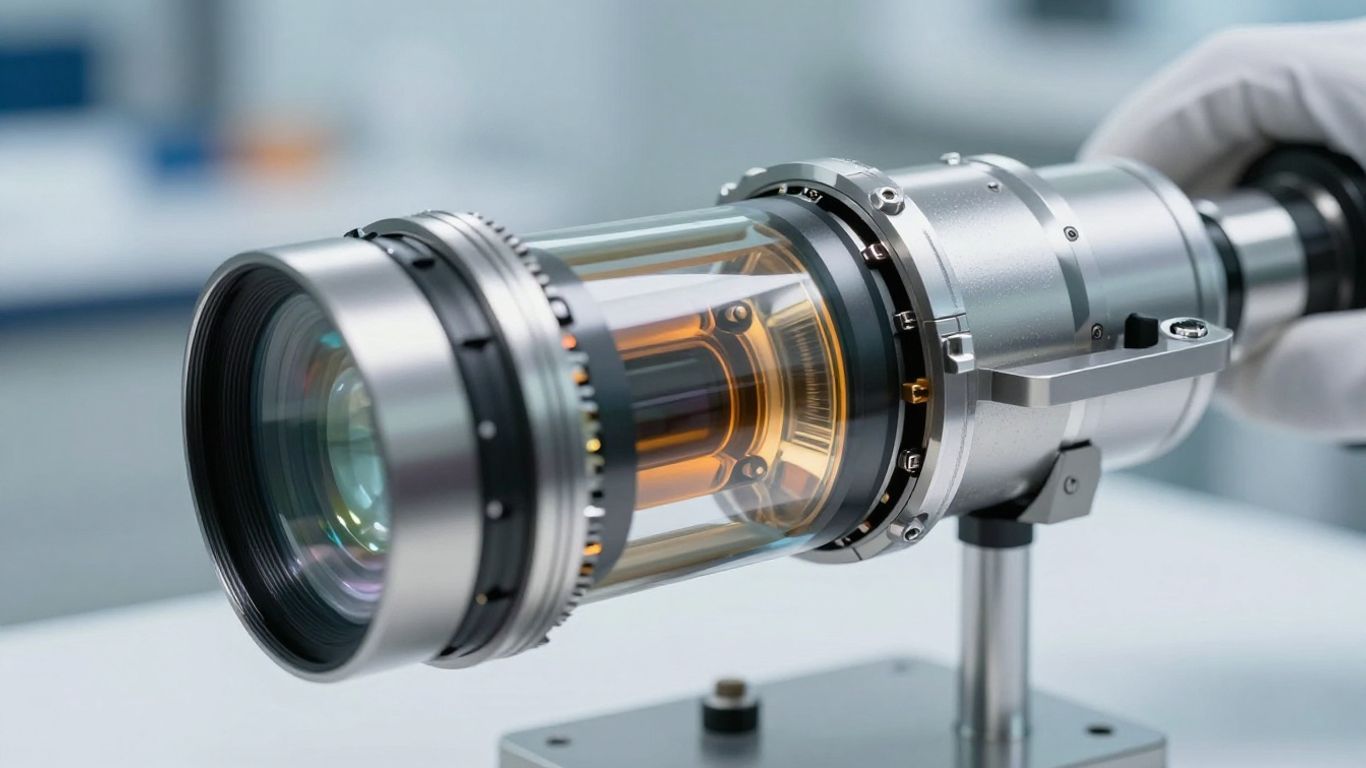


Thinking about swapping out your germanium lenses? It's a big decision, and you've got a lot to consider. Germanium has been the go-to for thermal optics for ages, but things are changing. Supply chain issues and rising costs mean it's smart to look at other options. This guide will walk you through what you need to know about the germanium lens replacement process, from understanding why you might switch to how to make the change work for your system.
Key Takeaways
- Germanium, while effective, faces supply chain volatility and increasing costs, prompting a look at alternatives for long-term projects.
- Proprietary chalcogenide glasses and other advanced materials can offer comparable or better performance than germanium, with more stable supply chains.
- When considering a germanium lens replacement, focus on optical performance metrics, material durability, and the effectiveness of coating technologies.
- Vertical integration in manufacturing and strategic sourcing can provide advantages in cost, quality control, and supply chain resilience.
- Successful system integration requires careful attention to gimbal requirements, SWaP optimization, athermalization, and interface compatibility, including export controls.
Understanding Germanium's Role in Thermal Optics

Germanium Transmission Characteristics
Germanium (Ge) has long been a standard material in thermal imaging systems, particularly for the Long-Wave Infrared (LWIR) spectrum, typically from 8 to 14 micrometers. Its primary advantage lies in its high transmission across this critical band. Unlike visible light optics, thermal imaging requires materials that allow infrared radiation to pass through to the detector. Germanium excels here, offering good transparency without the need for complex coatings to achieve transmission in this range. This makes it a go-to choice for many applications where detecting heat signatures is paramount.
However, its effectiveness is not absolute. While it transmits well in the LWIR, its transmission drops off significantly in the visible and near-infrared spectrum. This means a germanium lens is generally unsuitable for systems that need to operate across multiple spectral bands. Furthermore, its refractive index is quite high (around 4.0), which can lead to significant Fresnel reflections at the lens surfaces. To mitigate these reflections and maximize the light reaching the detector, anti-reflective (AR) coatings are almost always necessary, adding complexity and cost to the optical assembly.
Limitations of Germanium in Modern Systems
While germanium has served the thermal imaging community well, its limitations are becoming more apparent in the context of modern system requirements. One significant drawback is its physical nature. Germanium is a relatively soft and brittle material. This makes it susceptible to damage from environmental factors like dust, sand, and moisture, especially in ruggedized applications. It also requires careful handling during manufacturing and assembly to avoid chipping or scratching.
Another challenge is its thermal conductivity. Germanium has a relatively high coefficient of thermal expansion. This means that as the ambient temperature changes, the lens can expand or contract, altering its focal length and potentially causing the image to go out of focus. This phenomenon, known as thermal defocus, necessitates athermalization techniques to maintain focus across a wide operating temperature range, adding complexity and cost to the system design. For applications demanding high precision and stability across varying temperatures, these limitations can be a significant concern.
Supply Chain Volatility and Cost Challenges
Beyond its optical and physical properties, the supply chain for germanium presents considerable challenges for modern system development and production. Germanium is primarily a byproduct of zinc ore processing, meaning its availability is tied to the global demand for zinc. This has led to periods of significant price volatility and, at times, scarcity. For programs with long production runs or those requiring a consistent supply of components over many years, relying on a material with such unpredictable sourcing can introduce substantial program risk.
This uncertainty impacts not only the cost but also the long-term viability of programs. If germanium prices spike or availability plummets, the cost of thermal imaging systems can become prohibitive, or production may need to be halted. Recent geopolitical events and export controls have further complicated the supply chain, making it more difficult and expensive to procure germanium, especially for certain markets. This situation is driving a strong interest in alternative materials that offer greater supply chain stability and more predictable cost structures. If you are planning a system with a multi-year production horizon, it is wise to investigate the supply chain risks associated with germanium. You can learn more about alternative solutions by contacting us at https://www.lightpath.com/contact.
Evaluating Alternatives to Germanium Lenses
While germanium has long been a standard for thermal optics due to its transmission properties, its limitations and supply chain issues are prompting a closer look at other materials. Exploring these alternatives is becoming increasingly important for system designers aiming for stability and predictable costs.
Proprietary Chalcogenide Glasses
Chalcogenide glasses represent a significant advancement in infrared optics. These are specialized glasses, often proprietary formulations, that offer excellent transmission across various infrared wavelengths, including the long-wave infrared (LWIR) spectrum. Unlike germanium, their composition can be tailored to achieve specific optical characteristics and environmental resistances. Materials like BD6 Chalcogenide Glass, for instance, are engineered for superior thermal and spectral performance, providing a robust alternative.
- Tailored Transmission: Formulations can be adjusted for specific spectral bands, optimizing performance for particular applications.
- Environmental Stability: Many chalcogenide glasses exhibit better resistance to harsh environmental conditions compared to germanium.
- Supply Chain Security: These materials are often developed and manufactured by fewer entities, leading to more predictable availability and pricing.
Benefits of Alternative Materials
Moving away from germanium offers several distinct advantages for system development and long-term production. The primary drivers are often supply chain stability and cost predictability. Germanium's price can fluctuate significantly, and its availability can be subject to geopolitical factors and market demand, creating risks for programs with extended lifecycles. Alternative materials, particularly proprietary chalcogenide glasses, are engineered to mitigate these risks.
- Reduced Cost Volatility: Alternative materials often provide more stable pricing structures, making long-term budgeting more reliable.
- Supply Chain Resilience: Developing and sourcing alternatives can lessen dependence on a single, potentially constrained material.
- Performance Customization: Some alternative materials allow for fine-tuning of optical properties to better match specific application needs.
Performance Equivalence and Engineering Considerations
Achieving performance parity with germanium requires careful engineering and material selection. While alternatives can match or even exceed germanium's capabilities, it's not always a direct swap. The optical design must account for the specific refractive index, dispersion, and thermal properties of the new material. Diamond turning and precision molding are manufacturing techniques that allow for the creation of complex optical shapes, such as aspheres, from a variety of materials, including chalcogenides, silicon, and zinc selenide. These methods enable the production of high-precision optics with tight tolerances, which is critical for maintaining optical quality.
- Optical Design Adjustments: Refractive index and dispersion differences necessitate recalculating lens parameters.
- Manufacturing Techniques: Precision molding and diamond turning are key to realizing the potential of alternative materials.
- Coating Technologies: Advanced anti-reflective (AR) and durable coatings are vital for maximizing transmission and protecting the lens surface, regardless of the base material.
If your project requires exploring advanced optical materials and solutions, consider reaching out to our team of experts. You can contact us at https://www.lightpath.com/contact to discuss your specific needs.
Key Considerations for Germanium Lens Replacement
When you are looking into replacing germanium lenses, several factors come into play that can affect your system's performance and your project's timeline. It's not just about finding a lens that fits; you need to think about how it will perform over time and in different conditions.
Optical Performance Metrics
Evaluating the optical performance of a potential germanium lens replacement requires a close look at specific metrics. Traditional germanium lenses are known for their broad transmission spectrum, especially in the long-wave infrared (LWIR) range. When considering alternatives, you must compare their performance across key parameters:
- Transmission Spectrum: Does the new material transmit across the required wavelengths as effectively as germanium?
- Modulation Transfer Function (MTF): This measures the lens's ability to transfer contrast from the object to the image. A comparable MTF is vital for maintaining image clarity and detail.
- Aberrations: Assess how well the alternative material corrects for optical aberrations like spherical aberration and chromatic aberration. Advanced designs, such as aspheres, can help mitigate these issues.
- Refractive Index and Dispersion: These properties influence focal length and chromatic behavior, which need to be matched or compensated for in the system design.
Material Durability and Environmental Stability
Germanium, while optically effective, can be susceptible to certain environmental factors. When selecting a germanium lens replacement, consider the durability and stability of the alternative material, especially for applications in harsh conditions. You will want to look at:
- Hardness and Scratch Resistance: How well does the material hold up against physical abrasion? Some alternative materials offer superior hardness.
- Thermal Stability: Does the material's optical performance change significantly with temperature fluctuations? Athermalization strategies might be needed if the material is less stable than germanium.
- Chemical Resistance: Is the material resistant to moisture, corrosive agents, or other environmental contaminants that might be present in your operating environment? Material properties are key here.
- Operating Temperature Range: Ensure the chosen material can withstand the full spectrum of temperatures your system will encounter without degradation.
Coating Technologies for Enhanced Performance
Coatings play a significant role in the performance and longevity of any optical component, including those intended as germanium lens replacements. The right coatings can improve transmission, reduce reflections, and protect the lens surface.
- Anti-Reflective (AR) Coatings: These are critical for maximizing light throughput and minimizing unwanted reflections, which can degrade image quality. Different AR coatings are optimized for specific wavelength ranges.
- High-Durability AR (HDAR) Coatings: For systems exposed to demanding environments, HDAR coatings offer increased resistance to abrasion and environmental damage.
- Diamond-Like Carbon (DLC) Coatings: DLC coatings provide exceptional hardness and chemical resistance, acting as a protective layer against physical and chemical attack.
- Spectral Filter Coatings: These can be used to isolate specific wavelength bands or block unwanted light, further refining the system's optical performance.
Considering these aspects thoroughly will help you make an informed decision when undertaking a germanium lens replacement, ensuring your system continues to meet its performance objectives. If you need assistance evaluating these factors for your specific application, please reach out to our team at https://www.lightpath.com/contact.
Manufacturing and Sourcing Strategies
When you're developing a thermal imaging system, how you source and manufacture the optical components can significantly impact your project's success. It's not just about the lens itself, but the entire process from raw material to finished product. This section looks at how different manufacturing approaches and sourcing decisions can affect your system.
Vertical Integration Advantages
Opting for a vertically integrated supplier means they control the entire production chain, from raw materials to final assembly. This offers several benefits:
- Predictable Schedules: With a single supplier managing all stages, you get more reliable timelines. There are fewer handoffs between different companies, reducing potential delays.
- Consistent Quality Control: When one entity oversees every step, maintaining high quality becomes more straightforward. They can implement checks and balances throughout the manufacturing process.
- Faster Engineering Changes: If you need to make modifications during development or production, a vertically integrated partner can respond more quickly. They have direct control over all the necessary processes.
This level of control is particularly important when transitioning from development to full-scale production, where design adjustments are common. It helps bolster your infrared optics supply chain.
Diamond Turning and Precision Molding
Two key manufacturing techniques stand out for producing high-quality thermal optics: diamond turning and precision molding.
- Diamond Turning: This method uses a single-point diamond tool to precisely cut optical surfaces. It's ideal for creating complex shapes and achieving very low surface irregularities, often under 20 Angstroms RMS. This technique works with various materials, including Germanium, Silicon, Zinc Selenide, Zinc Sulfide, and specialized chalcogenide glasses. It allows for diameters up to 350mm with tight dimensional tolerances, like ±0.002mm.
- Precision Molding: For high-volume production, precision molding, particularly for aspheric lenses, is highly effective. This process offers excellent consistency and is more economical for large quantities. Companies have perfected this method to produce some of the most precise aspheric lenses available, suitable for demanding applications like thermal imaging and ruggedized industrial systems.
Both methods allow for the application of advanced coatings, such as anti-reflective (AR), highly durable AR (HDAR), and diamond-like carbon (DLC), to further improve performance and longevity.
Impact of Manufacturing Location
Where your optics are manufactured can have practical implications. Production facilities located in North America or Europe can simplify certain regulatory compliance requirements. Furthermore, domestic or regional manufacturing can contribute to supply chain resilience, which is increasingly important for defense and critical infrastructure applications. This can also affect delivery timelines and ease of communication, especially when dealing with sensitive technologies. If you need to discuss your specific manufacturing and sourcing needs, feel free to contact us.
System Integration and Performance Optimization
Integrating thermal imaging systems into larger platforms requires careful consideration of several factors to ensure optimal performance and reliability. This involves not only the optical components themselves but also how they interact with the overall system architecture, environmental conditions, and operational requirements. Addressing these aspects proactively can prevent performance degradation and costly redesigns.
Gimbal Requirements and SWaP Optimization
When incorporating thermal cameras into systems that require pointing and stabilization, such as surveillance or targeting platforms, the gimbal design is paramount. The gimbal must be robust enough to support the weight of the camera assembly while providing the necessary stability to counteract platform motion. Achieving optimal Size, Weight, and Power (SWaP) characteristics is a constant challenge in system design. Thermal imaging assemblies that are engineered as cohesive units, rather than being pieced together from disparate components, often achieve superior SWaP metrics without compromising optical performance. This holistic approach to design can lead to more compact, lighter, and power-efficient systems, which are particularly critical for airborne or mobile applications.
Athermalization for Temperature Stability
Thermal imaging systems operate across a wide range of ambient temperatures. Without proper design considerations, temperature fluctuations can cause the focus of the optical system to shift, leading to blurred images and reduced detection capabilities. Athermalization is the process of designing optical systems so that their focus remains constant across a specified temperature range. This can be achieved through careful selection of materials with complementary thermal expansion coefficients or by incorporating specific mechanical designs. For systems that cannot employ active focus mechanisms due to power or complexity constraints, athermalization is essential for maintaining consistent image quality and reliable performance in varying environmental conditions. This is especially important for long-term surveillance or monitoring applications where unattended operation is common.
Interface Compatibility and Export Controls
Ensuring that the thermal imaging system can communicate effectively with the host platform is another critical integration step. This involves matching interface protocols, data rates, and power requirements. Modern systems often utilize standard interfaces like GigE Vision or USB3, but custom integration projects may require specialized communication methods. Furthermore, export control regulations, such as those governed by EAR/ITAR or Wassenaar agreements, can impact the deployability of certain thermal imaging systems, particularly those with high frame rates or specific resolution and sensitivity combinations. Understanding these regulations and working with manufacturers who can provide compliant solutions is vital for international deployment. Navigating these export controls can be complex, and partnering with experienced suppliers can simplify the process and ensure compliance.
For systems requiring robust integration and optimized performance, consider consulting with specialists who can address these complex engineering challenges. Contact us at https://www.lightpath.com/contact to discuss your specific needs.
The Business Case for Germanium-Free Optics
Long-Term Program Viability
When planning for the future of your systems, consider the availability of materials. Germanium, a common choice for thermal optics, faces supply chain issues and price swings. This can make it hard to get the parts you need, especially for programs that will run for many years. If your project relies on germanium, you might face unexpected costs or delays down the line. Looking into alternative materials now can help make sure your program can continue without interruption. It's about building a stable foundation for your technology.
Mitigating Procurement Uncertainty
Procurement uncertainty is a significant risk for any long-term project. Fluctuations in the availability and cost of germanium can disrupt production schedules and impact budgets. This is particularly true given recent export controls that have affected germanium supply. By choosing optics made from more stable materials, such as proprietary chalcogenide glasses, you reduce your reliance on a single, potentially volatile source. This allows for more predictable budgeting and a more secure supply chain, giving you greater control over your project's timeline and costs.
Competitive Differentiation Through Customization
In markets where thermal imaging provides a distinct advantage, relying on standard, off-the-shelf components can limit your potential. Developing custom optical solutions, perhaps using alternative materials, allows you to create unique performance characteristics that set your product apart. This can lead to proprietary advantages that competitors cannot easily replicate. Investing in custom, germanium-free optics can therefore be a strategic move to secure a stronger market position and protect your intellectual property. If you are looking to build a more resilient and future-proof optical system, consider reaching out to our experts at https://www.lightpath.com/contact.
Thinking about ditching Germanium for your optics? It's a smart move that can save you money and improve performance. We've got the details on why going Germanium-free is the way to go. Ready to learn more about these advanced solutions? Visit our website today to explore the possibilities!
Final Thoughts on Germanium Lens Swaps
So, you've looked into swapping out those germanium lenses. It's clear that while germanium has its place, it's not the only option out there, and sometimes it's not even the best one. You've seen how material availability can mess with your plans and budgets, especially for long-term projects. Thinking about alternatives, like those special glasses or molded aspheres, makes a lot of sense for stability and performance. When you're putting together your next system, remember to look at the whole picture – not just the lens material, but how it all fits together, where it's made, and if the supplier can actually keep up with your needs. It’s about making smart choices now so you don’t run into trouble down the road.
Frequently Asked Questions
Why are people talking about changing lens materials away from germanium?
Germanium is a popular material for lenses used in heat-sensing cameras because it lets heat (infrared light) pass through well. However, getting enough germanium can be tricky, and its price can change a lot. This makes it hard for companies to plan for the future, especially for big projects that need lots of lenses over many years. Because of these issues, people are looking for other materials that work just as well but are easier to get and cost less over time.
What are the main benefits of using materials other than germanium for lenses?
Using different materials, like special types of glass called chalcogenide glasses, offers a more stable supply. This means you're less likely to face shortages or big price jumps. These alternative materials can provide similar or even better performance for heat-sensing applications. They also help make sure your project can continue smoothly without unexpected problems related to material availability.
How do you make sure a new lens material works as well as germanium?
Engineers carefully test and compare the new materials to germanium. They look at how well the lens lets heat through (transmission), how clear the image is, and how the lens holds up in different conditions. Sometimes, special coatings are added to the new lenses to boost their performance, making them just as good as, or even better than, lenses made from germanium. It's all about matching or exceeding the important performance measures.
What is 'diamond turning' for lenses?
Diamond turning is a super precise way to shape lenses using a diamond cutting tool. It's used for materials like germanium and others. This method can create lenses with very smooth surfaces and exact shapes, which is important for getting the best possible image quality in sensitive equipment. It's a high-tech manufacturing process that ensures accuracy.
What does 'SWaP optimization' mean for thermal imaging systems?
SWaP stands for Size, Weight, and Power. Optimizing SWaP means making the thermal imaging system as small, light, and energy-efficient as possible. This is really important for devices that need to be carried or mounted on things like drones or aircraft, where every bit of size, weight, and battery life counts. It's about getting the best performance without making the system too bulky or power-hungry.
Why is it important for a company to make all the parts of the camera system themselves (vertical integration)?
When a company controls everything from making the raw materials to putting the final camera together, it's called vertical integration. This gives them better control over quality, schedules, and costs. They can fix problems faster and make sure all the parts work perfectly together. It also means they can offer more predictable delivery times and a more reliable supply chain, which is a big advantage for long-term projects.