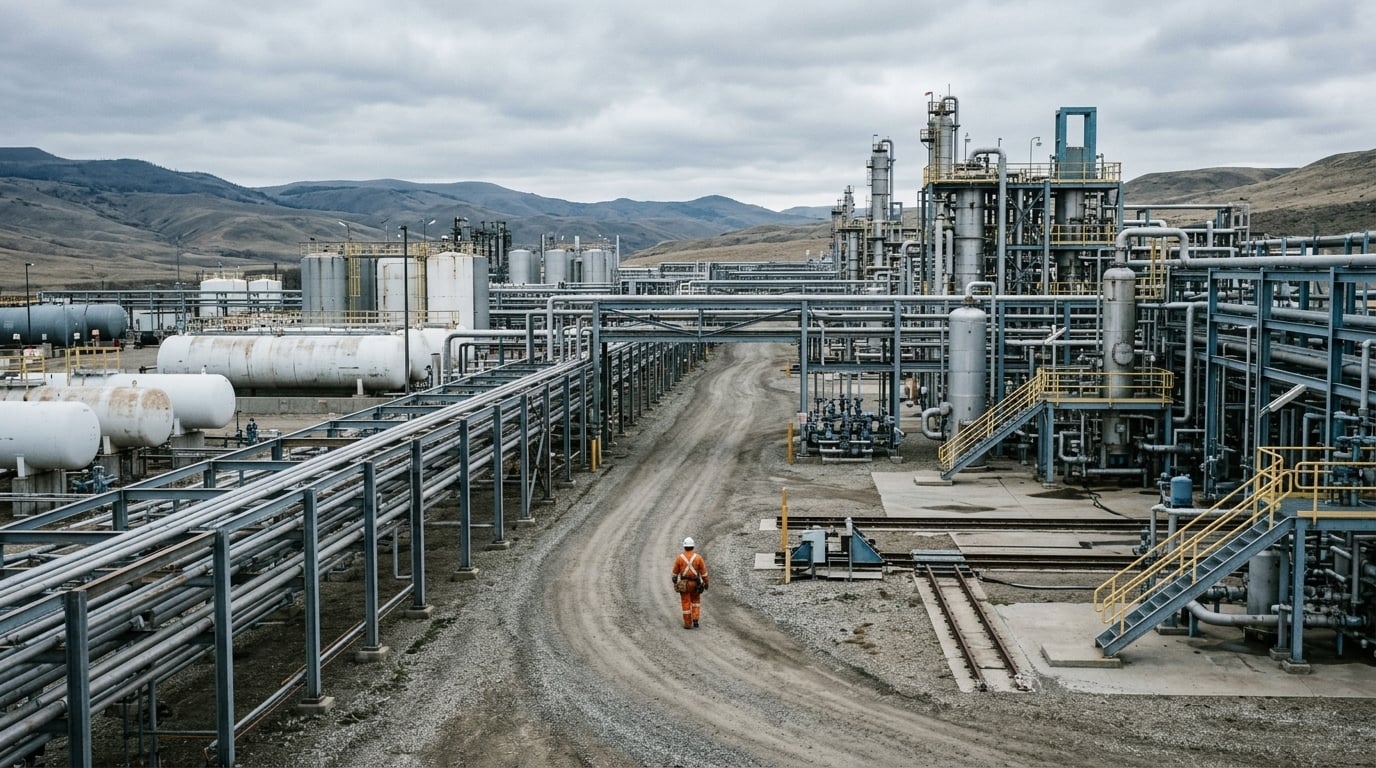

Mining and heavy industry give thermal camera systems the hardest job in the industrial world, and the platforms that win are the ones designed around that reality from the start.
- Conveyors, kilns, and mobile fleets each generate predictable heat signatures, and deviations from those signatures are the earliest reliable warning of failure.
- Dust, vibration, moisture, and round-the-clock duty cycles wash out systems that were designed for a clean plant floor.
- Predictive programs built on continuous monitoring can cut facility downtime by 5 to 15 percent compared with preventive schedules alone.
- Optics quality, environmental sealing, and supply chain stability matter more to long-term program economics than headline sensor specs.
If you are building a monitoring platform for mine sites, specify the imaging chain for the worst hour of the worst shift rather than the demo.
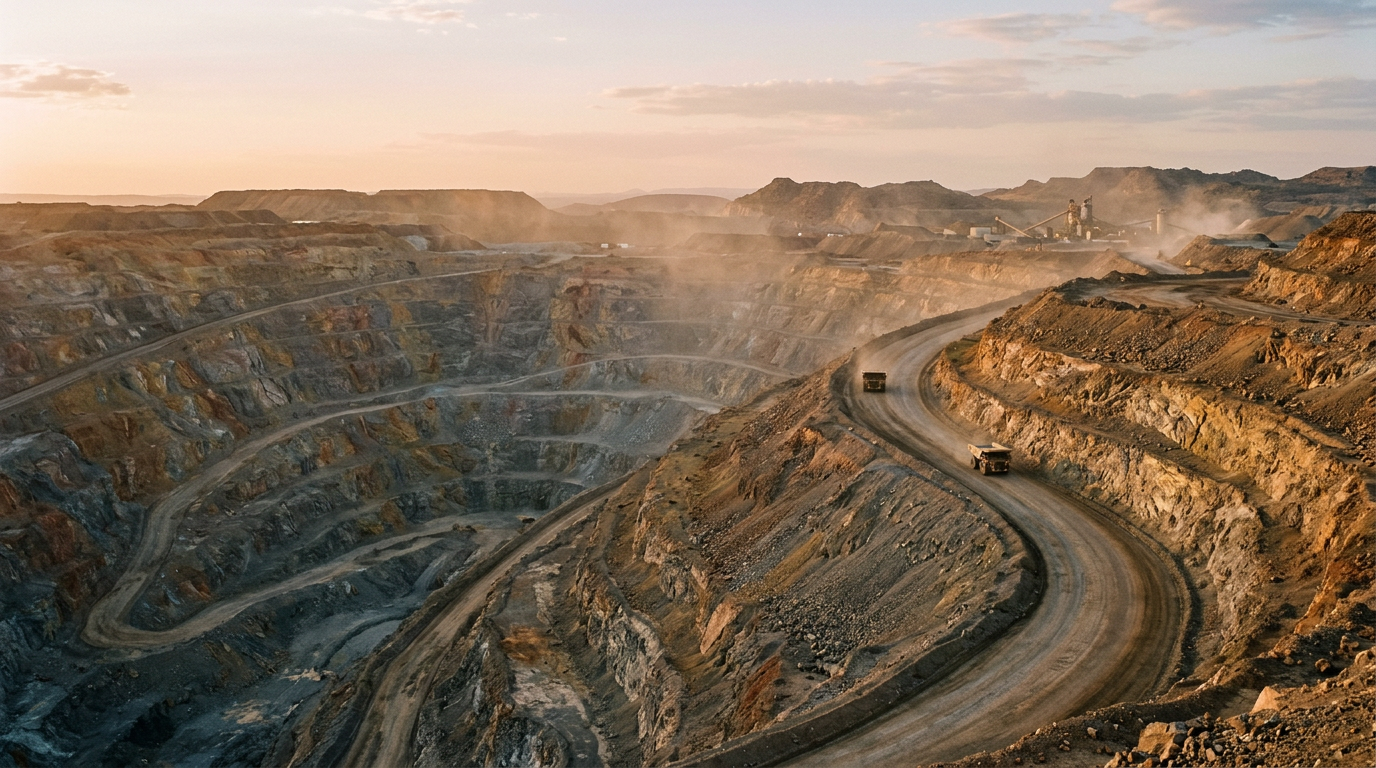
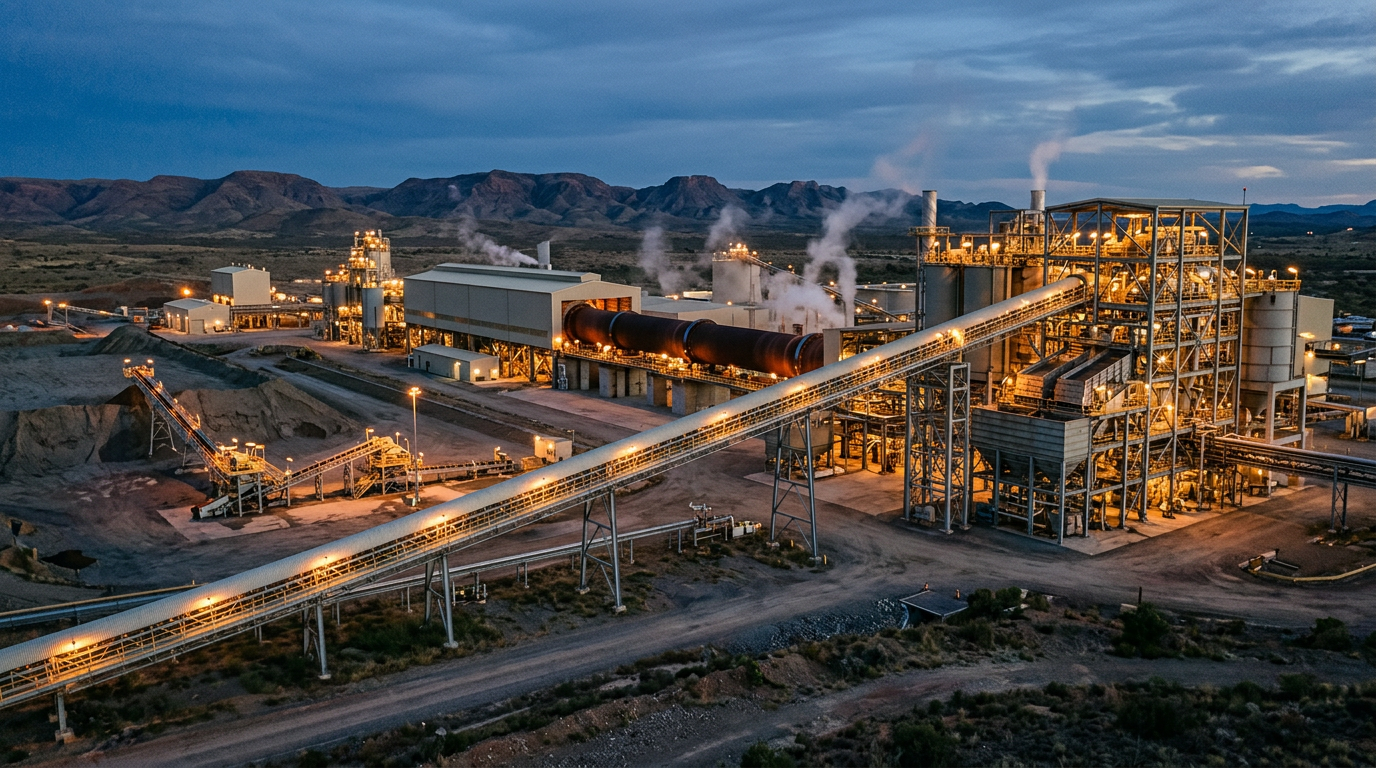
Few environments punish equipment the way a working mine does. Crushers run at capacity, conveyors stretch for kilometers, haul trucks cycle around the clock, and everything operates inside a permanent cloud of abrasive dust. When something overheats out there, the cost of finding out late is measured in lost production hours rather than repair invoices.
That is why thermal imaging mining applications have moved from occasional inspection routes to permanently installed monitoring. The economics are straightforward. Deloitte's analysis of predictive maintenance programs points to a 5 to 15 percent reduction in facility downtime when condition-based monitoring replaces calendar-driven servicing, along with 70 to 75 percent fewer breakdowns versus a reactive approach. Applied to a processing plant or a haulage circuit, those percentages get large fast.
For the OEMs, system integrators, and platform builders serving this market, the interesting question is not whether infrared belongs in mining. It is what a camera system has to survive to be worth installing. This piece walks through the applications that drive demand, the environmental realities that separate durable infrared imaging solutions from disappointing ones, and the criteria worth applying before you commit a design.
Why Does Mining Punish Thermal Imaging Systems So Hard?
Most industrial imaging specs are written against a factory baseline: controlled temperature, filtered air, a technician nearby. Mine sites offer none of that. Understanding the specific stressors helps explain why thermal imaging deployments in mining fail for reasons that have nothing to do with sensor resolution.
Airborne Particulates Never Stop
Ore dust, coal dust, and drill fines coat every exposed surface. Window contamination degrades apparent temperature readings before anyone notices a problem, which means calibration drift shows up as false confidence rather than an obvious fault. Purge air, sacrificial windows, and coating durability become design requirements rather than accessories.
Vibration and Shock Are Continuous
Crusher housings, screen decks, and haul truck frames transmit constant mechanical energy into anything bolted to them. Optical assemblies that hold alignment on a bench can wander in the field, and a misaligned lens stack quietly degrades image quality over months. Robust mounting and mechanically stable optical design carry real weight here.
Service Windows Are Rare
Mines operate around the clock, and a monitoring system that needs a technician every few weeks is a liability. Uncooled long wave infrared systems, operating in the 8 to 14 micrometer band, dominate mining thermal inspection work for exactly this reason: no cryocooler, low power draw, and long service intervals. Higher-temperature process work sometimes calls for mid wave systems in the 3 to 5 micrometer band, which is a separate design conversation covered in our guide to thermal cameras in harsh environments.
What Do Thermal Imaging Mining Systems Actually Watch?
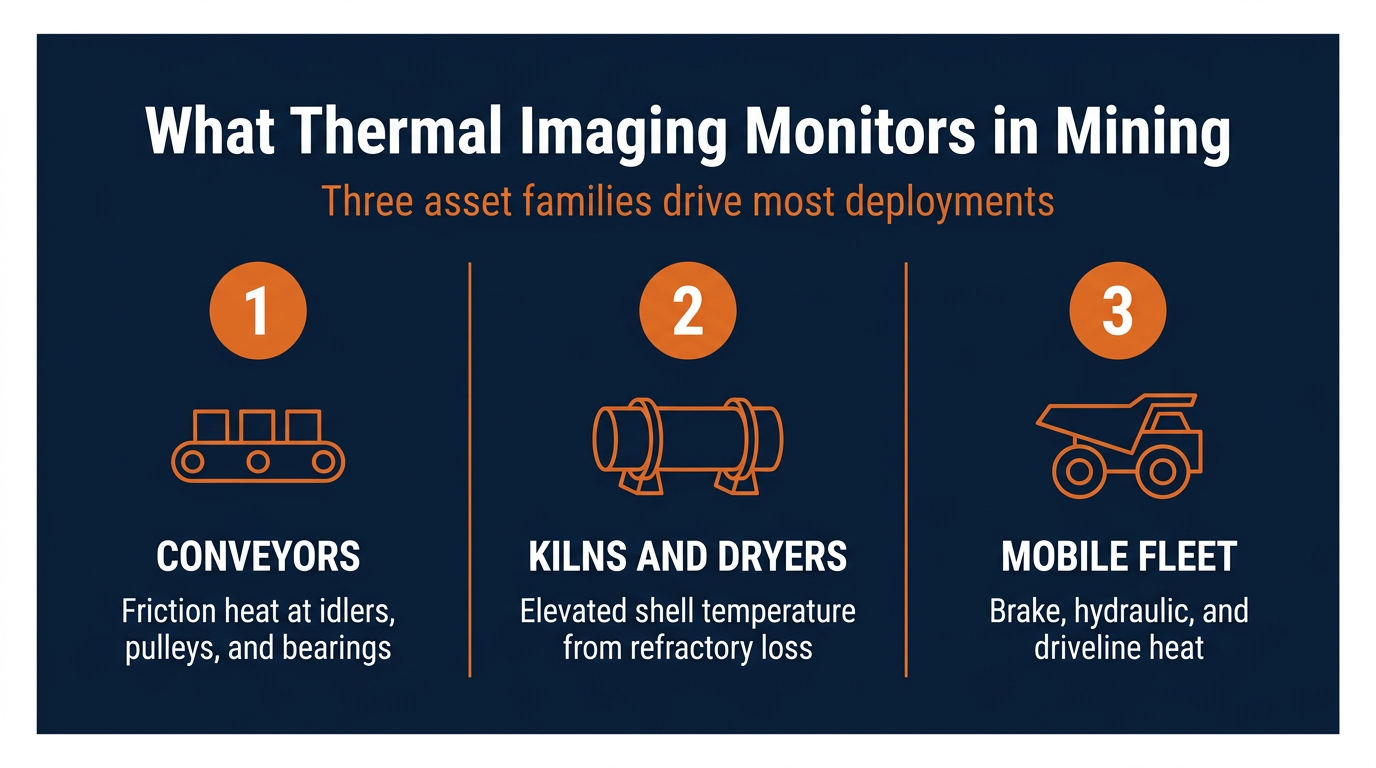
Three asset families account for most of the demand, and each one shapes system requirements differently. A platform built for industrial thermal imaging applications across all three needs flexibility in optics, mounting, and output rather than one fixed configuration.
Conveyors and Transfer Points
Conveyor thermal monitoring is the most established use case in the sector. Seized idlers, misaligned belts, and slipping drive pulleys all generate friction heat well before they generate visible damage. Fixed cameras positioned at drive heads and transfer chutes give operators continuous coverage of the points most likely to fail. Conveyor thermal monitoring also catches hot material coming off a stockpile or out of a process line, which matters enormously for fire prevention.
Kilns, Dryers, and High-Temperature Process Equipment
Kiln thermal imaging supports refractory management in cement, lime, and mineral processing operations. Refractory lining thins gradually, and thinning shows up as elevated shell temperature long before a breakthrough. Continuous kiln thermal imaging lets plants schedule relines against measured condition rather than calendar assumptions. The same approach applies to dryers, calciners, and furnace enclosures where interior inspection is impractical during operation, and where purpose-built furnace camera modules generally outperform general-purpose hardware.
Mobile Fleet and Heavy Equipment
A heavy equipment thermal camera mounted on or aimed at haul trucks, loaders, and shovels watches brakes, hydraulics, wheel motors, and engine compartments. Brake and hydraulic faults in particular tend to announce themselves thermally well ahead of any operator-noticeable symptom, which is why this coverage has spread from the maintenance bay to the haul road. Some operators run fixed gate-style scanning stations that image every vehicle as it passes; others integrate cameras onto the machine itself. Either way, heavy equipment thermal camera data feeds the same maintenance workflow as the fixed assets.
|
Asset Family |
Typical Thermal Signature Watched |
Common Deployment |
|---|---|---|
|
Conveyors and idlers |
Friction heat at rollers, pulleys, and bearings |
Fixed cameras at drive and transfer points |
|
Belt-carried material |
Hot ore, smoldering coal, combustible carryback |
Wide field of view over belt width |
|
Kilns and dryers |
Elevated shell temperature from refractory loss |
Fixed scanning along the shell |
|
Haul trucks and loaders |
Brake, hydraulic, and driveline heat |
Gate-style scanning or vehicle-mounted |
|
Electrical rooms and substations |
Loose connections, overloaded circuits |
Fixed panel monitoring or route-based |
How Does Conveyor Thermal Monitoring Reduce Fire Risk?
Fire is the safety case that gets thermal imaging mining projects funded. Underground, the stakes are severe. NIOSH notes that fires in conveyor belt entries generate smoke and high concentrations of toxic gas that the ventilation system then distributes through the mine, and that ventilation air velocity strongly affects how well detection and suppression systems perform.
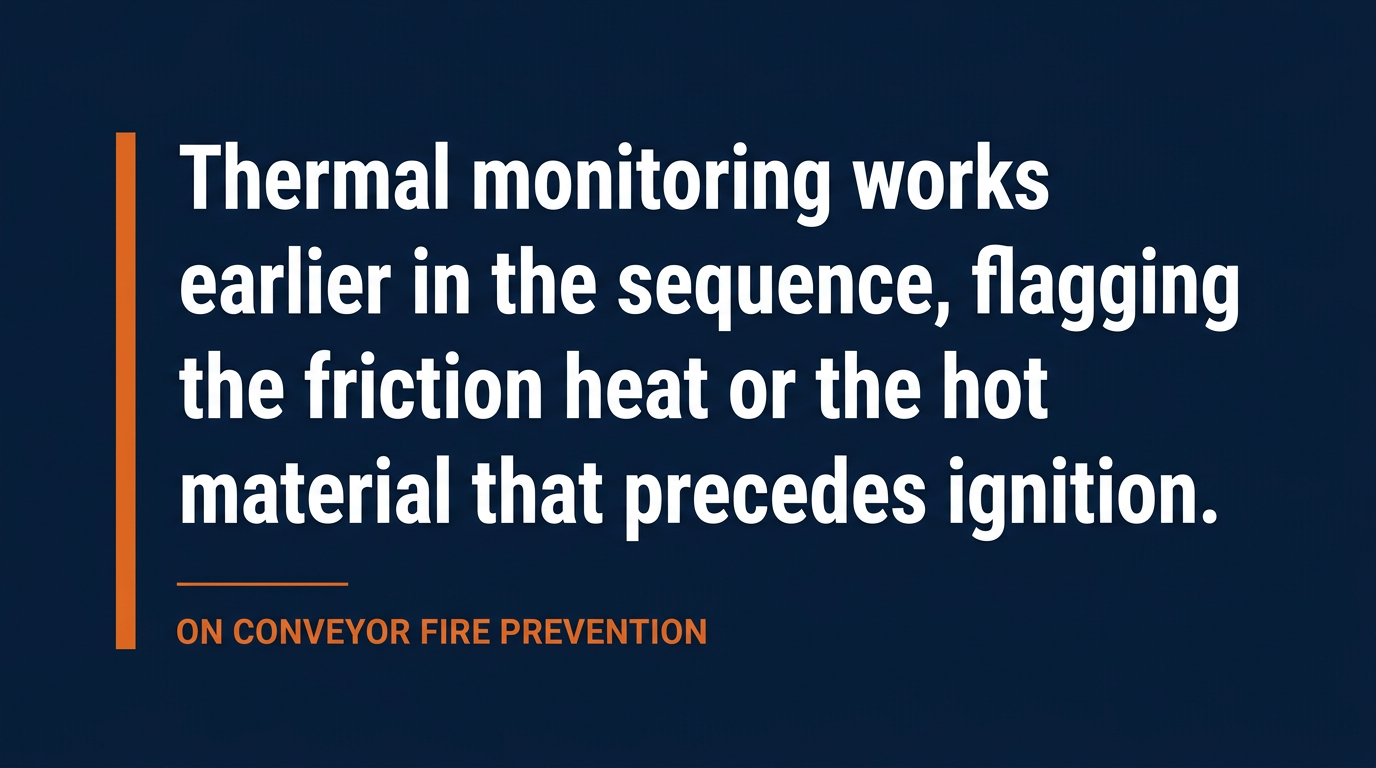
Traditional detection relies on carbon monoxide sensors and smoke sensors, which respond once combustion is already underway. Thermal monitoring works earlier in the sequence, flagging the friction heat or the hot material that precedes ignition. The two approaches complement each other rather than compete, and mining thermal inspection programs that pair them get earlier warning without giving up proven detection methods.
Regulatory structure reinforces this. MSHA's conveyor system standards cover slippage switches, belt maintenance, automatic fire warning devices, and belt entry ventilation across underground coal, surface, and metal and nonmetal operations. Systems that produce clean, auditable temperature records give operators evidence that supports those obligations, and that documentation value is a genuine selling point for platform builders.
A note worth carrying into product literature: thermal imaging is strong in low-visibility conditions and has real limits in others, and honest performance framing earns more trust with technical buyers than absolute claims do.
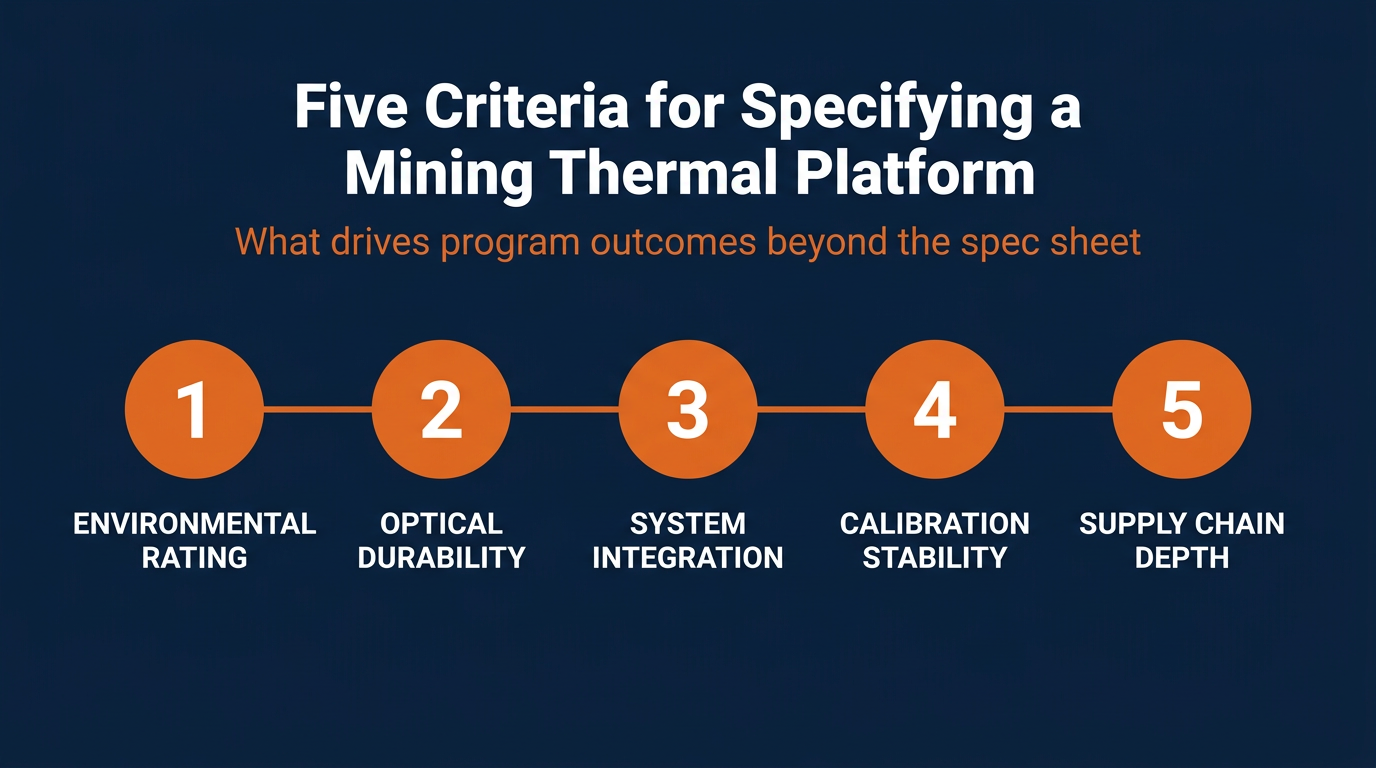
Five Criteria for Specifying a Mining Thermal Platform
Selection conversations in this sector tend to start with resolution and end somewhere entirely different. These five criteria drive long-term program outcomes more reliably than any single spec line.
- Environmental rating matched to the actual installation. Ingress protection, operating temperature range, and vibration tolerance should reflect the worst position at the client site, not the average one. A system rated for a control room fails at a transfer chute.
- Optical durability under abrasion. Window materials and coatings take continuous particulate impact. Material selection and coating hardness determine whether accuracy holds through year three or degrades through month six.
- Integration into existing plant systems. Output protocols, alarm handling, and historian compatibility decide whether a monitoring system becomes part of the maintenance workflow or a screen nobody watches. Our industrial thermal camera specifications checklist breaks these requirements down further.
- Calibration stability over service life. Industrial thermal monitoring only produces value when temperature readings stay trustworthy. Ask how accuracy is maintained, how often recalibration is required, and what happens to readings as windows accumulate contamination.
- Supply chain depth behind the components. Mining platforms carry long service lives and long spare parts obligations. Optical material availability, particularly for germanium and its alternatives, has real program risk attached to it. Programs that plan for this early avoid redesign later.
Those criteria apply differently depending on how the system gets deployed. Fixed installations for kiln thermal imaging carry different constraints than a camera bolted to a haul truck, and most mining programs end up running a mix.
|
Deployment Model |
Best Suited For |
Main Trade-Off |
|---|---|---|
|
Fixed continuous monitoring |
Conveyor drives, kilns, critical electrical assets |
Higher install cost, highest coverage |
|
Gate or checkpoint scanning |
Mobile fleet passing a fixed location |
Snapshot data rather than continuous |
|
Vehicle-integrated cameras |
Machine-level health on mobile assets |
Tighter size, weight, and power limits |
|
Route-based portable inspection |
Distributed low-criticality assets |
Depends on inspection frequency |
What Should OEMs Look for in an Imaging Partner?
The suppliers serving this market fall into distinct categories, and the category matters more than the brand. Component distributors offer broad catalog coverage, which works well when a standard part fits. Camera assemblers integrate purchased optics and sensors, an approach that serves many programs until a custom requirement or a supply disruption appears. Vertically integrated manufacturers control the chain from raw optical material through finished camera, which shortens development cycles and reduces the number of parties who can break your schedule.
For mining programs specifically, three supplier attributes deserve weight. First, custom optical design capability, because standard focal lengths rarely match a specific conveyor geometry or kiln standoff distance. Second, domestic manufacturing and compliance positioning, which increasingly matters for infrastructure and government-adjacent projects. Third, material independence. Chalcogenide glass formulations that substitute for germanium reduce exposure to a genuinely volatile supply market, and that stability shows up in program pricing years later.
Industrial thermal monitoring platforms live a long time. The imaging decisions made in the first design cycle set the ceiling on what the platform can do for the rest of its life, a theme explored further in our OEM guide to predictive maintenance imaging.
Frequently Asked Questions
These are the questions that come up most often in early scoping conversations with engineering and procurement teams evaluating industrial thermal monitoring for mine sites and heavy industry.
Which infrared band suits mining applications best?
Long wave infrared, covering 8 to 14 micrometers, handles most mining thermal inspection requirements, including conveyors, bearings, electrical assets, and general equipment monitoring. Mid wave infrared, at 3 to 5 micrometers, becomes relevant for very high-temperature process work such as kiln interiors and molten material. Match the band to the hottest and coldest assets in scope rather than defaulting to one choice.
Can thermal cameras see through mine dust?
Thermal imaging penetrates airborne dust, smoke, and darkness far better than visible-light cameras, which is a large part of its value underground and at transfer points. Performance still degrades in heavy rain, dense water spray, and against surfaces with strong reflected solar loading, so system design should account for those conditions.
Do surface and underground operations need different systems?
Underground work puts more weight on fire detection, confined-space mounting, and any applicable permissibility requirements for the mine class. Surface operations deal with wider ambient temperature swings, solar loading, and longer standoff distances across pit and stockpile areas. The core imaging requirements overlap heavily, but housings, mounting, and field of view usually diverge.
Do these systems replace manual inspection routes?
They shift the balance rather than eliminate inspections. Fixed monitoring covers critical assets continuously and flags anomalies between rounds, while portable inspection remains practical for distributed, lower-criticality equipment. Most mature programs run both.
Build a Mining Thermal Platform That Holds Up
The mine sites that get real value from infrared run systems designed for the conditions they actually face. That starts upstream of the camera housing, in the optical materials, the lens design, and the manufacturing chain behind them.
LightPath Technologies designs and builds infrared optics, assemblies, and complete thermal camera systems for OEMs and integrators serving industrial and heavy industry markets, backed by proprietary Black Diamond chalcogenide glass and North American manufacturing. If you are scoping a monitoring platform for mining or heavy equipment applications, talk with our engineering team about what your program requires.