
Key Takeaways
Selecting the right IR system integration services partner significantly impacts program success, timeline, and total cost of ownership.
- Integration partners with proven thermal imaging expertise reduce development time from 18+ months ton6-9 months compared to internal development
- Comprehensive evaluation criteria should include technical capabilities, supply chain reliability, custom optics vendor experience, and partnership approach
- Full-service integration ecosystems deliver better outcomes than component-only suppliers for mission-critical applications
- Choose partners offering complete IR imaging system integration capabilities, from materials to final testing, to minimize risk and accelerate deployment.
The decision to select an IR system integration services partner can make or break your program's success. With the thermal imaging systems market valued at $5.78 billion in 2025 and forecast to reach $8.17 billion by 2030, organizations face increasing pressure to deploy advanced thermal imaging capabilities quickly and reliably. However, the complexity of modern infrared systems means that choosing the wrong integration partner can result in costly delays, performance compromises, and budget overruns.
Program managers and engineering teams across aerospace, defense, and industrial sectors increasingly recognize that successful IR system deployment requires more than just selecting individual components. The integration of thermal imaging technologies involves sophisticated optical design, precise calibration procedures, materials science expertise, and complex system-level optimization that most organizations lack internally.
What Defines Quality IR System Integration Services?
Modern IR system integration services encompass far more than assembling components from multiple vendors. Quality integration partners provide comprehensive support across the entire development lifecycle, from initial requirements definition through final deployment and ongoing support.
Understanding Integration Complexity
The foundation of effective IR imaging system integration lies in understanding the complex interdependencies between optical elements, sensor technologies, signal processing, and mechanical systems. According to recent market analysis, defense applications account for 24.5% of the thermal imaging market, with these systems requiring extraordinary reliability and performance under challenging conditions.
Core Service Elements
Quality integration services begin with collaborative requirements definition, where experienced engineers work alongside your team to translate mission objectives into specific technical parameters. This phase proves critical because thermal imaging performance depends heavily on optimizing the entire optical chain rather than maximizing individual component specifications.
The most effective IR system integration services include factory calibration capabilities, standardized interfaces for simplified integration, dedicated engineering support throughout the project lifecycle, and comprehensive testing protocols that validate performance under operational conditions. Leading integration partners also provide ongoing technical support and upgrade paths as mission requirements evolve.
How Do You Evaluate IR System Integration Capabilities?
Evaluating potential integration partners requires examining multiple dimensions beyond basic technical specifications. The complexity of infrared systems means that experience, proven methodologies, and comprehensive capabilities often matter more than individual component performance claims.
Technical Expertise Assessment
Start by examining the potential partner's track record with similar applications and operational environments. Experience with your specific wavelength requirements, whether LWIR, MWIR, or broadband systems, directly impacts integration success. Partners should demonstrate deep understanding of optical design principles, including f-number optimization, modulation transfer function considerations, and athermalization techniques.
Manufacturing and Quality Control
The ability to design and manufacture custom optics represents another critical capability. Many applications require specialized lens + sensor bundle configurations that cannot be achieved with off-the-shelf components. Custom optics vendor experience becomes essential when standard solutions cannot meet your size, weight, power, or performance requirements.
|
Evaluation Criteria |
Key Questions to Ask |
Success Indicators |
|
Technical Track Record |
How many similar systems have you integrated? |
10+ successful deployments in similar applications |
|
Materials Expertise |
What alternative materials do you offer beyond germanium? |
Proven chalcogenide glass or alternative materials experience |
|
Integration Timeline |
What is your typical development timeline? |
6-9 months for standard integrations, clear milestone tracking |
|
Testing Capabilities |
What environmental testing can you perform? |
MIL-STD compliance, temperature cycling, vibration testing |
What Technical Capabilities Matter Most for IR Integration?
The technical capabilities that determine integration success extend beyond basic optical performance specifications. System-level design expertise, environmental hardening experience, and interface standardization capabilities often prove more critical than individual component specifications.
Optical System Design Excellence
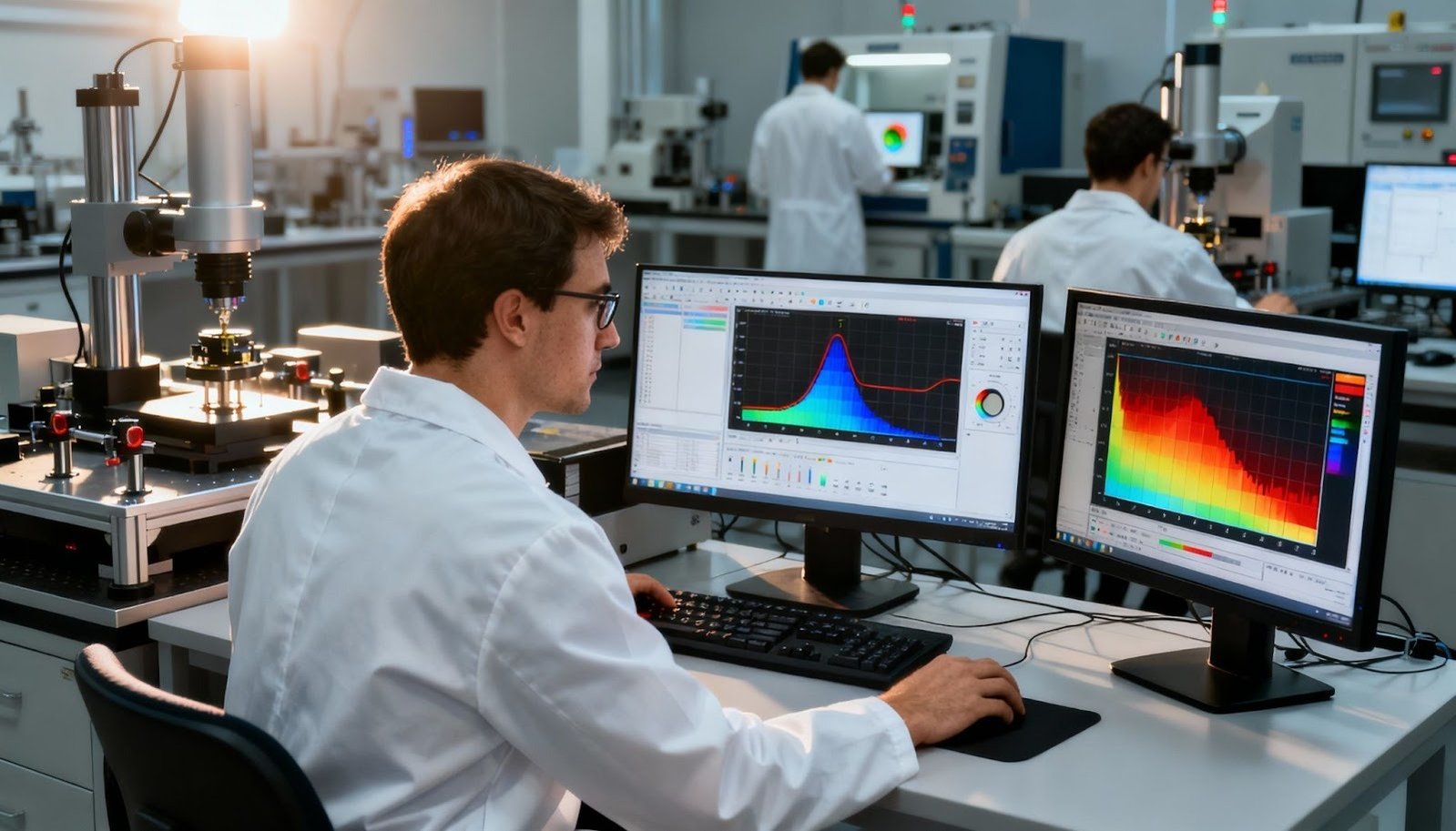
Effective IR imaging system integration requires comprehensive optical design capabilities that optimize the entire imaging chain. This includes lens-to-sensor matching, cold shield efficiency optimization, and coating technologies that maximize transmission across required wavelength ranges.
Advanced thermal imaging solutions require particular attention to cold shield design, which directly impacts image uniformity and system noise characteristics. Partners should demonstrate 100% cold shield efficiency to eliminate artifacts such as corner shading and zoom-related non-uniformities.
Environmental Performance Requirements
The ability to design achromatic optical systems provides significant integration advantages, particularly for broadband applications. These designs eliminate the need for refocus mechanisms across the operating wavelength range, simplifying integration and reducing system complexity.
Mission-critical applications demand thermal imaging systems that perform reliably under extreme environmental conditions. Integration partners should demonstrate experience with military-grade environmental specifications, including temperature cycling, vibration resistance, and shock tolerance.
Why Are Supply Chain and Materials Considerations Critical?
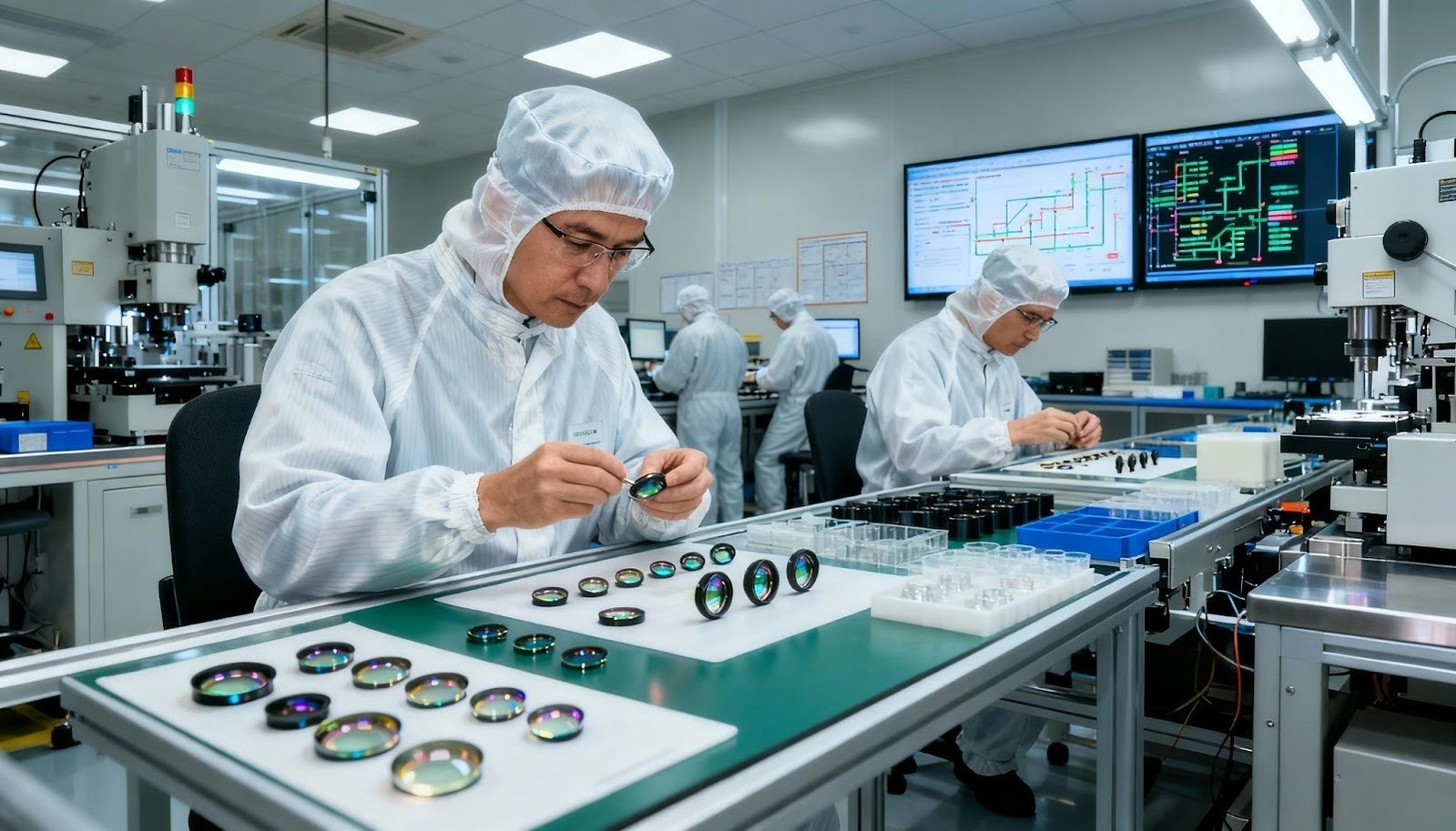
Supply chain reliability and materials expertise have become critical differentiators among IR system integration partners. Traditional reliance on germanium optics creates potential vulnerabilities in cost, availability, and lead times that experienced integration partners actively address through material innovation and diversified sourcing strategies.
Material Innovation Advantages
Leading integration partners invest in alternative materials research and manufacturing capabilities that reduce dependence on constrained materials. Proprietary chalcogenide glass technologies provide alternatives to germanium-based optics while maintaining or improving optical performance characteristics.
Vertical Integration Benefits
These material alternatives offer multiple advantages beyond supply chain security. Chalcogenide glass formulations can provide enhanced transmission characteristics, improved environmental durability, and cost advantages that improve total system economics. Partners with in-house materials capabilities can also customize optical properties for specific application requirements.
Vertical integration capabilities provide significant advantages in supply chain management, quality control, and cost optimization. Partners who manufacture critical components in-house can better control lead times, implement design changes rapidly, and maintain consistent quality standards across production volumes.
Which Integration Approach Delivers Better Results?
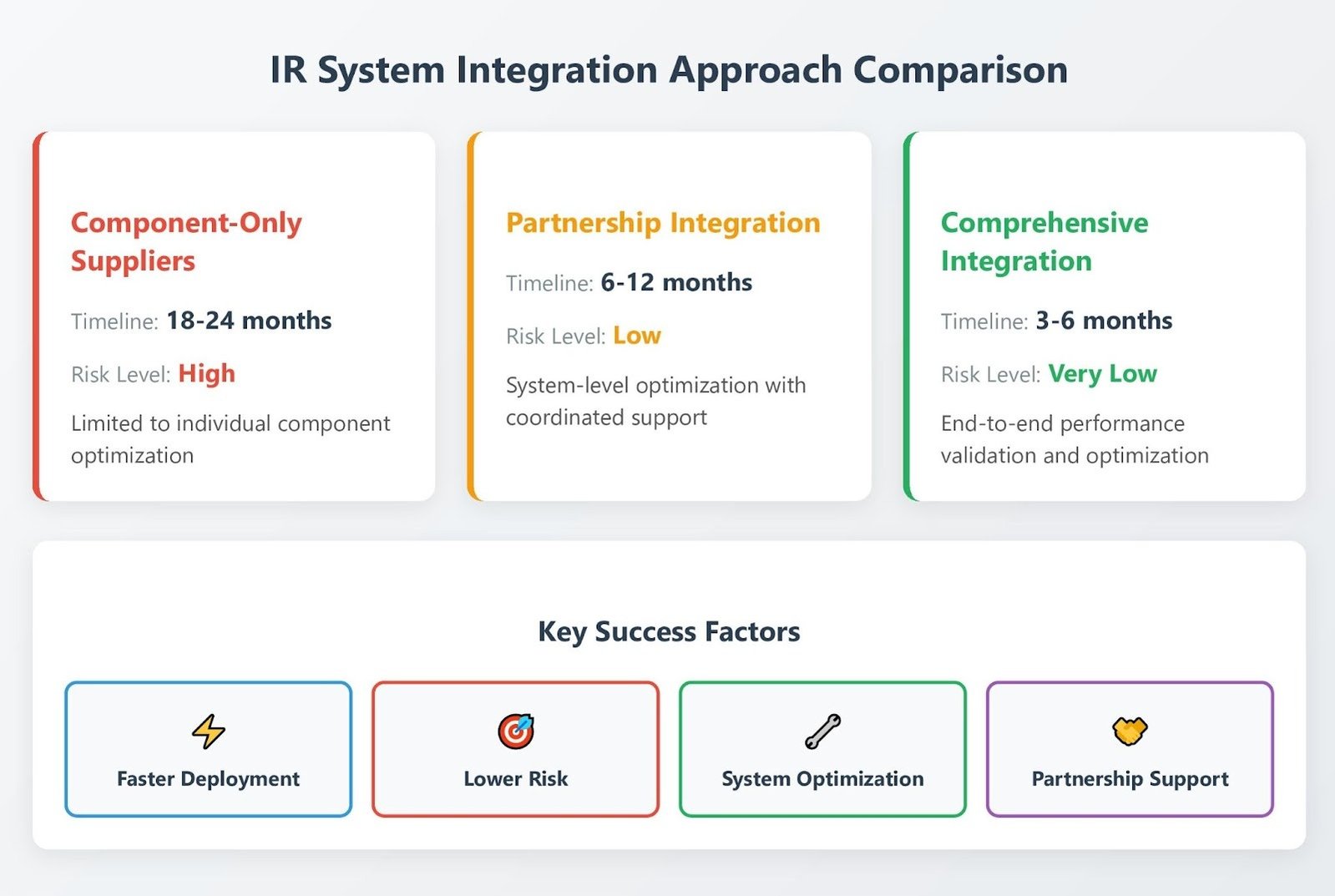
The complexity of modern IR systems strongly favors integration partners who provide comprehensive support ecosystems rather than component-only suppliers. Organizations that attempt to integrate thermal imaging systems using multiple component suppliers typically encounter significant challenges in system optimization, interface compatibility, and performance validation.
Top 5 Partnership Advantages Over Component-Only Suppliers
Integrated Design Optimization approaches system design holistically, optimizing performance across the entire imaging chain rather than maximizing individual component specifications. This approach typically delivers superior system-level performance while simplifying integration and reducing technical risk.
Consolidated Responsibility eliminates the complexity of managing multiple supplier relationships, troubleshooting interface issues, and coordinating testing activities across multiple organizations. Single-source accountability streamlines program management and accelerates issue resolution.
Reduced Technical Risk comes from proven design methodologies, established testing protocols, and integrated quality assurance processes that accelerate program milestones while maintaining performance standards. Partnership approaches typically reduce development timelines by 40-60% compared to component-level integration approaches.
System-Level Performance Validation ensures that all components work together optimally rather than individually meeting specifications. Comprehensive optical solutions require this systems-level approach to achieve optimal performance.
Streamlined Interface Management provides standardized electrical, mechanical, and communication interfaces across product families. This reduces integration complexity and enables rapid deployment across multiple platform configurations.
|
Integration Approach |
Typical Timeline |
Risk Level |
Performance Optimization |
|
Component-Only Suppliers |
18-24 months |
High |
Limited to individual components |
|
Partnership Integration |
6-12 months |
Low |
System-level optimization |
|
Comprehensive Integration |
6-9 months |
Very Low |
End-to-end performance validation |
What Integration Support Should You Expect?
Comprehensive integration support extends throughout the entire program lifecycle, from initial requirements definition through deployment, ongoing support, and future upgrade paths. The quality and scope of integration support often determine program success more than individual component specifications.
Engineering Support Throughout Development
Effective integration partners provide dedicated engineering support that begins during the requirements definition phase and continues through deployment and operational support. This includes collaborative design sessions, performance modeling, interface specification development, and integration planning.
Testing and Validation Capabilities
During the development phase, integration partners should provide regular design reviews, prototype testing results, and milestone validation activities that maintain program visibility and enable rapid issue resolution.
Quality integration partners provide comprehensive testing capabilities that validate both individual component performance and integrated system functionality. This includes optical testing, environmental qualification, electromagnetic compatibility validation, and operational performance verification under simulated mission conditions.
Environmental testing capabilities should encompass temperature cycling, vibration testing, shock qualification, and long-term stability validation that confirm system reliability under operational stresses. Partners should also provide calibration services, performance documentation, and certification support for regulatory compliance requirements.
How Do Market Trends Impact Integration Partner Selection?
Understanding current market trends helps inform integration partner selection by identifying emerging technologies, supply chain considerations, and performance requirements that will impact future system deployments.
Technology Evolution Trends
The thermal imaging systems market, expanding at a 7.16% CAGR through 2030, demonstrates the rapid adoption of thermal imaging across multiple industries. This growth drives continued innovation in sensor technologies, optical materials, and integration methodologies that leading partners must stay current with.
Supply Chain Adaptation
Market trends toward supply chain resilience have accelerated development of alternative materials and manufacturing approaches. Integration partners who invest in these capabilities position their customers for better long-term supply security and cost stability.
Making the Strategic Integration Decision
Selecting the right IR system integration services partner requires careful evaluation of technical capabilities, partnership approach, and long-term strategic alignment. Organizations that prioritize comprehensive integration partnerships typically achieve better program outcomes, faster deployment timelines, and lower total cost of ownership compared to component-level approaches.
The thermal imaging market continues to evolve rapidly, with new technologies, applications, and performance requirements emerging regularly. Integration partners who invest in research and development, maintain strong technical capabilities, and provide comprehensive support ecosystems position their customers for long-term success in this dynamic environment.
Your choice of integration partner will ultimately determine whether your thermal imaging deployment delivers the performance, reliability, and operational advantages your mission requires. Take the time to thoroughly evaluate potential partners against the criteria outlined above, and prioritize organizations that demonstrate proven expertise, comprehensive capabilities, and a genuine commitment to partnership success.

Frequently Asked Questions
What is the typical timeline for IR system integration projects? With an experienced integration partner, standard IR system integration projects typically require 6-9 months from requirements definition to deployment. Complex custom applications may require 6-12 months, while component-only approaches often extend to 18-24 months due to coordination complexity and interface challenges.
How do I evaluate the technical expertise of potential IR integration partners? Evaluate technical expertise by examining their track record with similar applications, materials capabilities including germanium alternatives, manufacturing and testing capabilities, and their ability to provide comprehensive system optimization rather than just component assembly.
What are the key advantages of choosing a vertically integrated IR system integration partner? Vertically integrated partners provide better control over quality, lead times, and cost while enabling system-level optimization across the entire optical chain. They can also respond more rapidly to design changes and provide consistent performance across production volumes.
How important are supply chain considerations when selecting an IR integration partner? Supply chain considerations are critical, particularly given constraints in germanium availability and cost. Partners with alternative materials capabilities, such as chalcogenide glass technologies, provide significant advantages in cost, availability, and performance reliability.
What testing and validation capabilities should I expect from an IR system integration partner? Comprehensive partners should provide factory calibration, environmental testing including temperature cycling and vibration qualification, optical performance validation, electromagnetic compatibility testing, and ongoing support for performance optimization and troubleshooting.
Partner With Proven IR Integration Expertise
For organizations ready to deploy advanced thermal imaging capabilities, working with an experienced integration partner who provides comprehensive IR system integration services, proven custom optics vendor capabilities, and full-spectrum support can transform your program timeline and ensure mission success. Contact our thermal imaging experts to discuss how our integrated approach to thermal imaging solutions can accelerate your program and deliver the performance advantages your mission demands.