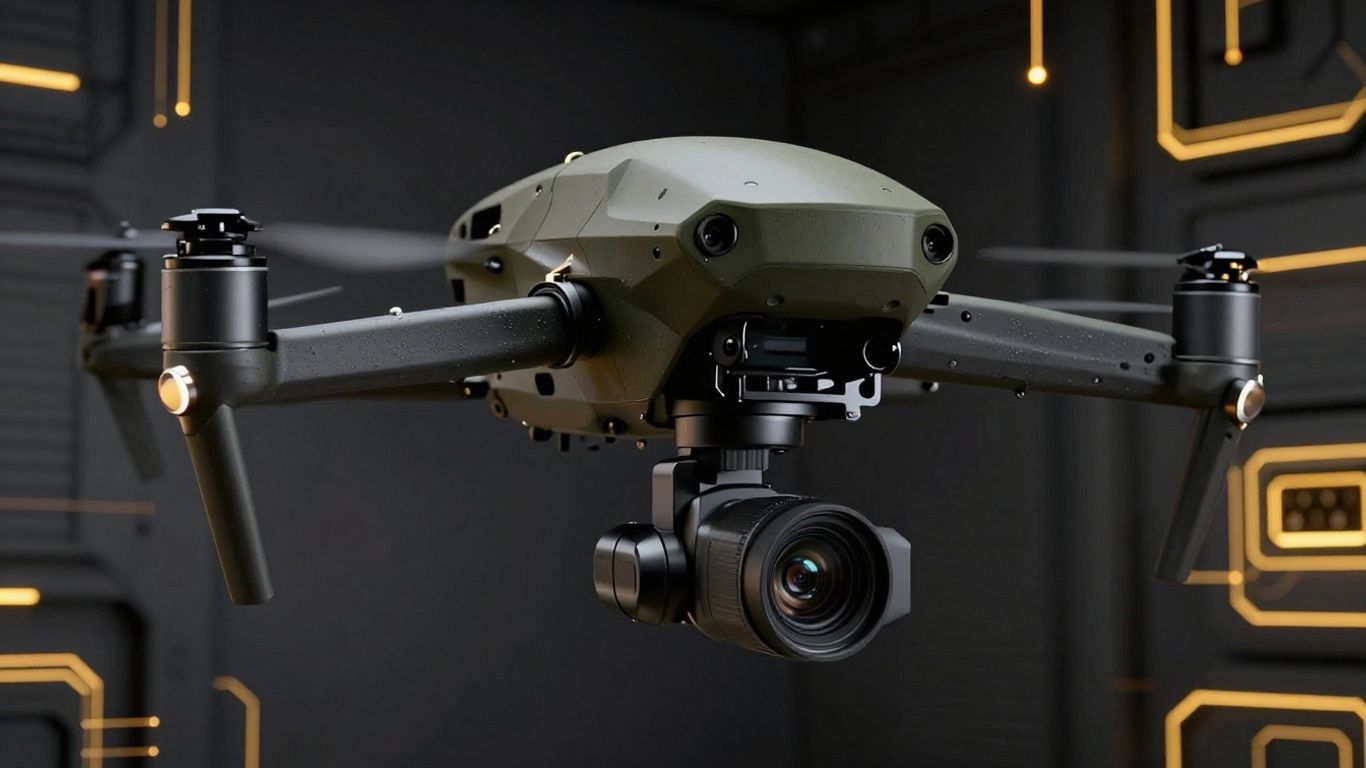

Choosing the right thermal camera for your drone can feel like a big task. You've got all these specs and features to think about, and honestly, it's easy to get lost. But don't worry, we're here to break it down. This guide is all about helping you make a smart drone thermal camera selection, so your drone can do what you need it to do, whether that's finding someone lost or checking on equipment. Let's get started.
Key Takeaways
- When you're looking at IR cameras for drones, remember that the overall design, not just the specs, really matters. Things like the lenses and how everything fits together play a huge role in how well it works.
- Don't forget about size, weight, and how much power the camera uses (SWaP). These factors can quickly rule out certain cameras, even if they look good on paper. You need to make sure it fits your drone and your flight plans.
- Think about where the camera comes from. The stability of the supply chain and the manufacturer's ability to make parts reliably are just as important as the camera's performance. It affects if you can get it and keep it working.
- Export rules can really limit where you can sell or use certain cameras. Understanding these regulations early on is key to avoiding problems later.
- It's often better to work with companies that handle the whole process, from making the basic materials to putting the final camera together. This usually means a more reliable and better-performing system for your drone.
Understanding Thermal Imaging Technology for Drone Integration
Drone-based thermal imaging plays an important role in search and rescue, surveillance, and industrial monitoring. When you consider integrating an IR camera into your drone platform, understanding the underlying technologies and distinctions is key to making sure you pick the right system for each mission.
Principles of Thermal Radiation Detection
Every object above absolute zero emits infrared radiation. Thermal cameras detect this energy, which is invisible to the naked eye, and convert it into a visible image. The process involves:
- Focusing IR energy onto a sensor array filled with thousands of detector pixels
- Each pixel transforms the incoming radiation into electric signals
- Processing electronics assign temperature values, creating a grayscale or color image
Lighter areas generally reflect warmer objects, but palettes can be adjusted. This method works day or night, and is not dependent on ambient lighting or visible spectrum conditions, making it effective for SAR operations in poor visibility, smoke, or heavy vegetation.
Distinguishing Thermal Infrared from Near-Infrared
A frequent source of confusion is the difference between thermal IR and near-infrared systems. For drone integration, this matters:
|
Technology |
Wavelength (μm) |
Detection Mechanism |
Typical Uses |
|---|---|---|---|
|
Near-Infrared |
0.7 – 2.5 |
Reflected IR, needs light |
Crop health, material sorting |
|
Thermal Infrared |
3 – 14 |
Emitted IR, temperature |
SAR, surveillance, inspections |
Near-infrared cameras function closer to regular visible cameras, needing active lighting or sunlight. In contrast, thermal infrared systems sense temperature differences, offering clear benefits for situations where light is unavailable or not reliable.
Cooled Versus Uncooled Detector Technologies
The type of sensor inside the camera largely determines its performance, weight, and integration complexity. You will typically encounter two primary types:
- Cooled Detectors
- Uncooled Detectors
A helpful breakdown:
|
Attribute |
Cooled Sensors |
Uncooled Sensors |
|---|---|---|
|
Sensitivity |
Very high |
Moderate |
|
Cost |
High |
Lower |
|
Power Use |
High |
Low |
|
Weight |
Heavy |
Light |
|
Maintenance |
More |
Minimal |
Selecting between cooled and uncooled systems depends on the specific performance objectives and what’s practical for the drone platform. If you are considering rugged applications or demanding operating conditions, it’s smart to partner with a supplier that engineers components for harsh environments, like advanced targeting systems providers.
If you’re planning to equip drones for search and rescue, inspection, or tactical surveillance, knowing these distinctions will help you make cost-effective and reliable choices. For expert advice or to talk about tailored solutions, contact the team at LightPath through their contact page.
Key Performance Metrics for Drone Thermal Camera Selection
Choosing an infrared camera for your drone isn’t just about picking the model with the highest specs; it’s about understanding what those numbers mean and how they directly affect operational outcomes. The right decision begins with a clear view of the critical performance indicators that matter most for SAR and surveillance applications.
Thermal Resolution and Sensitivity Explained
When you look at thermal resolution, you’re asking how many individual temperature points your sensor will record. More pixels typically translate to sharper, more useful images—especially at longer ranges—making it easier to identify targets that might otherwise blend into the background.
Thermal sensitivity goes hand-in-hand with resolution. Expressed as NETD (Noise Equivalent Temperature Difference) in millikelvin (mK), this metric tells you the smallest temperature difference the camera can distinguish. Drones used in SAR benefit from cameras with NETD values at or below 30mK, enabling the detection of faint heat signatures, even in thermally noisy environments or adverse weather.
- High thermal resolution (e.g., 640×512) = better long-range detection and positive identification
- Lower NETD number (e.g., 20mK) = detects subtler heat differences
- Real-world NETD values are affected not just by sensor, but also optics and environmental conditions
|
Resolution (pixels) |
Suitable for |
Typical Use Case |
|---|---|---|
|
320×240 |
Area search, wide |
Initial detection, SAR |
|
640×512 |
Detailed survey |
Target ID, surveillance |
|
1024×768+ |
Specialized/military |
Long-distance recognition |
Evaluating Detection Range and Field of View
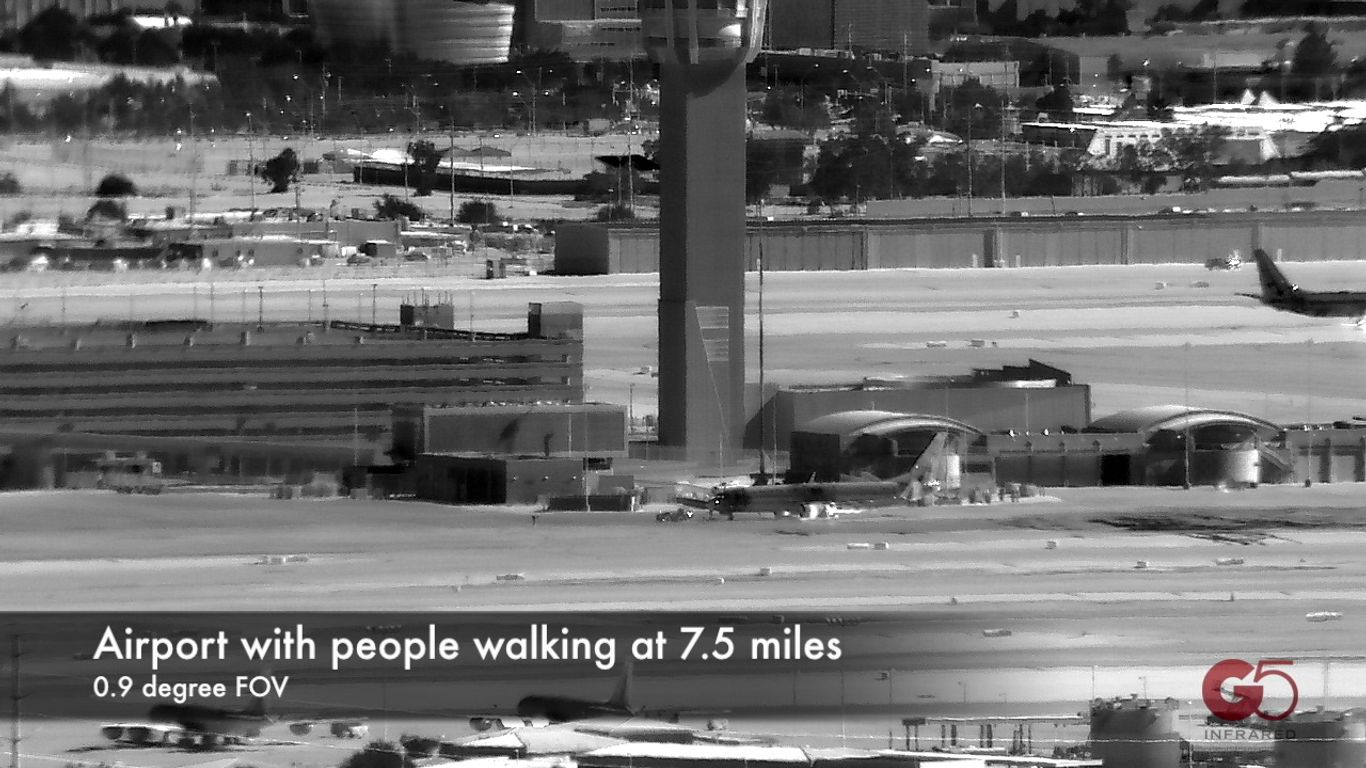
How far can your system see, and how much terrain does it cover? Detection range is the maximum distance at which the camera can reliably spot a human or object of interest. That number depends on a combination of sensor sensitivity, lens focal length, atmospheric clarity, and target characteristics—not just raw pixel count.
Field of view (FOV) describes the width of the area visible to the camera at any one time. Wide FOVs help you cover large regions quickly but provide less detail per target. Narrow FOVs give more detail but limit area coverage per flight.
Key things to check:
- Longer focal lengths/narrow FOVs: Greater detection distances, but reduced search area per image
- Shorter focal lengths/wide FOVs: Cover more ground in less time, often used for initial search
- Environment: Fog, rain, and heat distortion degrade range and image clarity
Table example:
|
Lens Focal Length |
Field of View |
Typical Detection Range (human-sized target) |
|---|---|---|
|
13mm |
45° |
~200m |
|
25mm |
25° |
~400-500m |
|
50mm |
12° |
~900-1000m |
The Impact of Instantaneous Field of View (IFOV)
Rather than just focusing on sensor resolution, you should also pay attention to the IFOV—the angle "seen" by each sensor pixel. IFOV determines how much “detail” each pixel can pick up at a given distance. This is what lets a 320×240 camera with a long lens sometimes spot targets farther than a higher-res camera with a short lens.
- IFOV is calculated as: (Pixel pitch / Focal length) × (57.3 for degrees)
- Smaller IFOV = finer detail at long range
- IFOV is critical for applications where you need to not just see that something is there, but actually recognize what it is
Checklist for camera selection:
- Match camera and lens specs to mission profile (e.g., urban search vs. rural SAR)
- Consider both overall resolution and IFOV in real-world scenarios
- Test candidate systems in relevant conditions when possible
When specifying a thermal payload for your drone, weigh thermal resolution, sensitivity, detection range, and IFOV together—not in isolation. If your operations depend on knowing exactly what you’re seeing from a safe distance, these metrics become the difference between actionable intelligence and missed opportunities. If you’re looking to discuss which combination best fits your unique requirements, our team is ready to assist—reach out at LightPath Technologies to schedule a consultation.
Critical Factors in Drone Thermal Camera System Design
When you're integrating a thermal camera onto a drone, it's not just about picking the camera with the highest resolution. Several other factors play a significant role in how well the system performs and how practical it is to use. You need to think about the optics, the size and weight of the components, and how well the system can handle tough conditions.
Optical Design and Lens Selection Significance
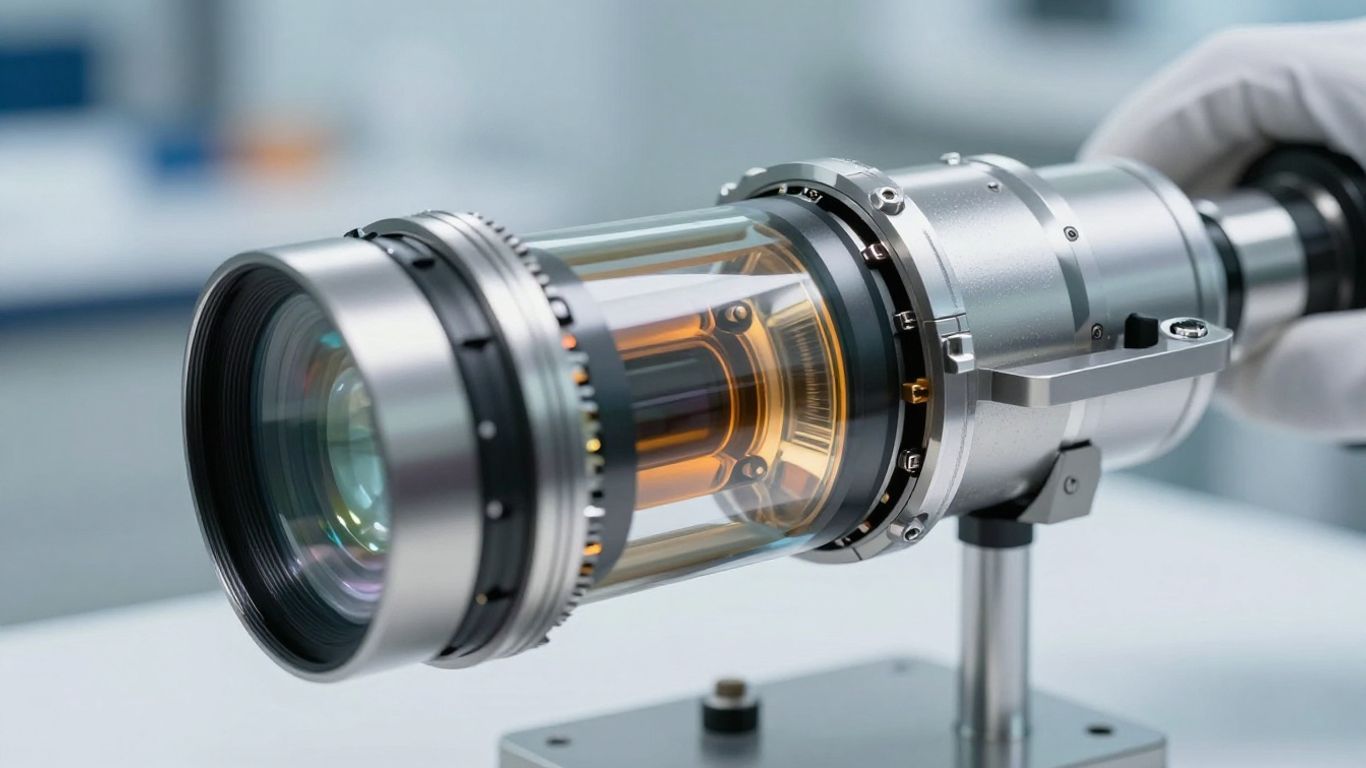
The lens is a really important part of the thermal camera system. It's what gathers the infrared energy and focuses it onto the sensor. You can't just look at the sensor's resolution numbers and assume you'll get great detection. The lens design matters just as much, if not more. For instance, a camera with a lower resolution sensor but a well-designed, wider field-of-view lens might be better for scanning large areas quickly. On the flip side, a narrower field-of-view lens on the same sensor could let you see smaller details or detect targets from much farther away. The instantaneous field of view (IFOV) is a key metric here, which is determined by both the sensor's pixel size and the lens's focal length. It tells you how much of the scene each individual pixel covers. You need to match the lens to your specific mission. Are you trying to cover a lot of ground, or are you looking for a specific, small heat signature from a distance? The optical coatings and the overall design of the lens system affect how much thermal energy actually gets through to the sensor, which impacts image quality and sensitivity. It's a trade-off, and you have to decide what's most important for your application.
Size, Weight, and Power (SWaP) Constraints
This is a big one for drones. Every extra gram of payload means less flight time or a need for a bigger, heavier drone. The size and weight of the thermal camera system, including any necessary cooling equipment or extra batteries, can quickly become a limiting factor. Cooled thermal cameras, while offering superior performance, are typically much heavier and consume more power than uncooled systems. A cooled system might weigh several kilograms and draw tens of watts, which can drastically reduce a drone's flight endurance. Uncooled systems are generally lighter, smaller, and use less power, making them a better fit for many drone platforms, especially smaller ones. You have to balance the performance you need with what your drone platform can realistically carry and power. Sometimes, a slightly less sensitive but much lighter camera is the more practical choice for extended missions.
Environmental Durability and Weather Resistance
Drones often operate in challenging environments, and your thermal camera system needs to keep up. Search and rescue missions, for example, might happen in rain, snow, or extreme temperatures. You'll want a system that is rated for dust and water resistance. The operating temperature range is also important; a camera designed for temperate climates might not function reliably in the desert heat or arctic cold. Beyond just surviving the elements, the system needs to be robust enough to handle the vibrations from the drone's motors and the stresses of flight. Commercial-grade cameras might not withstand the continuous vibration or the potential for hard landings that tactical or industrial drones might experience. Look for systems that have been tested rigorously for shock and vibration tolerance and have a proven track record in demanding conditions. If your operations are in harsh environments, this is not an area where you want to cut corners. If you need to discuss system design for your specific operational needs, please reach out to us at https://www.lightpath.com/contact.
Operational Considerations for Drone Thermal Imaging
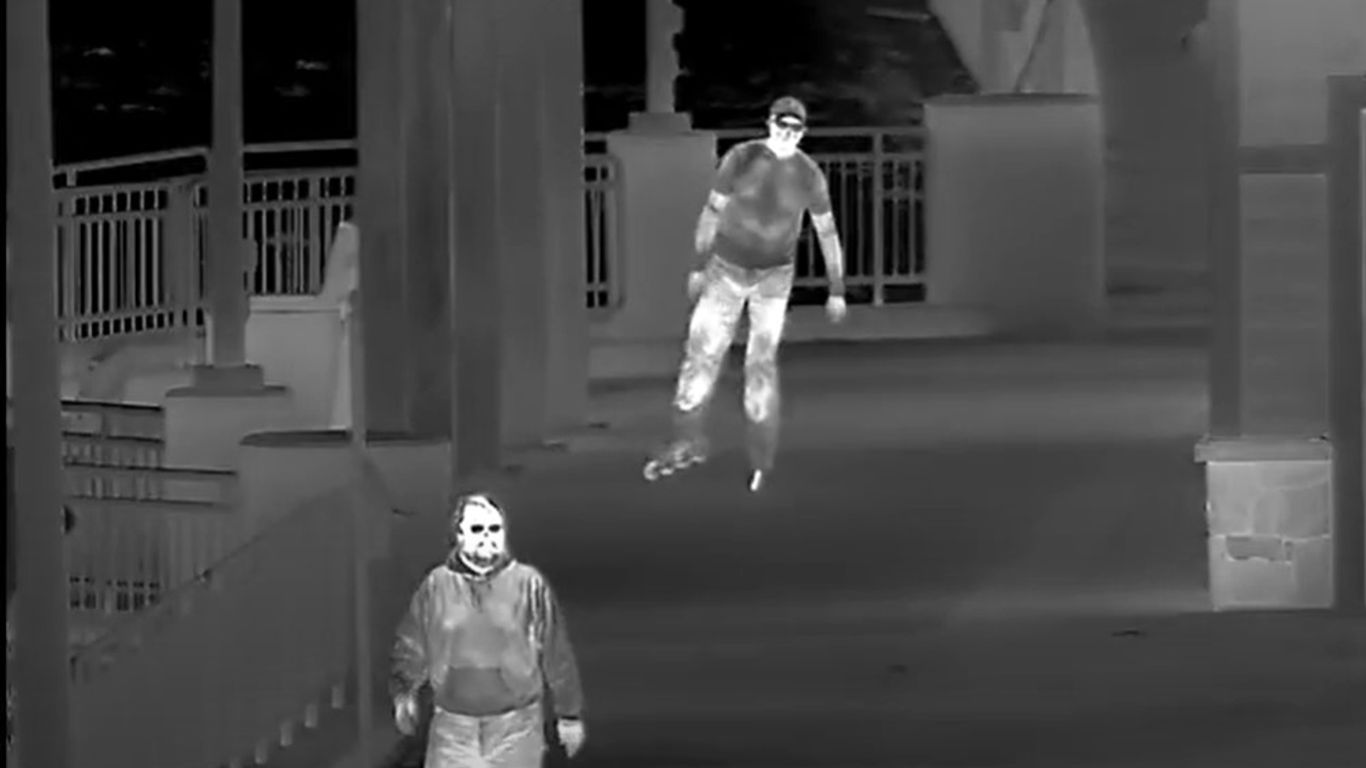
Thermal cameras on drones shift how teams approach field operations, SAR missions, and site security. Selecting the right system isn’t just a matter of technical specs; it is about balancing real-time communication requirements, how long you can keep the drone in the air, and how well it works with other onboard sensors. Each factor impacts practical mission effectiveness. Here is a closer look at these operational challenges and what they mean for integrating thermal cameras with drone platforms.
Real-Time Video Transmission Requirements
One thing often overlooked is how the camera’s output gets to the person who needs it.
- Low Latency: Teams need a live video feed so they can direct action in real time. Delays or lag make it difficult to coordinate SAR or surveillance operations.
- Reliable Bandwidth: Video transmission needs to remain stable even at the edge of a drone’s operational range. Wireless interference and terrain obstacles can degrade the signal.
- Integration with Command Centers: Many operations require feeds to broadcast back to multiple users or remote centers. Compatibility with standard software and hardware helps keep communication lines open.
Most serious drone setups use purpose-built data links (sometimes custom RF and mesh networks) instead of consumer-grade Wi-Fi to maintain secure, high-quality live video during flight.
Flight Time and Operational Range Implications
The camera’s weight and power consumption have a direct effect on what the drone can actually do in the field.
|
Camera Payload Type |
Typical Weight (kg) |
Power Draw (W) |
Expected Flight Time (minutes) |
|---|---|---|---|
|
Uncooled IR Camera |
0.15 – 0.8 |
2 – 10 |
25 – 45 |
|
Cooled IR Camera |
2 – 6 |
20 – 50 |
12 – 25 |
- Longer Flight = Larger Search Area: The lighter the camera, the longer the drone stays airborne.
- Battery Management: High-power cameras can force teams to carry more batteries or land more often, which slows down critical missions.
- Environmental Factors: Strong winds, low temperatures, and altitude can all reduce flight endurance further.
Choosing a thermal camera involves trade-offs—sometimes, accepting a lower resolution or simpler feature set is worth it if it doubles your air time.
Multi-Sensor Integration Capabilities
Modern drones often carry more than just a thermal camera. Combining several sensors provides a richer, more actionable picture for operators.
Some integration options include:
- Visual cameras (for context and easier identification)
- Laser rangefinders (for target location and mapping)
- GPS modules (for geo-referencing images)
When choosing a thermal camera system:
- Check Compatibility: Not all cameras easily integrate into every drone, especially with custom gimbals and multiplexed sensor arrays.
- Weight & Power Budget: Adding more sensors further reduces flight time; you need to balance what is truly needed for your mission.
- Data Synchronization: If using multi-sensor fusion, confirm that all feeds can be time-coded or combined for accurate analysis.
When the right operational considerations come together, drone-mounted thermal imaging can save lives, protect assets, and make site assessments faster than any other tool. To discuss solutions that fit your specific requirements, reach out at LightPath Technologies.
Advanced Features and System Integration
Radiometric Capability in Still Images Versus Video
When selecting a thermal camera for drone integration, it is important to understand the nuances of radiometric data. Many systems offer radiometric capabilities, meaning they can measure precise temperature values. However, this functionality is often limited to still images rather than continuous video streams. For applications like industrial inspection, where real-time temperature monitoring or tracking thermal trends over time is necessary, this distinction is significant. You must verify with your supplier whether full-motion radiometric video is supported if your mission profile demands it. Keep in mind that accurate temperature readings in the field depend on more than just the camera's specifications; factors such as distance to the target, atmospheric conditions, and proper emissivity correction all play a role. It is advisable to establish realistic accuracy requirements based on your specific application needs rather than expecting laboratory-grade precision from a field-deployed system.
Understanding Export Compliance and Market Access
Navigating the complexities of export regulations is a critical step in the drone thermal camera selection process. Technologies like Long-Wave Infrared (LWIR) and Mid-Wave Infrared (MWIR) systems are subject to different export controls than Near-Infrared (NIR) systems. Failing to clarify these specifications early in your development cycle can lead to significant delays or necessitate costly redesigns when you encounter export licensing hurdles. MWIR systems, while offering better atmospheric transmission in humid environments, typically come with higher costs and power demands compared to LWIR. Understanding these trade-offs upfront will help you avoid overspecifying capabilities you do not operationally require, while also preventing underspecification that could compromise mission effectiveness. Always confirm the export classification of any system you are considering.
The Importance of Supply Chain Stability
Beyond technical specifications, the stability and reliability of the supply chain are paramount for successful drone thermal camera integration. For program managers and engineering teams, issues like component availability and manufacturing partnerships can impact long-term program viability more than performance metrics alone. Programs that succeed often partner with manufacturers who control their entire value chain, from raw materials to final assembly. This vertical integration can lead to faster customization, greater supply chain certainty, and system-level performance that off-the-shelf components cannot match. When evaluating potential suppliers, inquire about their manufacturing provenance, component traceability, and adherence to regulations such as NDAA requirements. Secure supply chains and domestic manufacturing provide the assurance that component availability will not disrupt program timelines or introduce national security risks. For reliable integration and long-term program success, consider working with partners who offer dedicated US-based technical services and comprehensive development kits. You can learn more about integrated solutions by contacting us at https://www.lightpath.com/contact.
Selecting Thermal Cameras for Specific Mission Profiles
Choosing the right thermal camera for your drone platform involves aligning the technology's capabilities with the specific demands of your intended mission. Different operational scenarios require distinct performance characteristics, from the sensitivity needed for search and rescue to the range required for surveillance.
Optimizing for Search and Rescue Scenarios
For search and rescue (SAR) operations, the primary goal is locating individuals who may be in distress. This often means detecting faint heat signatures against varied backgrounds, sometimes in challenging environmental conditions. The ability to cover large areas quickly is also paramount.
- Detection Sensitivity: High thermal sensitivity (low NETD) is key. This allows the camera to distinguish small temperature differences, helping to spot a person who might be hypothermic or partially obscured.
- Field of View (FOV): A wider FOV is generally preferred for SAR. It enables the drone to scan more ground area per flight, increasing the speed at which a search area can be covered. This is particularly useful in wilderness or large-scale disaster scenarios.
- Image Processing: Features that enhance contrast and highlight heat signatures, such as adaptive histogram equalization, can significantly improve the chances of spotting a target.
- Radiometric Capability: While not always the top priority for initial detection, radiometric data can be useful for assessing a survivor's condition if they are found.
Uncooled thermal cameras often strike a good balance for SAR due to their lower weight and power consumption, which translates to longer flight times and the ability to cover more ground. The focus here is on reliable detection and broad area coverage.
Requirements for Surveillance and Security Applications
Surveillance and security missions often demand longer detection ranges and the ability to identify targets from a distance. The operational environment can vary from urban settings to remote border patrols.
- Detection Range: This is often the most critical factor. Achieving longer detection ranges requires a combination of a sensitive detector, a longer focal length lens, and sufficient sensor resolution. The Instantaneous Field of View (IFOV) per pixel becomes very important here.
- Resolution: While a wide FOV is useful for initial scanning, higher resolution is needed for positive identification of targets at greater distances. This might lead to considering dual-sensor systems or cameras with zoom capabilities.
- Frame Rate and Latency: For tracking moving targets or monitoring dynamic situations, a high frame rate and low latency video transmission are essential for real-time situational awareness.
- Cooled vs. Uncooled: Cooled thermal cameras, particularly Mid-Wave Infrared (MWIR) systems, often provide superior sensitivity and longer detection ranges, making them suitable for high-end surveillance where performance is paramount, despite their higher cost, weight, and power requirements.
Considerations for Industrial Inspection Tasks
Industrial inspections, such as those for electrical infrastructure, building envelopes, or manufacturing processes, typically focus on precise temperature measurement and identifying anomalies. The environment can range from controlled indoor settings to harsh outdoor conditions.
- Radiometric Accuracy: For industrial applications, the camera must provide accurate temperature measurements. This means looking for cameras with good radiometric calibration and understanding factors like emissivity correction and atmospheric effects.
- Temperature Measurement Range: The camera's ability to measure the specific temperature ranges relevant to the inspection task is vital. This includes both high-temperature applications (e.g., furnaces) and low-temperature ones (e.g., insulation defects).
- Lens Selection: The choice of lens depends on the inspection distance and the size of the features being examined. A balance between FOV and detail is needed. For close-up inspections, a wider lens might be suitable, while longer-range inspections of power lines would require a narrower FOV.
- Durability: Industrial environments can be demanding. Cameras should possess adequate environmental sealing (IP rating) and resistance to shock and vibration.
For many industrial tasks, uncooled cameras with good radiometric performance are often sufficient and offer a more cost-effective and lighter solution. However, specialized applications might benefit from the enhanced performance of cooled systems.
Selecting the appropriate thermal camera system is a strategic decision that directly impacts mission effectiveness. Understanding these mission-specific requirements will guide you toward a solution that meets your operational needs. To discuss your specific application and explore suitable thermal imaging solutions, please contact us at https://www.lightpath.com/contact.
Picking the right thermal camera depends on what you need to do. Maybe you want to spot heat leaks, keep an eye on equipment, or work in really tough places. Every mission is different, so you should have a camera that matches your goals. If you’re not sure where to start or need expert advice, visit our website to connect with our team. We’re here to help you find the best thermal solution for your project.
Final Thoughts on Selecting Your Drone's IR Camera
Choosing the right infrared camera for your drone is a big decision, and it's not just about picking the one with the most pixels. You've got to think about what you'll actually be doing with it. Will you be searching large areas in tough weather, or inspecting something up close? Consider how long you need the drone to fly and how much weight the drone can handle. Remember, a camera that's too heavy or uses too much power can cut your mission short. It's also smart to look at how well the camera holds up in different conditions, like rain or extreme temperatures. By carefully looking at these points – resolution, sensitivity, range, flight time, and durability – you can pick a camera system that truly fits your needs and helps you get the job done right.
Frequently Asked Questions
How does a drone infrared (IR) camera help in search and rescue operations?
A drone IR camera detects the heat given off by people and objects. This helps rescue teams find missing or injured people, even at night or through smoke and fog. The camera shows heat differences, making people stand out against cooler backgrounds, which is much faster and safer than searching by foot.
What is the difference between thermal infrared and near-infrared cameras for drones?
Thermal infrared cameras sense the heat given off by objects, working best in complete darkness or bad weather. Near-infrared cameras, on the other hand, need some light to work and detect reflected light instead of heat. For search and rescue or surveillance, thermal infrared cameras are usually the better choice.
Should I choose a cooled or uncooled thermal camera for my drone?
Cooled thermal cameras are more sensitive and can see smaller temperature changes from farther away, but they are heavier, cost more, and use more power. Uncooled cameras are lighter, need less power, and are easier to use on most drones. For most search and rescue or basic surveillance, uncooled cameras work well.
Why are size, weight, and power (SWaP) important when picking a drone thermal camera?
SWaP matters because drones have limits on how much weight they can carry and how much power they can use. A camera that is too heavy or uses too much power will shorten the drone's flight time and may even make flying unsafe. Choosing a camera that fits your drone's SWaP limits helps you fly longer and cover more ground.
Can thermal cameras be used in bad weather or at night?
Yes, thermal cameras work well at night and in poor weather, like fog, rain, or smoke. They do not depend on sunlight or visible light, so they can see heat signatures in conditions where regular cameras would not work.
What features should I look for when choosing a thermal camera for drone surveillance?
Look for a camera with good thermal resolution, wide field of view, and strong sensitivity to temperature changes. Also, check that it has real-time video transmission, is lightweight, works well with your drone, and can handle tough weather. If you need to measure temperatures, make sure it has radiometric capabilities.